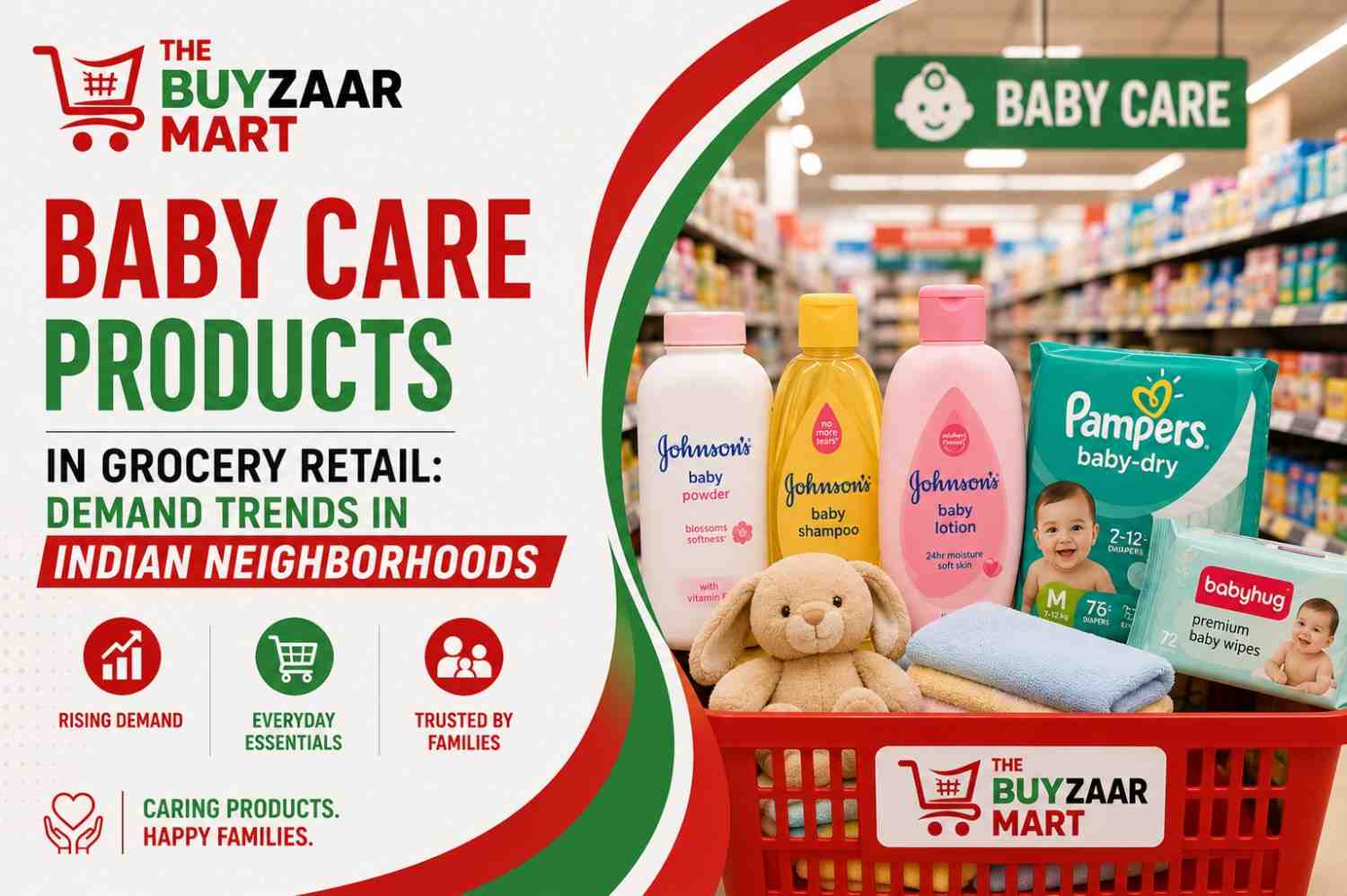
Baby Care Products in Grocery Retail: Demand Trends in Indian Neighborhoods
Baby care is one of the fastest-growing categories in neighbourhood retail. See the demand trends shaping this category and how to stock it right in your Buyzaar Mart store.
A few years ago, baby care was a category most neighbourhood grocery stores handled half-heartedly — a small shelf with a couple of diaper packs and one brand of baby soap, mostly there so customers wouldn't feel the store was incomplete. That's changing fast. Baby care has quietly become one of the most consistent, high-loyalty categories in Indian retail, and stores that treat it seriously are capturing a customer relationship that lasts years, not weeks. Here's what's actually driving this shift and how to stock the category properly.
Why Baby Care Demand Is Rising in Neighbourhood Retail
- •Rising dual-income households across urban and semi-urban India mean less time for parents to travel to specialised baby stores or malls, pushing baby care purchases toward the most convenient nearby option — the neighbourhood grocery store
- •Growing awareness around infant hygiene, skin care, and nutrition, driven by digital content and paediatric guidance, has expanded the category well beyond diapers into skincare, feeding accessories, and wellness products
- •Urban and semi-urban families increasingly expect baby care availability as a baseline feature of a modern grocery store, similar to how they expect refrigerated dairy — its absence is noticed even by customers not currently buying it
- •Repeat purchase frequency in this category is exceptionally high during the active parenting window, since diapers, wipes, and feeding products are consumed on a near-daily basis, unlike many other discretionary FMCG categories
- •Word-of-mouth influence is unusually strong in this category. Parents actively discuss and recommend baby product availability within their social and neighbourhood circles, making a well-stocked baby aisle a genuine local reputation driver
The Core Sub-Categories Driving This Growth
- •Diapers and wipes — the single highest-frequency purchase in the category, spanning multiple size ranges and both value and premium brand tiers. This is the anchor product that drives category footfall
- •Baby skin and bath care — baby soap, shampoo, lotion, oil, and rash cream, purchased regularly and often bought in multiples once a parent settles on a trusted brand
- •Feeding essentials — feeding bottles, bottle cleaning liquid, and basic weaning-stage food products, which see steady demand as infants move through different developmental stages
- •Baby food and nutrition — infant cereal, formula milk where locally permitted, and weaning foods, a category requiring careful attention to storage and freshness given its sensitivity
- •Baby wellness basics — mild baby-safe sanitiser, thermometers, and basic health monitoring products, an increasingly requested sub-category post-pandemic as parents have become more health-vigilant
Why This Category Builds Exceptional Customer Loyalty
- •Parents shopping for a newborn or infant are in an active, ongoing purchase cycle that typically lasts two to three years per child, creating one of the longest sustained loyalty windows of any grocery category
- •Once a parent finds a store that reliably stocks their preferred diaper size and brand, switching stores becomes genuinely inconvenient — this is a category where consistent availability creates strong lock-in behaviour
- •A parent who trusts a store for baby products almost always extends that trust to the store's entire range, since baby care purchases involve heightened scrutiny of quality, hygiene, and freshness — trust earned here transfers to the whole store relationship
- •Baby care shoppers frequently combine this purchase with their full weekly grocery basket rather than making a separate trip, meaning strong baby care stocking increases overall basket value, not just category-specific sales
How to Stock and Merchandise the Category Correctly
- •Stock diapers across the full size range relevant to your customer base — newborn through toddler sizes — since incomplete size availability is the single biggest reason a parent stops visiting for this category
- •Offer both value and premium brand tiers in diapers and baby skin care specifically, since price sensitivity in this category varies more by household income than by product necessity
- •Keep the baby care section visually distinct and easy to locate — parents, especially those shopping with an infant, want to find this section quickly without navigating the full store
- •Maintain visibly clean, well-organised shelving in this section specifically. Parents are unusually attentive to hygiene cues around baby products, and a disorganised or dusty shelf undermines trust disproportionately compared to other categories
- •Cross-merchandise adjacent categories — place baby wipes near household cleaning wipes, and baby snacks or weaning foods near the general snacks section, to capture incidental basket additions from parents already in the store
Managing Inventory for This Category
- •Track diaper size-wise sales velocity specifically, since demand shifts as your regular customer base's children grow — a size that sold well six months ago may need less shelf space today, and a new size may need more
- •Avoid stockouts on top-moving diaper and wipes SKUs more aggressively than in other categories, since this is the product most likely to trigger a permanent switch to another store if unavailable during an urgent need
- •Baby food and formula products require particularly close attention to shelf life and FIFO rotation, given the heightened sensitivity around freshness and safety that parents apply to this sub-category
- •Build a light informal feedback loop with regular baby-care customers — a quick question about which brand or size they need next time — to fine-tune stocking decisions for your specific neighbourhood's parent demographic
Positioning the Category for Long-Term Store Growth
- •A strong baby care section signals to the broader neighbourhood that the store is family-oriented, trustworthy, and attentive to a sensitive customer need — this reputation effect extends beyond just parents actively shopping the category
- •As dual-income and nuclear family households continue to grow across tier-2 and tier-3 Indian cities, the baby care customer base within any given catchment is structurally expanding, not just cyclically fluctuating
- •Stores that establish themselves early as the reliable baby care destination in their locality benefit from a compounding loyalty effect, since new parents in the neighbourhood often ask existing parents where they shop for these products
Final Thoughts
- •Baby care is no longer a peripheral category to stock reluctantly — it's a genuine growth driver with some of the strongest loyalty economics available to a neighbourhood grocery store
- •Getting size range, brand tier variety, and shelf hygiene right in this category creates a customer relationship that can anchor two to three years of consistent, high-frequency store visits
- •Franchise owners who invest proper shelf space and stocking discipline into baby care are building a reputation advantage that's difficult for under-stocked competitors to catch up on quickly
Frequently Asked Questions
Why is baby care considered a high-loyalty category in grocery retail?
Parents remain in an active purchase cycle for two to three years per child, and once they find a store with reliable size and brand availability, switching becomes genuinely inconvenient, creating strong repeat-visit behaviour.
What's the most important baby care sub-category to stock first?
Diapers and wipes, since they're the highest-frequency purchase and the product most likely to drive a parent to switch stores permanently if unavailable.
Should a store stock both value and premium baby product brands?
Yes. Price sensitivity in baby care varies significantly by household income even within the same neighbourhood, and offering both tiers captures a wider share of local demand.
How does baby care affect overall store loyalty, not just category sales?
Parents extend the trust they place in a store's baby product hygiene and quality to the store's entire range, making baby care an indirect driver of overall customer confidence and basket size.