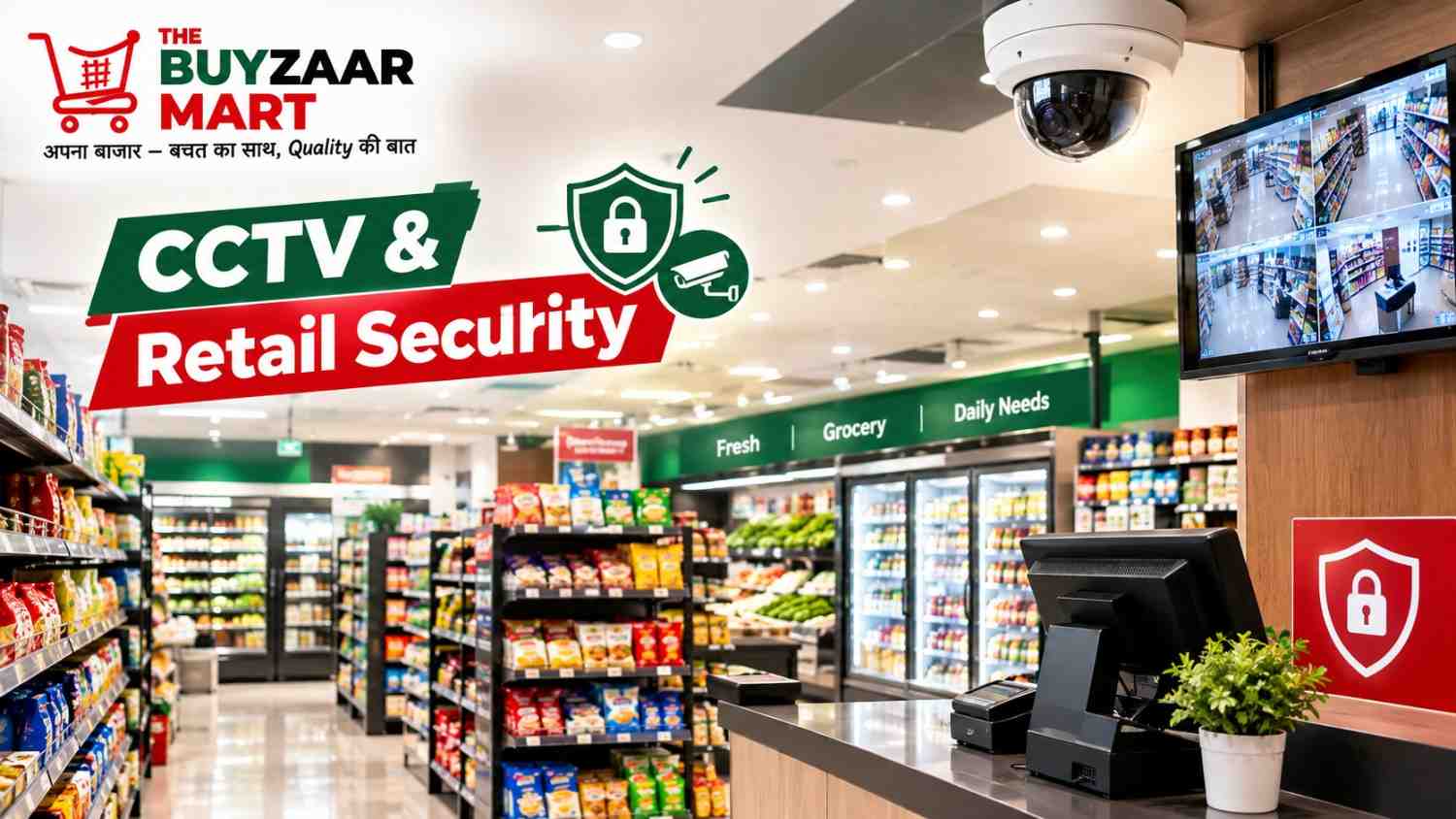
CCTV & Loss Prevention Tips for Retail Store Owners
Discover practical CCTV placement, loss prevention & security tips for retail store owners to reduce shrinkage, prevent theft & protect your grocery store investment.
Running a retail store in India today means dealing with more than just customers, stock, and sales targets. Theft, shoplifting, and internal fraud quietly eat into profits every single day — often without owners even realizing it. Whether you run a standalone grocery store or a franchise outlet under a growing retail brand, having the right security setup isn't optional anymore; it's a core part of running a profitable business. This guide covers everything retail store owners need to know about CCTV surveillance, loss prevention strategies, and building a security-first culture in their stores.
Why Retail Security Should Be a Top Priority
- •Retail shrinkage (loss of inventory due to theft, fraud, and errors) can silently reduce store profits by 1-3% annually, which adds up fast for grocery and FMCG retailers working on thin margins
- •A single security incident — whether shoplifting, cash pilferage, or vendor fraud — can wipe out an entire day's profit
- •Franchise-model stores (FOCM, FOCO, FOFO) carry an added responsibility since franchise owners are directly accountable for protecting the investment and brand reputation
- •Customers increasingly notice and trust stores that visibly invest in safety and security, which builds long-term brand loyalty
- •Insurance providers often offer better premiums to stores with documented CCTV and security systems in place
Understanding the Real Sources of Retail Loss
- •Before installing any security system, it helps to understand where losses actually come from:
- •Shoplifting — customers concealing or walking out with unpaid merchandise, especially common in high-footfall grocery aisles
- •Employee theft — internal pilferage, cash register manipulation, or unauthorized discounting, which studies consistently show accounts for a larger share of shrinkage than shoplifting
- •Vendor and supplier fraud — short deliveries, mislabeled quantities, or billing discrepancies during stock receiving
- •Administrative and billing errors — incorrect price entries, unscanned items, or POS mistakes that go unnoticed without monitoring
- •Return fraud — fake or manipulated returns used to extract cash or store credit
Smart CCTV Camera Placement for Complete Store Coverage
- •Camera placement matters as much as camera quality. A well-planned CCTV layout should include:
- •Entry and exit points — wide-angle cameras capturing every person entering or leaving, along with a timestamp
- •Checkout and billing counters — close-angle cameras focused on the till, scanner, and cash drawer to prevent register fraud
- •High-value product aisles — dedicated coverage for cosmetics, electronics, dairy, and premium FMCG sections that are common shoplifting targets
- •Storage rooms and back-office areas — since a large share of internal theft happens away from customer-facing areas
- •Parking areas and store perimeter — to deter vehicle theft and monitor after-hours activity
- •Blind spot corners — mirrors combined with cameras in aisle corners where sightlines are naturally blocked by shelving
Choosing the Right CCTV System for Your Store
- •Not every camera system suits every store size. Key factors to evaluate:
- •Resolution — a minimum of 2MP (1080p) is recommended; higher resolution helps in identifying faces and license plates clearly
- •Night vision (IR) capability — essential for stores with early-morning or late-night operating hours
- •Cloud storage vs. local DVR/NVR — cloud backup protects footage even if the physical device is damaged or stolen
- •Remote monitoring apps — allows owners to check live feeds from their phone, especially useful for multi-outlet or franchise owners managing several locations
- •Storage retention period — aim for at least 30 days of footage retention to allow time for investigating disputes or claims
- •Number of channels — plan camera count based on store size; a mid-sized grocery store typically needs 8-16 cameras for full coverage
- •Motion detection and alerts — real-time push notifications for after-hours movement add an extra layer of protection
Loss Prevention Strategies That Go Beyond Cameras
- •CCTV alone isn't a complete solution. The most effective retail security combines technology with process:
- •Integrate CCTV footage with your POS and billing software so that transactions can be cross-verified against camera timestamps, making it easy to spot voided bills, unscanned items, or cash mismatches
- •Conduct regular, unannounced inventory audits to catch shrinkage patterns early rather than discovering losses at year-end stock-taking
- •Use Electronic Article Surveillance (EAS) tags on high-value or frequently stolen items
- •Install visible security signage — the psychological deterrent of "This store is under CCTV surveillance" reduces shoplifting attempts significantly
- •Maintain clear sightlines by keeping shelving at a height that lets staff see across the store
- •Set up a defined cash-handling protocol with regular till reconciliation throughout the day, not just at closing
Employee Theft Prevention Tips
- •Run background checks before hiring staff for cash-handling or inventory roles
- •Rotate staff responsibilities periodically so no single employee has unchecked control over billing or stock
- •Set up a dual-verification system for high-value transactions or discounts
- •Encourage an anonymous reporting channel for staff to flag suspicious behavior without fear of conflict
- •Review CCTV footage alongside POS logs weekly, not just when a discrepancy is already suspected
Shoplifting Prevention Tips
- •Train staff to greet every customer at the entrance — visible staff presence is one of the strongest shoplifting deterrents
- •Position billing counters with a clear view of the main entrance and exit
- •Keep small, high-value items near the checkout counter rather than in easily accessible aisles
- •Use convex mirrors in corners that cameras can't fully capture
- •Train staff to recognize common shoplifting behaviors, such as loitering, oversized bags, or repeated visits without purchases
Legal and Compliance Considerations for CCTV in India
- •Display clear signage informing customers that the premises are under video surveillance, as required under data protection norms
- •Avoid installing cameras in areas like changing rooms or restrooms, which is both illegal and a serious privacy violation
- •Maintain a data retention and access policy — limit who can view or export footage
- •Keep footage securely stored, since it may be needed as evidence in case of disputes, theft claims, or insurance verification
- •Franchise owners should check brand-specific security compliance guidelines, since many retail franchise agreements include minimum surveillance standards
Building a Complete Security Culture in Your Store
- •Technology is only as effective as the habits built around it. The strongest retail security programs combine CCTV, trained staff, smart store layout, and consistent monitoring routines. Store owners who treat security as an ongoing process — not a one-time installation — see the biggest long-term reduction in shrinkage and the highest returns on their security investment.
Frequently Asked Questions
Q1. How many CCTV cameras does a small retail store need?
Most small to mid-sized grocery stores need 8-16 cameras to cover entry points, aisles, billing counters, and storage areas effectively.
Q2. What is the ideal CCTV footage storage duration for retail stores?
A minimum of 30 days is recommended, giving enough time to investigate billing disputes, theft claims, or customer complaints.
Q3. Can CCTV alone stop shoplifting completely?
No. CCTV acts as a strong deterrent and evidence tool, but it works best combined with staff training, store layout planning, and EAS tagging.
Q4. Is it legal to install CCTV cameras inside a retail store in India?
Yes, as long as signage is displayed informing customers, and cameras avoid private areas like restrooms or changing rooms.
Q5. What causes the highest retail shrinkage — employees or customers?
Industry data consistently shows internal employee theft contributes to a larger share of shrinkage than shoplifting by customers.
Q6. Should franchise store owners follow specific security guidelines?
Yes, many retail franchise models specify minimum CCTV and security standards to protect brand consistency and investor interests.