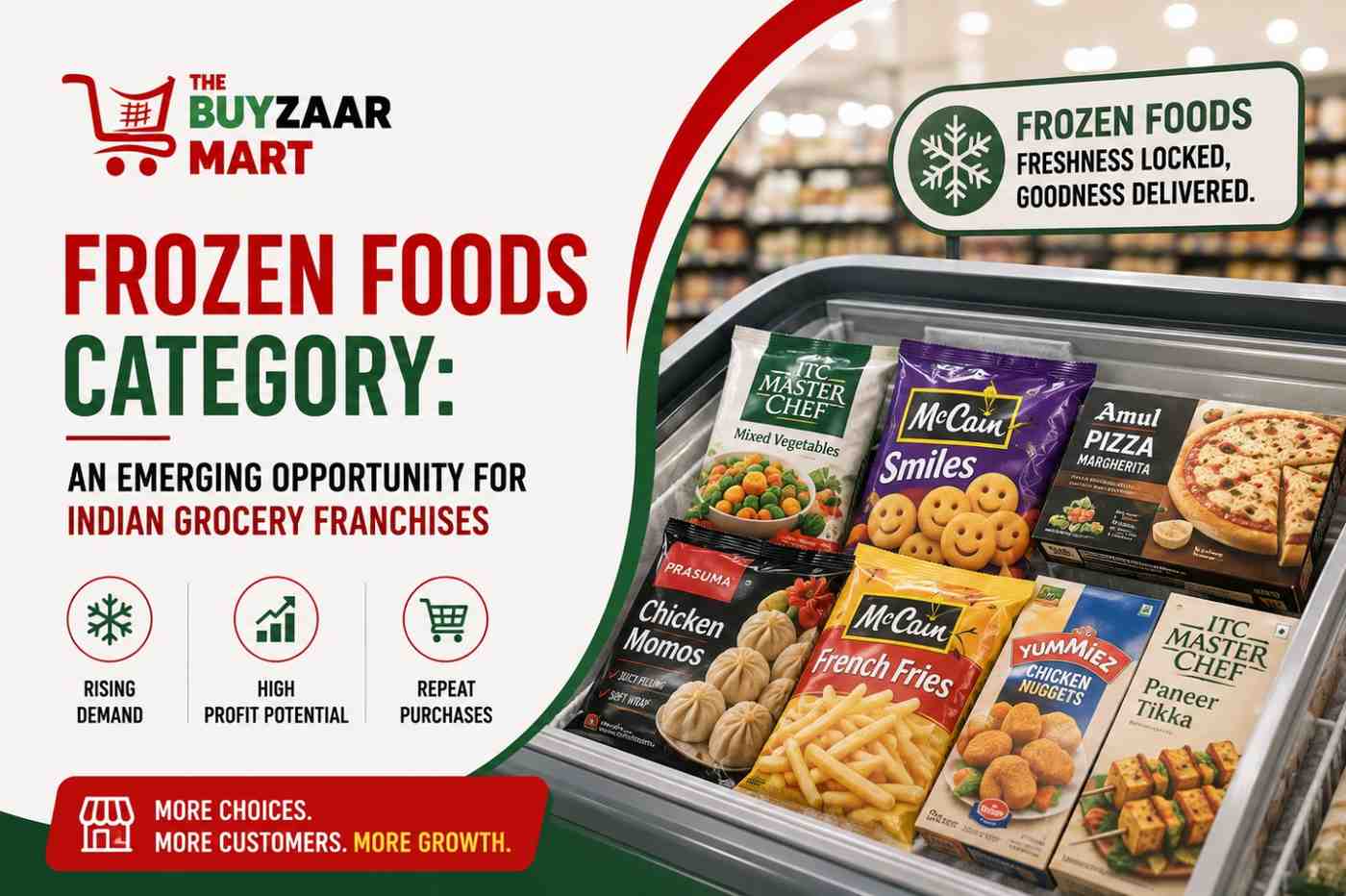
Frozen Foods Category: An Emerging Opportunity for Indian Grocery Franchises
Explore why frozen foods are becoming a high-growth category for Indian grocery franchises and how The Buyzaar Mart stores can capture this demand.
India's grocery retail landscape is shifting fast, and one category that is quietly outgrowing almost every other section on the shelf is frozen foods. For years, frozen food in India was seen as a niche segment limited to metro cities and premium supermarkets. That perception is changing rapidly. Busy urban households, working couples, students living away from home, and a fast-growing base of younger consumers are all driving demand for convenient, ready-to-cook, and ready-to-eat frozen products. For grocery franchise owners, this represents one of the most promising and underexplored categories to build into a store's product mix.
Why Frozen Foods Are Gaining Momentum in India
- •Rising number of nuclear families and working professionals with limited time for daily meal preparation
- •Increasing smartphone and refrigerator penetration even in Tier 2 and Tier 3 cities
- •Growing comfort with packaged and processed food among younger consumers
- •Expansion of organised cold chain and logistics infrastructure across smaller cities
- •Post-pandemic shift toward hygienic, pre-packed food options over loose or unpackaged alternatives
What the Frozen Foods Category Includes
- •Frozen vegetables such as peas, corn, and mixed vegetable blends
- •Frozen snacks including samosas, spring rolls, nuggets, and cutlets
- •Frozen parathas, rotis, and other ready-to-cook breads
- •Frozen non-vegetarian items such as marinated chicken, seafood, and kebabs
- •Ready-to-eat meals and curries that only require heating
- •Frozen desserts, ice creams, and bakery items
Understanding the Indian Frozen Food Consumer
- •Working professionals in metro and Tier 2 cities who need quick meal solutions on weekdays
- •College students and young adults living in rented accommodation or hostels
- •Small families where both partners are employed and daily cooking time is limited
- •Households that entertain frequently and use frozen snacks for quick hospitality
- •Health-conscious buyers seeking portion-controlled or preservative-light frozen options
- •Festive and seasonal shoppers who stock up on frozen snacks during gatherings and celebrations
Why This Matters for Grocery Franchise Owners
- •Frozen foods carry higher per-unit margins compared to many staple grocery items
- •The category drives repeat visits, since frozen stock is typically replenished weekly rather than monthly
- •A well-stocked frozen section differentiates a store from unorganised kirana shops that rarely invest in freezer infrastructure
- •Frozen products encourage larger basket sizes, since customers often pair them with sauces, dips, or beverages during the same visit
- •The category appeals strongly to working professionals and small families, a fast-growing customer base in urban and semi-urban India
Market Signals Supporting the Opportunity
- •India's processed and frozen food market has been expanding at a strong double-digit pace in recent years
- •Organised retail chains and quick commerce platforms are dedicating more shelf and freezer space to this category, signalling confidence in sustained demand
- •Branded players are entering aggressively with new product lines, indicating expectations of continued category growth
- •Cold storage and logistics investment across Uttar Pradesh, Delhi NCR, and other regions is making it easier for smaller-format stores to stock frozen inventory reliably
How a Grocery Franchise Like The Buyzaar Mart Can Capture This Opportunity
- •Dedicate a visible, well-lit freezer unit near the store entrance or billing counter to maximise visibility
- •Start with a curated selection of high-demand items such as frozen snacks, parathas, and vegetables before expanding into meat, seafood, and ready meals
- •Maintain strict cold chain discipline, since frozen products lose both quality and customer trust quickly if temperature control is inconsistent
- •Use in-store signage and staff recommendations to introduce first-time buyers to the category
- •Bundle frozen items with complementary products such as sauces, spreads, or beverages to increase average basket value
Merchandising Tips for a Stronger Frozen Foods Section
- •Group products by meal occasion, such as snacks, breakfast items, and main course items, rather than only by brand
- •Keep the freezer glass clean and frost-free so products remain visible and appealing
- •Rotate stock using strict first-in-first-out practices to avoid quality complaints
- •Place fast-selling items at eye level and slower-moving items lower or higher on the shelf
- •Use small in-store recipe or usage suggestion cards near the freezer to help undecided customers
Challenges Franchise Owners Should Plan For
- •Higher upfront investment in freezer equipment and reliable power backup
- •Dependence on consistent cold chain logistics from suppliers to the store
- •Lower shelf life tolerance compared to dry grocery items, requiring careful inventory planning
- •Need for customer education in markets where frozen food adoption is still developing
- •Slightly longer break-even period on freezer investment compared to standard grocery shelving
Why Now Is the Right Time to Enter This Category
- •Indian consumers are moving away from purely price-driven grocery shopping toward convenience-driven shopping
- •Tier 2 and Tier 3 cities are following the adoption curve that metro cities experienced a few years ago, creating a first-mover advantage for organised stores that stock frozen foods early
- •Franchise brands with structured supply chain support, like The Buyzaar Mart, are better positioned than independent kirana stores to manage the cold chain requirements this category demands
- •Early entry allows a franchise store to build customer habit and loyalty around the category before competitors catch up
- •Consumer willingness to pay a premium for convenience and hygiene is rising steadily across income segments
What This Means for a Buyzaar Mart Store
- •A frozen foods section is not just an added category — it functions as a footfall driver in its own right, since customers who visit specifically for frozen items often browse and purchase across other sections as well
- •It reinforces the brand's positioning as a modern, organised alternative to traditional stores
- •It supports higher average transaction value, which directly benefits franchise profitability over time
- •It creates a natural entry point for cross-promotion with dairy, snacks, and beverages, categories that are already strong performers in neighbourhood retail
- •Consistent stocking builds a habit loop, where customers begin planning their weekly shopping around the store's freezer availability
Long-Term Growth Potential of the Category
- •As cold chain infrastructure deepens across smaller Indian cities, the cost of stocking and maintaining frozen inventory is expected to gradually decline
- •Product innovation from FMCG brands is expanding the frozen category beyond snacks into full ready meals, which broadens its appeal across age groups
- •Franchise stores that build early expertise in managing this category are likely to see it become one of their strongest-performing sections within a few years
- •Growing urban migration and smaller household sizes across India suggest sustained, structural demand rather than a short-term trend
Frequently Asked Questions
Is frozen food a good category for a new grocery franchise store to stock?
Yes. Frozen food is one of the fastest-growing categories in Indian grocery retail, and it typically carries higher margins and drives repeat customer visits compared to many staple items.
What is the biggest challenge in stocking frozen foods?
Maintaining consistent cold chain and power backup is the biggest challenge, since any break in temperature control can spoil stock quickly and affect customer trust.
Which frozen products should a franchise store start with?
Starting with high-demand items like frozen parathas, snacks, and vegetables is a safer entry point before expanding into meat, seafood, and ready meals.
Is frozen food demand limited to metro cities?
No. Demand is now rising steadily in Tier 2 and Tier 3 cities as refrigeration access, cold chain infrastructure, and consumer awareness improve across these markets.
How does a frozen foods section benefit overall store sales?
It increases average basket size, since customers often buy complementary items like sauces or beverages alongside frozen products, and it encourages more frequent store visits.