
Is Supermarket Business Profitable in India? Market Analysis 2026
A Detailed Look at Supermarket Profitability, Market Size, and Growth Trends in India
The supermarket industry in India has evolved dramatically over the last decade. What was once dominated by small neighborhood kirana stores is now witnessing rapid growth in organized retail formats such as supermarkets, hypermarkets, and modern grocery chains. With increasing urbanization, rising disposable income, and changing consumer preferences, supermarkets have become a popular retail format across both metropolitan and tier-2 cities. Many entrepreneurs and investors are now asking an important question: Is the supermarket business profitable in India in 2026? The short answer is yes, but profitability depends on several factors including location, operational efficiency, supply chain management, and customer demand. In this detailed market analysis, we explore the profitability potential of the supermarket business in India, the growth of the retail industry, market trends, and why organized retail formats are expanding rapidly.
Understanding the Supermarket Business Model
A supermarket is a retail store that sells a wide variety of grocery products, household goods, packaged foods, and daily essentials under one roof. Unlike traditional kirana shops that operate in small spaces, supermarkets offer:
- •Organized store layouts
- •Multiple product categories
- •Self-service shopping experience
- •Modern billing systems
Supermarkets operate on high volume sales with moderate margins, meaning profitability often depends on consistent daily customer traffic and efficient operations.
Growth of the Retail Market in India
India is one of the fastest-growing retail markets in the world. The country's retail industry is expanding rapidly due to rising consumer spending and modernization of shopping habits.
According to industry reports, India's retail sector is expected to grow from around $952 billion in 2024 to nearly $1.6 trillion by 2030, with organized retail capturing an increasing share of the market. Another analysis suggests that the retail industry could even cross $1.9 trillion by 2030, driven by technology adoption, urbanization, and increasing consumer demand.
This growth indicates a massive opportunity for supermarket businesses and retail franchises.
Grocery Retail Market Size and Growth
The grocery segment is the largest component of India's retail industry. Studies show that the India grocery market is expected to grow at around 9% CAGR between 2025 and 2030, indicating strong long-term demand for food and household products.
The reason for this consistent growth is simple: groceries and daily essentials are non-discretionary purchases. Consumers buy them regularly regardless of economic conditions. This makes the supermarket sector one of the most stable retail industries.
Profit Margins in the Supermarket Business
Understanding profit margins is essential when evaluating the profitability of supermarkets. Typically, supermarkets operate with gross margins of around 25–30% on many products depending on category, and net profit margins around 10–15% for organized supermarket franchises when managed efficiently.
| Product Category | Typical Margin |
|---|---|
| Staples (rice, flour, oil) | 5–10% |
| Packaged foods | 10–20% |
| Household goods | 15–25% |
| Personal care products | 20–40% |
Typical Profit Margins by Product Category in Supermarkets
Because supermarkets sell hundreds of products daily, high sales volume compensates for lower margins.
Why Supermarkets Are Growing in India
Several factors are driving the growth of supermarkets across the country.
Rising Urbanization
As cities expand and lifestyles become busier, consumers prefer stores where they can purchase multiple products in one visit.
Changing Consumer Preferences
Customers increasingly prefer organized shopping environments with clean store layouts, wide product variety, transparent pricing, and digital billing systems.
Expansion into Tier-2 and Tier-3 Cities
Retail chains are expanding into smaller cities where organized supermarkets were previously limited.
Digital Payments and Technology
Modern retail stores use POS systems, digital payments, and inventory software, improving efficiency and customer convenience.
Market Trends Shaping Supermarkets in 2026
The supermarket industry is evolving with new trends that are reshaping the retail ecosystem.
Organized Retail Expansion
Organized retail formats are gaining popularity as brands expand their store networks across India.
Integration of Online and Offline Retail
Many supermarkets now combine physical stores with online delivery platforms to increase customer reach.
Quick Commerce and Fast Delivery
The rise of rapid delivery platforms has changed consumer expectations regarding grocery purchases.
Technology-Driven Inventory Systems
Retailers are increasingly using data analytics and digital inventory management to optimize product availability.
Advantages of the Supermarket Business Model
The supermarket business offers several advantages that make it attractive for investors and entrepreneurs.
Consistent Customer Demand
Groceries and household essentials are products that customers purchase regularly, ensuring steady demand.
High Product Turnover
Fast-moving consumer goods (FMCG) sell quickly, allowing supermarkets to maintain consistent sales volume.
Multiple Revenue Streams
Supermarkets generate revenue through grocery sales, household products, personal care items, and packaged foods.
Brand-Driven Retail Expansion
Franchise supermarket models allow brands to expand through structured retail systems.
Challenges in the Supermarket Industry
While the supermarket business offers strong potential, it also comes with certain challenges.
High Competition
Supermarkets compete with local kirana stores, online grocery platforms, and quick commerce delivery apps.
Inventory Management
Poor stock management can lead to product wastage or shortages.
Location Dependency
A supermarket's profitability depends heavily on store location and customer footfall.
Profitability Factors for Supermarkets
Several factors determine whether a supermarket becomes profitable.
Location
Stores located in residential or high-traffic commercial areas generally attract more customers.
Product Mix
A balanced mix of high-volume and high-margin products helps improve overall profitability.
Operational Efficiency
Efficient store operations, inventory systems, and supply chain management improve margins.
Customer Experience
Organized store layouts and product availability encourage repeat customers.
Why Organized Supermarket Brands Are Expanding
Organized retail brands use structured operational systems that allow them to expand across multiple cities while maintaining consistent store standards. These systems typically include:
- •Centralized procurement
- •Standardized store layouts
- •Inventory management systems
- •Brand-driven marketing
Such frameworks make it easier to scale retail operations while maintaining consistent customer experiences.
Future Outlook for the Supermarket Industry in India
The future of the supermarket industry looks highly promising. India's retail market is projected to grow significantly over the next decade, supported by rising consumer demand and expanding organized retail networks.
Reports suggest that the Indian retail market could more than double by 2035, highlighting the long-term growth potential of retail businesses. As shopping habits evolve, supermarkets will continue to play an important role in the retail ecosystem.
Conclusion
The supermarket business in India is one of the most promising retail sectors in 2026. With rising consumer demand, expanding organized retail networks, and growing urban populations, supermarkets are becoming a key part of India's retail transformation.
While profitability depends on factors such as location, operational efficiency, and customer demand, the overall market outlook remains highly positive. For entrepreneurs and investors looking to enter the retail industry, supermarkets offer an opportunity to participate in one of the fastest-growing sectors in the country.
Contact Buyzaar Mart
If you would like to learn more about organized retail opportunities and how the Buyzaar Mart model works, you can connect with the team for further information.
Phone: 9217991727
Email: info@thebuyzaarmart.com
Frequently Asked Questions
Is the supermarket business profitable in India?
Yes. Supermarkets can be profitable due to high demand for daily essentials and consistent customer traffic.
What is the average profit margin in supermarkets?
Supermarkets usually operate with gross margins of around 25–30%, while net profit margins may range between 10–15% depending on operational efficiency.
Why are supermarkets growing in India?
Urbanization, higher incomes, and changing consumer preferences are driving the growth of organized retail stores.
Do supermarkets require large investments?
Investment requirements vary depending on store size, location, and business model.
Is the supermarket business sustainable long term?
Yes. Because grocery products are essential items, supermarkets benefit from consistent consumer demand.
Related Articles

Buyzaar Mart vs Traditional Kirana Store – Which is More Profitable?
Is a traditional kirana store still the most profitable option, or does an organized retail format like Buyzaar Mart offer better long-term growth? A detailed comparison of both retail models.
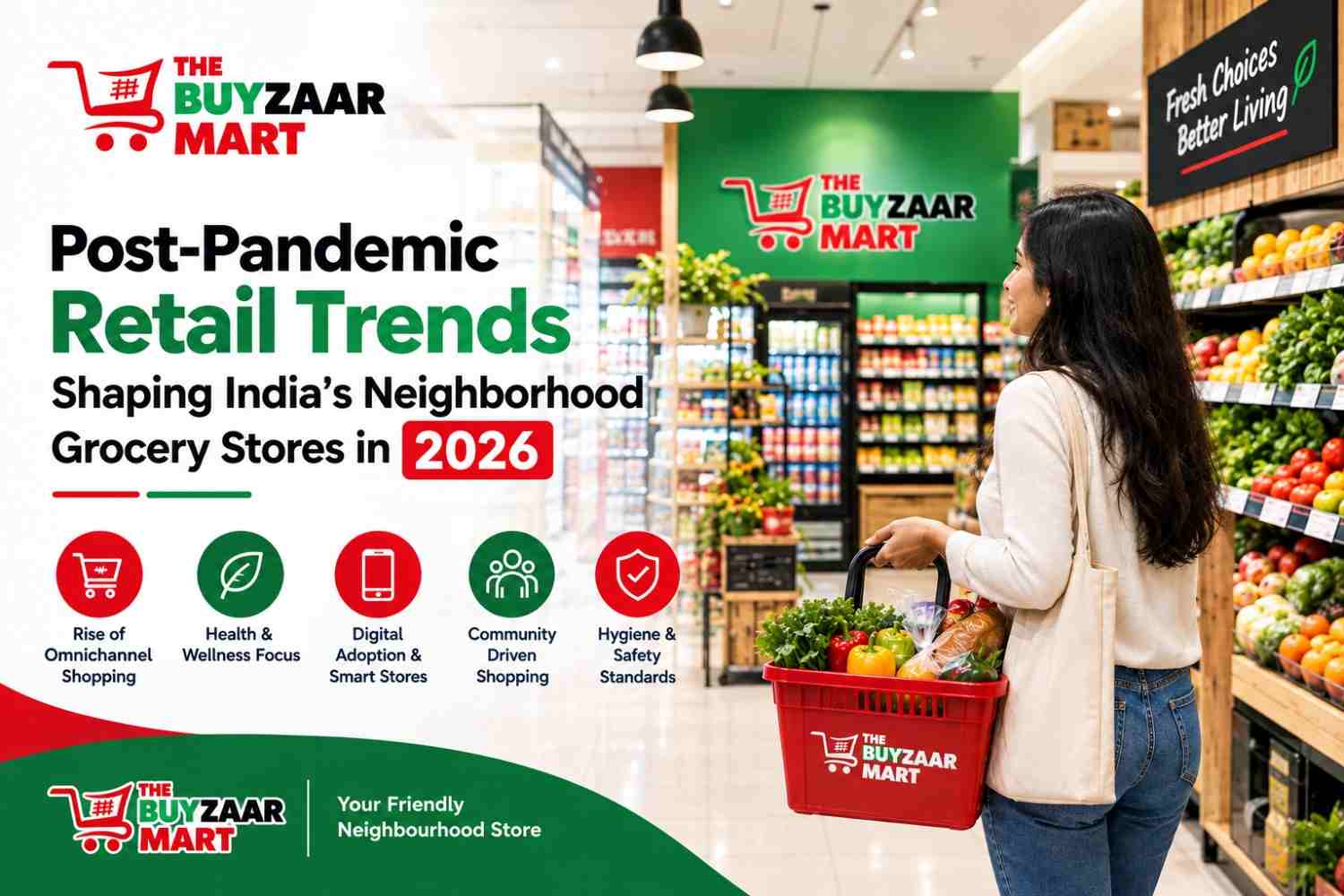
Post-Pandemic Retail Trends Shaping India's Neighborhood Grocery Stores in 2026
Explore key 2026 retail trends transforming India's neighborhood grocery stores — quick commerce, private label, technology adoption & franchise growth.