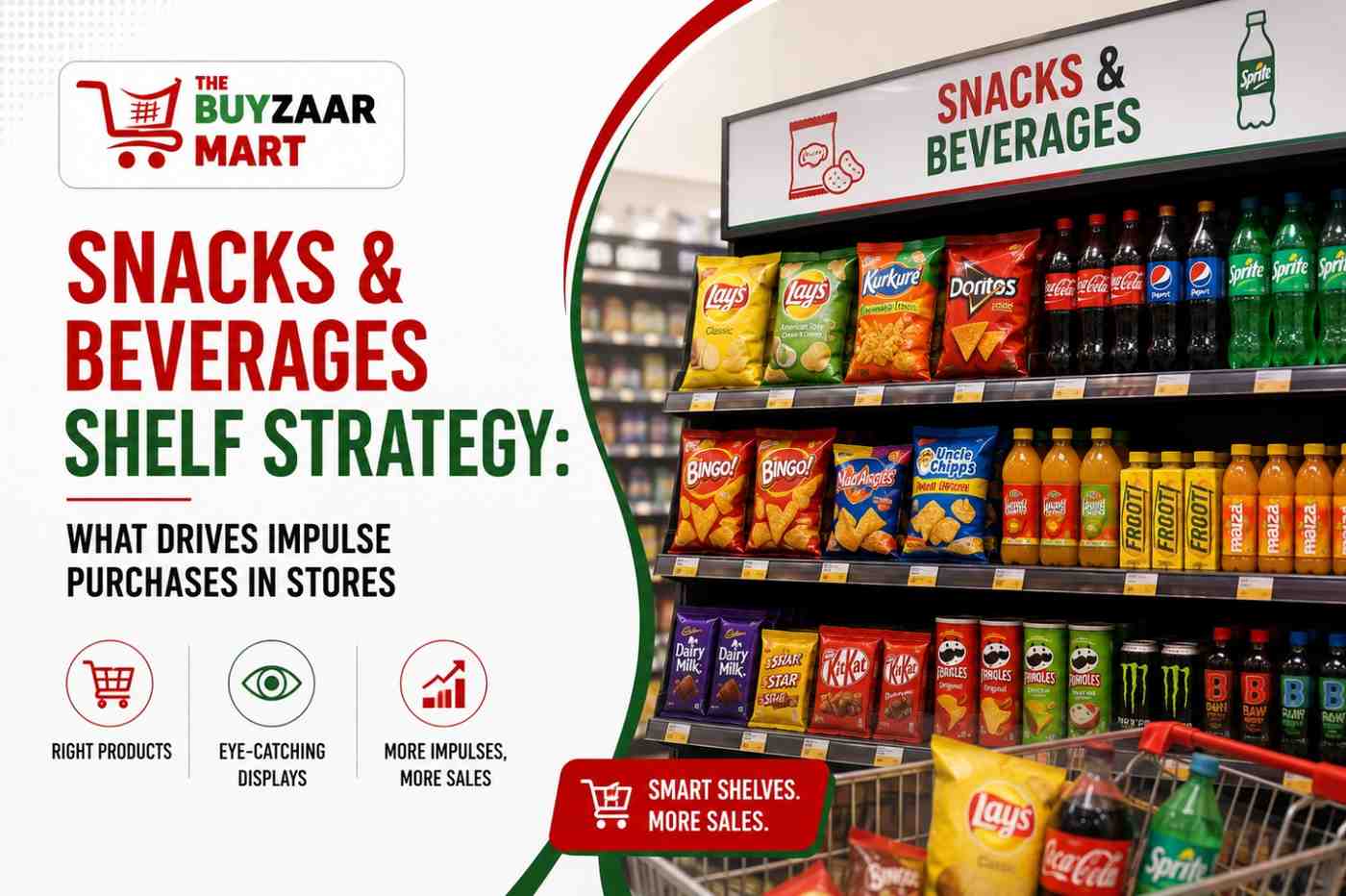
Snacks & Beverages Shelf Strategy: What Drives Impulse Purchases in Stores
Learn how shelf placement, cross-merchandising, and checkout strategy drive impulse purchases in the snacks and beverages category for grocery retailers.
Snacks and beverages are among the highest footfall-driving, highest-frequency categories in any grocery store. They are also the categories most influenced by impulse buying — purchases customers make without prior planning, often triggered by what they see, smell, or notice at the shelf or checkout counter. For a store owner, understanding what drives these unplanned purchases is one of the most direct ways to increase basket size and daily revenue without adding a single new customer. Below is a practical breakdown of what actually influences impulse purchases in the snacks and beverages category, and how shelf strategy can be used to capture more of this spending.
Understanding Impulse Buying in Snacks & Beverages
- •Impulse buying happens when a customer makes an unplanned purchase driven by an immediate desire rather than a shopping list item.
- •Snacks and beverages are naturally suited to impulse behavior because they are low-cost, low-risk, and easy to consume immediately.
- •A large share of in-store snack purchases across grocery retail are unplanned, making this category one of the most valuable for shelf-level influence.
- •What this means for your Buyzaar Mart store: this category deserves disproportionate attention in layout planning, because small shelf changes here can meaningfully move daily sales numbers.
Eye-Level Placement: The Simplest, Most Effective Lever
- •Products placed at eye level are noticed faster and chosen more often than items on top or bottom shelves.
- •Eye-level positioning consistently performs better for driving quick, low-effort purchase decisions.
- •Fast-moving, high-margin snack items should occupy this prime shelf space rather than slower-moving or bulk-pack items.
- •Rotate which brands or SKUs occupy eye level periodically to keep the shelf feeling fresh to repeat customers.
- •What this means for your Buyzaar Mart store: reserve eye-level shelf space for your best-margin, fastest-selling snack SKUs, and review this placement every few weeks based on sales data.
Checkout Counter: The Last Chance to Convert
- •The checkout area remains one of the highest-converting impulse zones in any store format.
- •Customers waiting to pay are naturally idle for a few seconds — a moment retailers can use effectively.
- •Small, affordable items — chocolates, mints, single-serve namkeen, chewing gum, small beverage bottles — work best here.
- •Items priced low enough to feel like an easy "add-on" convert far better than higher-priced products at checkout.
- •What this means for your Buyzaar Mart store: keep checkout shelving stocked with small-ticket, high-margin items and refresh the selection regularly so returning customers don't tune it out.
Cross-Merchandising: Pairing Products That Belong Together
- •Placing complementary products near each other encourages customers to buy both instead of just one.
- •Common effective pairings include chips with cold drinks, biscuits with tea or coffee, and namkeen with soft drinks during evening hours.
- •Cross-merchandising works because it answers an unspoken question in the customer's mind — "what goes well with this?" — before they even ask it.
- •This strategy is especially effective around evening and weekend shopping windows, when snack-and-beverage combination purchases rise naturally.
- •What this means for your Buyzaar Mart store: identify your top-selling snack and beverage combinations from sales data and place them within arm's reach of each other on the shelf.
Time-of-Day and Seasonal Shelf Adjustments
- •Customer snacking and beverage preferences shift meaningfully through the day and across seasons.
- •Morning hours tend to favor biscuits, rusk, and tea-related products; evenings favor namkeen, chips, and cold beverages.
- •Summer months drive strong demand for cold drinks, juices, and water; winter shifts demand toward hot beverage mixes and heavier snacks.
- •Adjusting shelf-facing and front-of-store displays according to these patterns keeps the store relevant to what customers actually want at that moment.
- •What this means for your Buyzaar Mart store: review time-of-day and seasonal sales trends periodically and reposition beverage cooler stock and snack displays to match current demand instead of keeping a fixed year-round layout.
Visual Merchandising and Shelf Signage
- •Clear, colourful, and well-organised shelves attract more attention than cluttered or inconsistent displays.
- •Bright packaging naturally draws the eye, so grouping snacks by colour or flavour family can increase visual appeal.
- •Simple shelf signage — highlighting new arrivals, combo offers, or bestsellers — helps customers make faster decisions.
- •A shelf that looks organised also signals product freshness and store reliability, reinforcing trust with every visit.
- •What this means for your Buyzaar Mart store: keep snack and beverage shelves visually structured, avoid overcrowding, and use simple signage to flag new or trending products.
Bundling and Combo Offers
- •Bundling a snack with a beverage at a slightly discounted combined price encourages customers to buy more than they originally intended.
- •Combos work particularly well for evening snacking occasions and for customers buying for a small gathering or family time.
- •Even a modest, simple bundle — a namkeen pack with a soft drink, or biscuits with a tea sachet — can noticeably lift average basket value.
- •Bundles also help move slower-selling SKUs when paired thoughtfully with a fast-moving product.
- •What this means for your Buyzaar Mart store: introduce two or three simple, rotating snack-and-beverage combos rather than relying only on individual product sales.
Using POS Data to Guide Shelf Decisions
- •Point-of-sale data reveals which snack and beverage combinations customers are already buying together, even without formal bundling.
- •This data removes guesswork from shelf placement decisions and replaces assumptions with actual buying behavior.
- •Reviewing top-performing SKUs regularly ensures shelf space is allocated to what customers are proven to want, not just what looks appealing to the store owner.
- •Slow-moving items identified through POS data can be repositioned, bundled, or phased out to make room for stronger performers.
- •What this means for your Buyzaar Mart store: use available POS reporting to identify frequently paired items and top sellers, and let this data — not habit — guide shelf layout decisions.
Building a Long-Term Shelf Strategy
- •Impulse-driven categories like snacks and beverages reward stores that treat shelf layout as an ongoing process rather than a one-time setup.
- •Regularly rotating displays, adjusting for season and time of day, and refreshing checkout selections keeps the shopping experience engaging for repeat customers.
- •A well-executed shelf strategy in this category does not require major investment — it requires consistent attention to placement, pairing, and presentation.
- •Over time, small and consistent shelf-level improvements compound into a meaningfully higher average basket size across the store.
Frequently Asked Questions
What is the most effective shelf position for driving snack impulse purchases?
Eye-level shelf space is consistently the most effective position, as it is noticed faster and chosen more often by customers.
Why does checkout placement matter so much for snacks and beverages?
Customers are naturally idle while waiting to pay, making the checkout counter one of the highest-converting zones for small, affordable add-on purchases.
How does cross-merchandising increase basket size?
Placing complementary products like chips and cold drinks near each other encourages customers to buy both together instead of just one item.
Should shelf layout change with the seasons?
Yes, adjusting beverage and snack displays according to seasonal demand — cold drinks in summer, hot beverage mixes in winter — keeps the store aligned with actual customer needs.
How can store owners decide which snacks and beverages to bundle together?
Reviewing POS sales data to identify products frequently purchased together is the most reliable way to design effective combo offers.