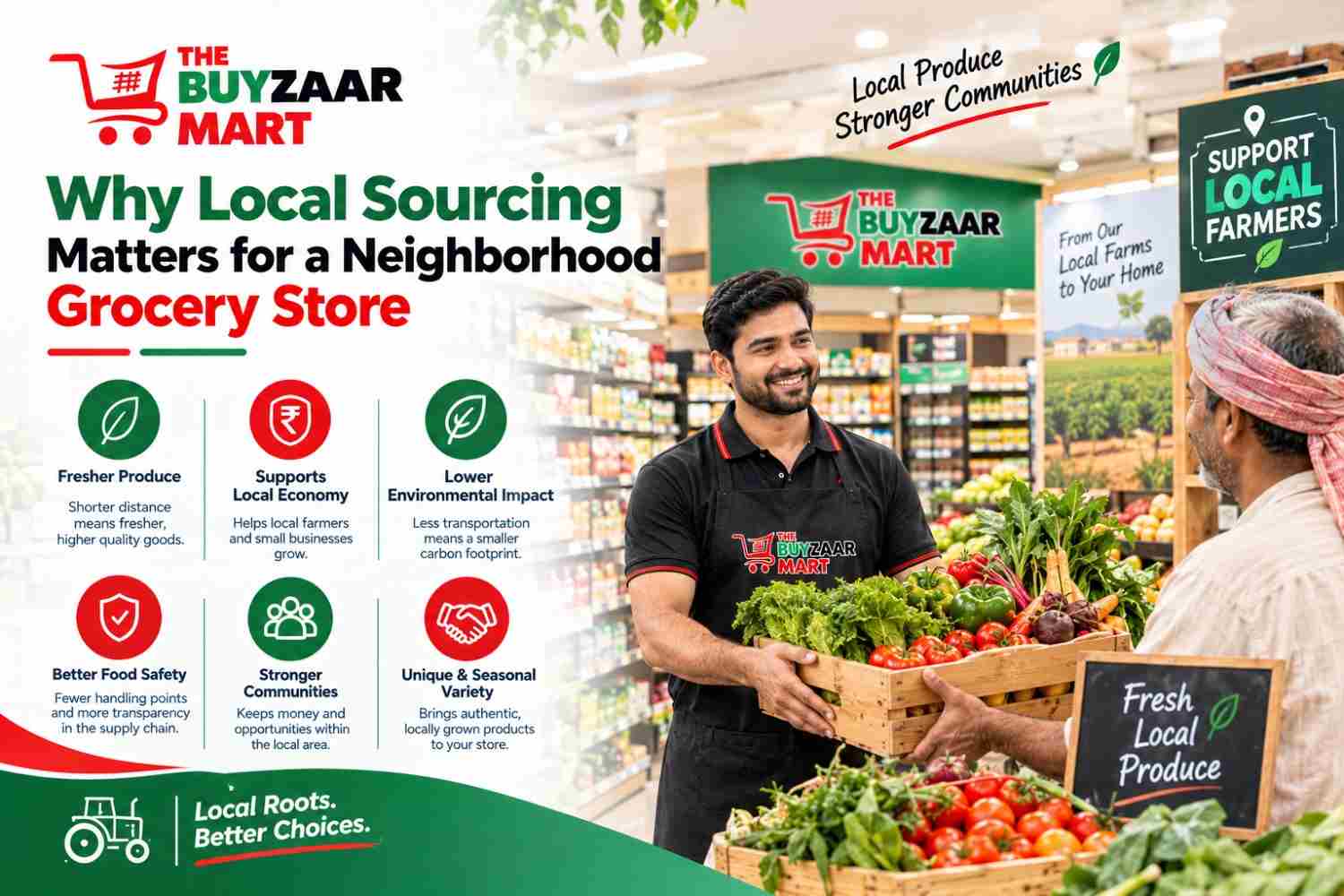
Why Local Sourcing Matters for a Neighborhood Grocery Store
Discover why local sourcing matters for a neighborhood grocery store: fresher produce, lower wastage, loyal customers and stronger margins. Read the guide.
A neighborhood grocery store succeeds when it feels like part of the community, not just a place that sells packets. Customers visit these stores several times a week for daily needs, so freshness, fair pricing and familiarity decide whether they return. Local sourcing means buying produce, dairy, staples, snacks and regional specialities from nearby farmers, producers and suppliers instead of relying only on distant supply chains. This approach supports faster stock movement, lower wastage and stronger customer trust, which directly improve store profitability. At The Buyzaar Mart, the 'Your Friendly Neighborhood Store' idea works best when the shelves reflect what the neighborhood actually eats.
What Local Sourcing Really Means for a Grocery Store
Defining Local Sourcing
- •Local sourcing is buying from farms, dairies, small manufacturers and wholesalers located in the same city, district or nearby region.
- •It covers fresh fruits and vegetables, milk and paneer, regional snacks, pickles, spices, pulses and seasonal specialities.
- •It does not replace national FMCG brands. It works alongside them to complete the range.
Local Sourcing vs Fully Centralized Buying
- •Centralized buying gives consistency and scale, especially for packaged FMCG products.
- •Local buying gives freshness, flexibility and regional relevance, especially for perishables and taste-driven items.
- •The strongest neighborhood stores combine both: reliable branded supply plus a locally relevant range.
Fresher Products and Better Quality on Every Shelf
Shorter Journey from Farm to Shelf
- •Produce that travels a short distance spends less time in transit, so it reaches the shelf in better condition.
- •Fruits and vegetables stay crisp longer, which helps stores keep display quality high through the day.
- •Dairy and bakery items arrive closer to their production date, giving customers longer usable life at home.
Easier Quality Checks
- •Store owners can personally inspect nearby suppliers, visit their units and build direct accountability.
- •Quality complaints can be resolved quickly because the supplier is a short drive away.
- •Regular supplier reviews help the store maintain FSSAI-aligned handling and storage standards.
Lower Wastage and Smarter Inventory Control
Smaller, More Frequent Deliveries
- •Local suppliers can deliver in smaller lots, so stores do not have to over-order and risk spoilage.
- •Frequent replenishment keeps shelves full without locking up too much cash in stock.
- •Fast-moving perishables like vegetables, milk and bread benefit the most from this rhythm.
Better Demand Matching
- •Nearby suppliers understand local festivals, weddings, weather patterns and seasonal buying habits.
- •Stores can adjust orders quickly when demand shifts, instead of waiting for long supply cycles.
- •Less unsold stock means lower markdowns, lower write-offs and healthier gross margins.
Stronger Margins and Fair Pricing
Reduced Logistics Cost
- •Shorter transport distances usually mean lower freight, handling and cold-chain costs for perishables.
- •Fewer middlemen in the chain can leave room for better buying rates.
- •Savings can be shared with shoppers through value pricing or kept to protect store margins.
Value-Conscious Pricing That Customers Notice
- •Households compare prices closely for daily-use items such as vegetables, milk and staples.
- •Competitive pricing on local fresh items builds footfall, and that footfall lifts sales of packaged goods too.
- •The Buyzaar Mart model highlights affordable pricing and an effective gross margin of 18–20%, and a smart local range supports that balance.
Building Community Trust and Customer Loyalty
A Store That Reflects the Neighborhood
- •Shoppers feel proud and comfortable when they see familiar local brands, regional flavours and nearby farm produce on display.
- •Labels such as 'sourced locally' or 'from nearby farms' give customers a clear reason to choose your store over a faceless alternative.
- •Familiarity turns first-time visitors into regular weekly shoppers.
Word-of-Mouth That Money Cannot Buy
- •Satisfied customers talk about fresh produce and fair prices in housing societies, markets and family groups.
- •Local suppliers and their families often become loyal customers and informal ambassadors for the store.
- •Strong word-of-mouth reduces dependence on paid advertising, especially in the early months of a new store.
Supporting the Local Economy
Keeping Money in the Community
- •When a store buys from nearby farmers and small producers, more of the spend stays within the local economy.
- •Steady orders help small suppliers plan production, hire staff and invest in better quality.
- •A healthier local supplier base creates a more reliable supply for the store in the long run.
Purpose That Resonates with Customers
- •Many customers prefer shopping at stores that support local livelihoods.
- •This purpose-driven positioning matches the Buyzaar Mart mission of empowering communities through neighbourhood retail ownership.
- •It strengthens the store's brand story on social media, in-store signage and local marketing.
Matching Local Taste and Regional Preferences
Every Neighborhood Eats Differently
- •Preferences for spices, pulses, pickles, sweets and snacks change from one city and district to another.
- •Local sourcing helps the store stock regional favourites that national brands may not cover well.
- •Seasonal and festival items, from winter greens to festive sweets, sell faster when sourced close to home.
Localized Product Flexibility in Practice
- •A flexible product range lets the store respond to what customers ask for most.
- •Tracking sales through POS billing shows which local items move fast and which need to be reduced.
- •Over time, the store builds a range that is unique to its catchment area.
Challenges of Local Sourcing and How to Manage Them
Consistency and Capacity
- •Small suppliers may struggle with volume during peak seasons. Keep a backup supplier for every critical item.
- •Agree on quality standards, packaging norms and delivery timings in writing.
Compliance and Food Safety
- •Choose suppliers who follow FSSAI norms for packaged and processed food.
- •Check labels, batch details, expiry dates and storage conditions at every delivery.
- •Maintain clean receiving, storage and display practices to protect customer health and trust.
Pricing and Payment Discipline
- •Fix rates and review them regularly, so both sides stay fair during price swings.
- •Pay local suppliers on time. Reliable payment earns priority supply and better terms.
How a Franchise Network Balances Branded Range and Local Flexibility
- •A structured retail network gives owners tested systems for purchasing, inventory, billing and supply chain, so they can focus on running the store.
- •Buyzaar Mart partners with leading FMCG brands, which covers the dependable packaged range customers expect.
- •Localized product flexibility allows each store to add region-specific items on top of that core range.
- •POS-enabled billing and CRM give owners data on what sells, who buys and when, so local sourcing decisions are based on facts and not guesswork.
- •Training and ongoing support help owners set up supplier checks, stocking routines and hygiene practices from day one.
Practical Tips for Store Owners Starting with Local Sourcing
- •Start with five to ten high-turnover local items, such as vegetables, milk, bread, eggs and regional snacks.
- •Visit supplier units in person before placing the first order.
- •Track sales and wastage weekly, then scale up the items that perform well.
- •Display local products at eye level with clear signage, so customers notice them quickly.
- •Collect customer feedback at the billing counter and adjust the range accordingly.
- •Review each supplier every quarter on quality, price, delivery time and responsiveness.
Final Thoughts
- •Local sourcing is a practical business strategy: it delivers fresher products, lower wastage, fairer pricing and a loyal customer base.
- •It also strengthens the community, which is the foundation of every successful neighborhood grocery store.
- •The best results come from combining trusted national brands with carefully selected local suppliers, backed by good systems and clear quality standards.
- •Aspiring store owners who want a proven retail model with this flexibility can explore the franchise opportunities at The Buyzaar Mart.
Frequently Asked Questions
Q1. What is local sourcing in a grocery store?
It means buying products from nearby farmers, dairies and small producers instead of depending only on distant suppliers.
Q2. Does local sourcing reduce grocery store wastage?
Yes. Smaller, frequent deliveries and better demand matching mean less spoilage and fewer unsold items.
Q3. Is local sourcing cheaper for a neighborhood grocery store?
Often, yes. Lower transport costs and fewer middlemen can improve buying rates, especially on perishables.
Q4. Should a store stop selling national brands?
No. A balanced mix of trusted FMCG brands and local products serves customers best.
Q5. How can a store check the quality of local suppliers?
Visit their units, check FSSAI compliance, inspect each delivery and review suppliers regularly.
Related Articles
What is FOCM Franchise Model? Complete Guide for Investors
The FOCM Franchise Model — Franchise Owned, Company Managed — is reshaping how investors enter organized retail in India. Learn how Buyzaar Mart's structured system works.

Buyzaar Mart vs Traditional Kirana Store – Which is More Profitable?
Is a traditional kirana store still the most profitable option, or does an organized retail format like Buyzaar Mart offer better long-term growth? A detailed comparison of both retail models.

How to Apply for a Buyzaar Mart Franchise: Step-by-Step Process (2026)
Want to open a Buyzaar Mart franchise in India? Read our complete 2026 step-by-step guide covering eligibility, investment, documentation, and store launch process.