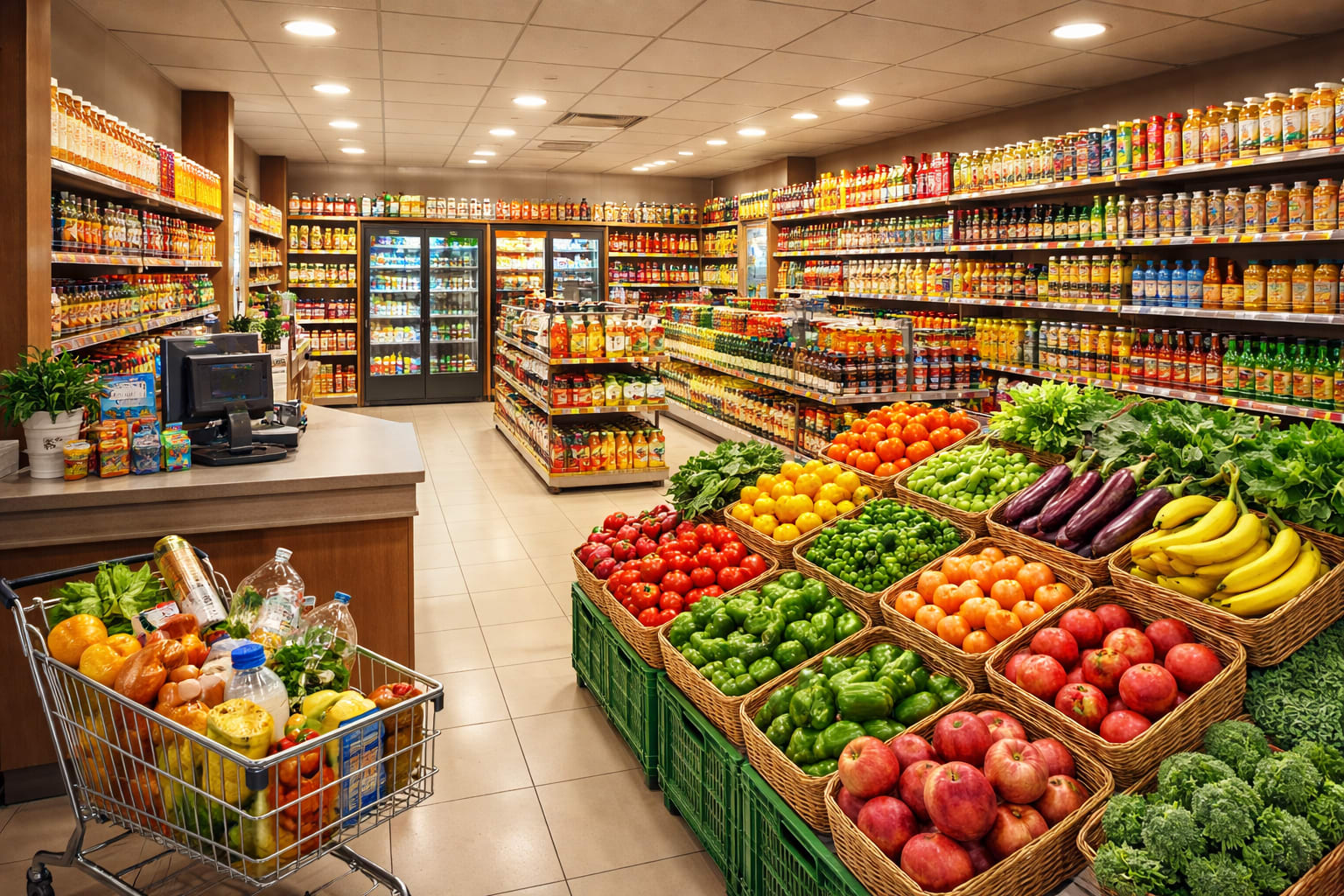
Supermarket Franchise Profit Margin in India
Supermarket Franchise Profit Margin in India – Buyzaar Mart
One of the most common questions prospective entrepreneurs ask before investing in a retail business is: "What kind of profit margin can I expect?" Understanding profit margins is essential for evaluating whether a supermarket franchise is a financially sound investment. This article breaks down how profit margins work in the Indian supermarket sector and what factors influence profitability for a Buyzaar Mart franchise, presented in an easy-to-follow, point-wise format.
Understanding Profit Margins in Retail
- Profit margin in retail generally refers to the difference between the selling price of a product and its cost price, expressed as a percentage of the selling price.
- In supermarket retail, there are typically two types of margins to consider: gross margin before operating expenses and net margin after all expenses, including rent, salaries, and utilities.
- Gross margin reflects how much money is made purely from buying and selling products, while net margin reflects actual take-home profitability after running the store.
- Profit margins in supermarket retail vary significantly by product category, with packaged FMCG goods typically offering lower margins and categories like fresh produce, bakery, or private-label products often offering higher margins.
- Since supermarkets sell a wide product mix, the overall store margin is usually a blended average across categories rather than a single fixed number.
Typical Profit Margin Ranges in Indian Supermarket Retail
- Staple groceries and packaged FMCG products such as rice, atta, oil, and packaged snacks generally carry lower margins, often in the single digits to low double digits, due to intense price competition and price-controlled categories.
- Personal care and household products may offer moderately higher margins compared to staple groceries.
- Fresh produce, dairy, and bakery items can offer relatively higher margins but come with higher wastage risk due to shorter shelf life.
- Private-label or store-brand products, where available, generally offer better margins compared to established third-party brands, since there's no intermediary brand markup.
- Overall, most organised supermarket formats in India work with blended gross margins that support profitability when combined with efficient inventory management and reasonable operating costs.
- Net margins after accounting for rent, staff salaries, utilities, and other overheads are naturally lower than gross margins and depend heavily on how well the store is managed.
Key Factors That Influence Franchise Profitability
- Store Location: High-footfall locations near residential societies, offices, or busy market areas typically drive better sales volumes, which directly impacts overall profitability.
- Store Size and Format: Larger formats can carry a wider product range and higher sales volume but also come with higher fixed costs like rent and staffing.
- Rental Costs: Since rent is often one of the largest fixed expenses, choosing a location with reasonable rental rates relative to expected footfall is critical for maintaining healthy margins.
- Inventory Management: Efficient stock management reduces wastage, minimises dead stock, and ensures better cash flow, all of which improve net profitability.
- Product Mix: A well-balanced product mix that includes higher-margin categories alongside high-footfall staple items can help improve overall store profitability.
- Operational Efficiency: Streamlined billing, staffing, and store operations reduce unnecessary costs and improve the bottom line.
- Local Competition: The presence of other organised or unorganised retail competitors in the vicinity can affect pricing flexibility and footfall.
- Supply Chain Efficiency: Access to a reliable, cost-effective supply chain helps maintain consistent stock availability at competitive procurement costs, supporting better margins.
Why the Buyzaar Mart Franchise Model Supports Better Profitability
- Established Supply Chain: Franchise partners gain access to Buyzaar Mart's vendor and distribution network, which can help maintain competitive procurement costs.
- Standardised Operations: A structured store format and standard operating procedures help minimise operational inefficiencies that often eat into profits in unorganised retail setups.
- Technology-Enabled Inventory Management: POS and inventory tracking tools help franchisees monitor stock levels, reduce wastage, and identify fast-moving versus slow-moving products.
- Brand Recognition: An established brand name can help drive consistent footfall, supporting better sales volumes compared to starting an independent, unbranded store.
- Training and Guidance: Franchisees receive operational training that helps avoid common pitfalls in inventory management, staffing, and store operations that can otherwise erode margins.
- Multiple Store Formats: The ability to choose between Mini Mart, Super Mart, and Hyper Mart formats allows entrepreneurs to match their investment and expected footfall with an appropriately sized store, optimising the cost-to-revenue ratio.
Store Formats and Investment Overview
Choosing the right store format is closely tied to expected profitability, as it determines fixed costs, product range, and potential sales volume.
- Mini Mart (600 – 1,000 sq. ft.): Total Investment starting at ₹15,25,000 (for a 600 sq. ft. store)
- Super Mart (1,001 – 3,000 sq. ft.): Total Investment starting at ₹26,63,407 (for a 1,001 sq. ft. store)
- Hyper Mart (3,001 – 8,000 sq. ft.): Total Investment starting at ₹78,89,960 (for a 3,001 sq. ft. store)
How to Estimate Potential Profitability Before Investing
- Request historical sales and profitability data, if available, from the franchise team for existing outlets in comparable locations.
- Estimate expected daily footfall and average transaction value based on the chosen location's residential or commercial density.
- Factor in all fixed costs, including rent, staff salaries, utilities, and maintenance, when calculating expected net margin.
- Account for seasonal fluctuations, as certain months such as festive seasons or back-to-school periods may see higher sales volumes than others.
- Build a conservative financial model with realistic assumptions rather than relying solely on optimistic projections.
- Consult with the Buyzaar Mart franchise team to understand typical break-even timelines and ROI expectations based on store format and location.
Common Mistakes That Hurt Profit Margins
- Choosing a location with high rental costs but insufficient footfall to justify the expense.
- Overstocking slow-moving products, leading to capital being tied up in dead stock.
- Ignoring wastage in perishable categories like fresh produce and dairy due to poor inventory rotation.
- Failing to monitor competitor pricing, resulting in either overpricing that loses customers or underpricing that erodes margins.
- Inadequate staff training, leading to billing errors, poor customer service, or inefficient store operations.
- Not leveraging available technology tools for inventory and sales tracking, resulting in delayed identification of profitability issues.
Tips to Improve Profit Margins as a Franchisee
- Focus on optimising the product mix by balancing high-footfall staples with relatively higher-margin categories.
- Regularly review sales data to identify and phase out consistently underperforming products.
- Negotiate favourable rental terms and consider locations with growth potential rather than only current footfall.
- Implement efficient staff scheduling to control labour costs without compromising customer service.
- Take advantage of brand-supported marketing initiatives to drive footfall without significant additional local marketing spend.
- Maintain strong communication with the franchise support team to stay updated on best practices and new product opportunities.
Profit margins in the Indian supermarket sector depend on a combination of product mix, location, operational efficiency, and effective inventory management. While staple grocery items typically offer thinner margins, a well-managed store with the right product mix, efficient operations, and strong footfall can achieve healthy overall profitability. The Buyzaar Mart franchise model is designed to support franchisees in maximising profitability through brand support, supply chain access, technology integration, and operational training. For entrepreneurs looking to enter the organised retail space with a structured, profit-focused business model, a Buyzaar Mart franchise offers a promising path forward.
Frequently Asked Questions (FAQs)
1. What is a typical profit margin for a supermarket in India?
Margins vary by category — staple groceries generally have lower margins, while fresh produce, personal care, and private-label products can offer relatively higher margins.
2. Does store location affect profit margin?
Yes, high-footfall locations with reasonable rental costs generally support better overall profitability.
3. Which product categories offer the best margins?
Fresh produce, dairy, personal care, and private-label products typically offer better margins than staple packaged groceries.
4. How does the Buyzaar Mart franchise support profitability?
Through established supply chain access, standardised operations, technology-enabled inventory management, and brand-driven footfall.
5. What store formats does Buyzaar Mart offer?
Mini Mart, Super Mart, and Hyper Mart formats are available.
6. How much investment is required for a Buyzaar Mart franchise?
Investment starts around ₹15,25,000 for a Mini Mart, ₹26,63,407 for a Super Mart, and ₹78,89,960 for a Hyper Mart.
7. What factors most commonly hurt profit margins?
High rent relative to footfall, overstocking, wastage in perishables, and inefficient store operations are common culprits.
8. How can I estimate profitability before investing?
Review historical sales data if available, estimate footfall and transaction value, and build a conservative financial model including all fixed costs.
9. Do larger store formats guarantee higher profits?
Not necessarily — larger formats have higher fixed costs, so profitability depends on matching store size to actual footfall and demand.
10. How can I get more details on franchise profitability?
Contact the Buyzaar Mart franchise team directly for a detailed cost breakdown and ROI discussion specific to your chosen location.
Build a Profitable Supermarket Business
Buyzaar Mart's supermarket franchise model is designed to help entrepreneurs understand costs, manage margins, and build a profitable retail business with support.
Join the Buyzaar Mart network and explore a structured, profit-focused retail opportunity backed by training, technology, and supply chain access.
Email: info@thebuyzaarmart.com
Phone / WhatsApp: 9217991727
Business Hours: Monday to Saturday, 09:00 AM – 07:00 PM

Store Features & Services
Discover our comprehensive range of services designed to provide the best shopping experience for urban and semi-urban households















Wide Product Range
Daily-need items under one roof!

Affordable Pricing
Value-conscious pricing strategy!

POS-Enabled Billing System
Modern point-of-sale technology!

Customer Relationship Management (CRM)
Building lasting customer relationships!

Uniform Branding & Store Design
Consistent professional identity!
Localized Product Flexibility
Adapted to local preferences!