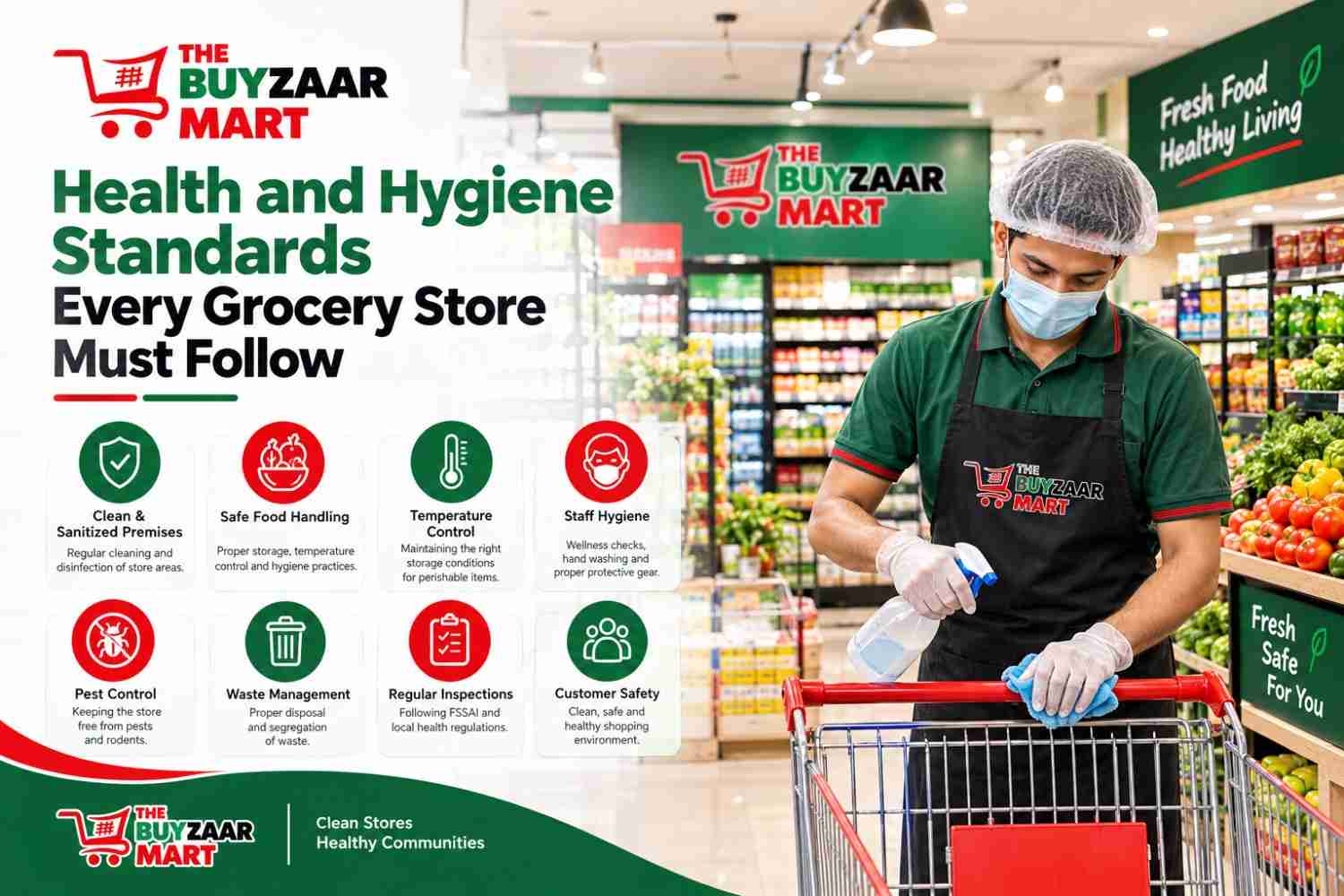
Health & Hygiene Standards Every Grocery Store Must Follow
Learn essential grocery store hygiene standards, from FSSAI compliance and safe storage to staff hygiene and pest control, to build customer trust.
Customers walk into a grocery store expecting more than just products on shelves. They expect clean floors, fresh produce, properly stored dairy, and staff who handle food responsibly. For grocery store owners and franchise operators, health and hygiene standards are not just a compliance formality. They directly shape customer trust, repeat footfall, brand reputation, and long-term profitability. This guide covers the essential health, hygiene, and food safety standards every grocery store, from a neighborhood Mini Mart to a large Hyper Mart, should follow consistently.
Why Hygiene Standards Matter for Grocery Stores
- •Customers now judge a store within seconds of entering, and visible cleanliness is one of the strongest signals of product quality and trustworthiness
- •Poor hygiene leads to product spoilage, contamination risks, customer complaints, and potential legal action or license issues
- •Franchise brands depend on consistency, so a single outlet with weak hygiene practices can damage the reputation of the entire network
- •Clean, well-maintained stores see longer customer dwell time, higher repeat visits, and stronger word-of-mouth referrals
- •Good hygiene practices reduce wastage, since properly stored and handled products last longer and sell better
FSSAI Compliance: The Legal Foundation
- •Every grocery store selling food products must hold a valid FSSAI registration or license, depending on the store's turnover and scale of operations
- •The FSSAI license number should be displayed prominently at the store, so customers and inspectors can verify compliance easily
- •Stores must follow FSSAI guidelines on food storage, labeling, handling, and sanitation as applicable to their category of business
- •Keep licenses, renewals, and inspection records organized and accessible at all times
- •Stay updated on regulatory changes, since food safety rules and display requirements are revised from time to time
Store Cleanliness: Daily Housekeeping Standards
- •Sweep and mop floors multiple times a day, especially during peak hours and after fresh produce restocking
- •Clean shelves, racks, and display units on a scheduled rotation to prevent dust buildup and pest attraction
- •Wipe billing counters, weighing scales, and card machines regularly, since these are high-touch surfaces
- •Keep entrances, glass doors, and signage clean, because they shape the customer's first impression
- •Maintain clean, well-stocked restrooms for staff, and for customers where facilities are available
- •Dispose of waste in covered bins and remove garbage frequently so it never sits near food areas
Safe Storage Practices for Different Product Categories
- •Dry groceries and staples: store on raised racks away from walls and floors, in dry, well-ventilated areas to prevent moisture, fungus, and pest damage
- •Dairy products: keep in properly working chillers at recommended cold temperatures, and never leave dairy stock unrefrigerated during restocking
- •Frozen foods: maintain consistent deep-freeze temperatures and avoid repeated thawing and refreezing
- •Fresh fruits and vegetables: store in cool, ventilated areas, separate damaged or overripe produce quickly to prevent spoilage from spreading
- •Bakery and ready-to-eat items: keep covered, at proper temperatures, and clearly labeled with dates
- •Non-food items: store cleaning supplies, detergents, and chemicals away from food products to avoid contamination
Expiry Date and Stock Rotation Management
- •Follow FEFO (First-Expiry-First-Out) so products closest to expiry are sold first
- •Check shelves daily for expired or near-expiry items and remove them immediately
- •Never relabel, alter, or extend the expiry date of any product, since this is both illegal and a serious safety risk
- •Train staff to check dates during stock receiving as well as during shelf restocking
- •Keep a simple expiry tracking log, especially for dairy, packaged snacks, baby food, and beverages
Personal Hygiene Standards for Store Staff
- •Require staff to wash hands thoroughly before handling food items, after restroom breaks, and after handling waste
- •Provide clean uniforms, aprons, and where relevant gloves and head coverings for staff handling loose or fresh items
- •Ensure staff with visible illness or infections do not handle food products until they recover
- •Keep nails trimmed and clean, and discourage eating, smoking, or chewing tobacco in food handling areas
- •Set up accessible handwashing stations with soap and sanitizer for staff use throughout the day
- •Conduct periodic hygiene training sessions so standards stay consistent as new staff join
Pest Control and Sanitation Management
- •Schedule regular professional pest control treatments for rodents, cockroaches, ants, and flying insects
- •Seal gaps, cracks, and drain openings where pests can enter, particularly in storage rooms and back areas
- •Store food products off the floor and away from walls to reduce pest access and make inspection easier
- •Keep drains, gutters, and waste disposal areas clean and treated regularly
- •Maintain a written pest control log to demonstrate compliance during inspections
- •Never store open or damaged packaging, since it is one of the fastest ways to attract pests
Cold Chain and Temperature Monitoring
- •Check and record chiller and freezer temperatures at fixed intervals every day
- •Avoid overloading refrigeration units, since blocked airflow leads to uneven cooling and faster spoilage
- •Keep backup power support ready to protect perishable stock during outages
- •Schedule regular servicing of cooling equipment to prevent unexpected breakdowns
- •Train staff to limit the time refrigerator and freezer doors stay open during restocking
Handling Loose, Open, and Fresh Products Safely
- •Use clean scoops, tongs, and covered containers for loose items like pulses, grains, and dry fruits
- •Keep loose items covered to protect against dust, insects, and customer contact
- •Use food-grade packaging materials for repacked or loose items sold in-store
- •Label repacked products clearly with the date of packing and expiry
- •Avoid reusing old or damaged packaging materials for fresh product packing
Customer-Facing Hygiene Practices
- •Provide sanitizer at entrance and billing counters as a visible hygiene assurance
- •Keep shopping baskets and trolleys clean and wiped regularly
- •Display cleanliness and food safety signage that reassures customers and reinforces store standards
- •Set up clear waste bins for customer use inside and outside the store
- •Address customer hygiene complaints immediately and record the corrective action taken
Building a Culture of Hygiene Across Your Grocery Franchise
- •Create a simple daily hygiene checklist for opening, mid-day, and closing routines
- •Assign clear responsibility for each area, from shelves to storage to restrooms
- •Conduct weekly internal inspections and monthly deeper audits for storage, cold chain, and pest control
- •Recognize and reward staff who consistently maintain high standards
- •Use CCTV and periodic supervisor visits to keep standards consistent, especially in multi-outlet operations
Making Hygiene a Long-Term Brand Advantage
- •Health and hygiene standards are not a one-time setup. They are a daily discipline that shapes how customers see your store. Grocery store owners who treat cleanliness, food safety, and compliance as core business priorities build stronger customer loyalty, avoid costly compliance issues, and create a store environment that customers trust with their family's daily food needs.
Frequently Asked Questions
Q1. Is FSSAI registration mandatory for all grocery stores?
Yes, any store selling food products needs FSSAI registration or a license, depending on its size and turnover.
Q2. How often should a grocery store be cleaned?
Floors and high-touch surfaces should be cleaned several times daily, while shelves and storage areas follow a scheduled routine.
Q3. Why is FEFO important for grocery stores?
It ensures products closest to expiry are sold first, reducing wastage and preventing expired items from reaching customers.
Q4. How often should pest control be done in a grocery store?
Professional pest control should be scheduled regularly, typically monthly or quarterly depending on store size and location.
Q5. What are the hygiene rules for staff handling food?
Staff should wash hands frequently, wear clean uniforms, and avoid handling food while ill.
Q6. Should temperature logs be maintained for chillers and freezers?
Yes, daily temperature records help prevent spoilage and demonstrate compliance during inspections.