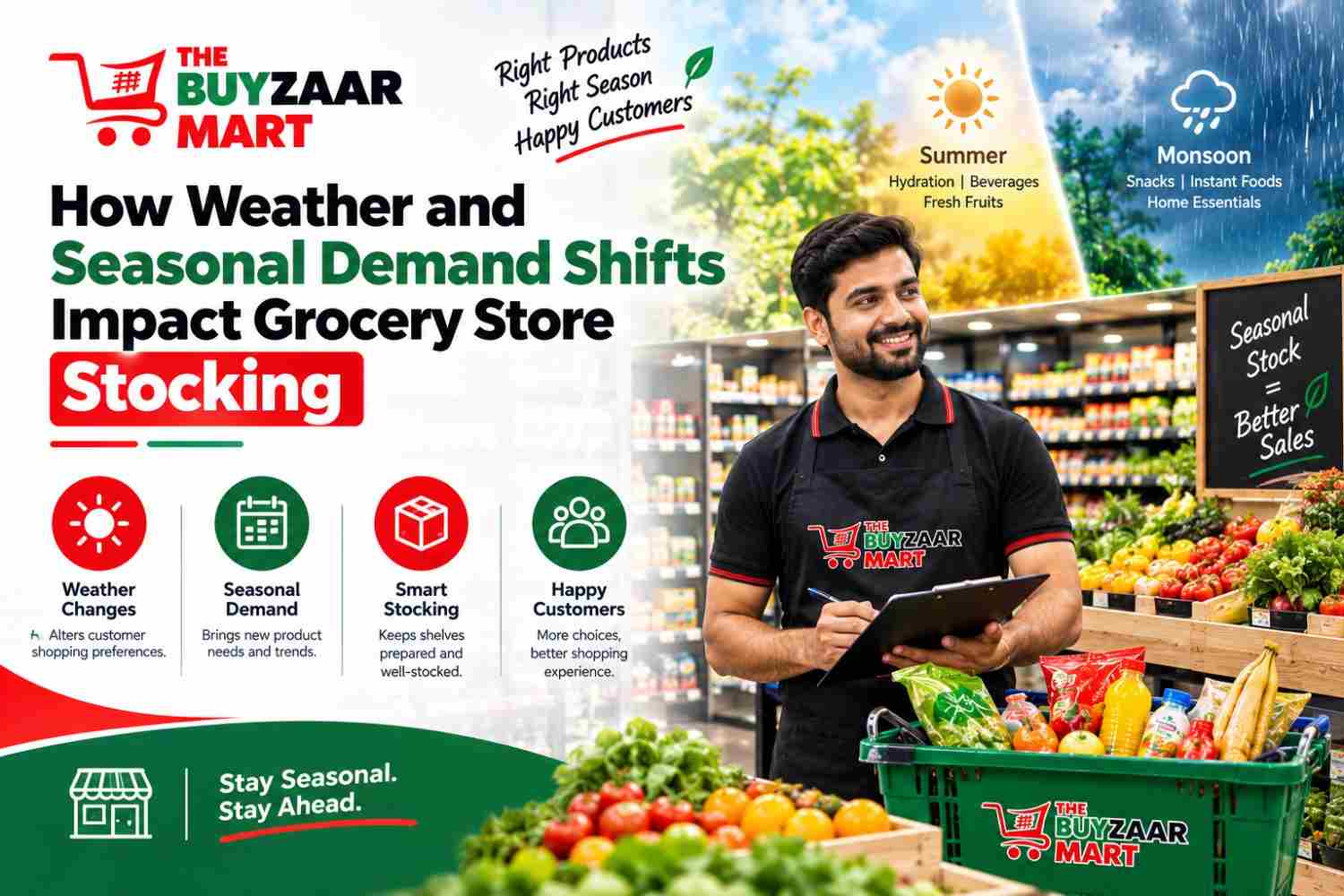
How Weather & Seasonal Demand Shifts Impact Grocery Store Stocking
Learn how weather and seasonal trends affect grocery store stocking, from summer and monsoon demand shifts to festival planning and wastage reduction.
Grocery stores don't sell the same products at the same pace all year round. Temperature swings, monsoon patterns, festival calendars, and seasonal produce cycles all shape what customers buy and when. For store owners, understanding these shifts isn't just useful — it directly affects stock availability, spoilage rates, and profitability. This guide breaks down how weather and seasonal demand patterns influence grocery stocking decisions, and how store owners can plan ahead instead of reacting after the fact.
Why Seasonal Planning Matters for Grocery Retail
- •Grocery demand is inherently cyclical, driven by weather, festivals, school schedules, and agricultural produce cycles
- •Poor seasonal planning leads to two costly outcomes: overstocking items that don't sell and running out of high-demand products at the worst possible time
- •Customers notice when a store consistently has what they need for the season, which builds long-term loyalty and repeat visits
- •Seasonal mismanagement is one of the most common hidden causes of grocery store shrinkage and wastage
- •Store owners who plan stocking around seasonal patterns typically see steadier cash flow instead of sharp demand spikes and slumps
Summer Season: Managing Heat-Driven Demand
- •Cold beverages, ice creams, and frozen items see a sharp rise in demand, requiring adequate freezer and chiller capacity well before peak heat arrives
- •Fresh fruits like watermelon, mango, and muskmelon become high-turnover items, needing frequent restocking and careful handling to avoid spoilage
- •Dehydration-related products — electrolyte drinks, buttermilk, coconut water, and lemon-based items — see consistent demand throughout the season
- •Dairy products require extra attention to cold chain reliability, since summer heat accelerates spoilage risk during transport and storage
- •Reduce stock of heavier, warming food items like certain packaged snacks and ready-to-cook meals that naturally see lower demand in peak summer
Monsoon Season: Handling Humidity and Supply Disruptions
- •Humidity significantly increases spoilage risk for dry groceries, grains, and packaged snacks, making proper storage and ventilation critical
- •Demand rises for hot beverages, instant snacks, and comfort foods as weather cools and rain keeps customers indoors more often
- •Fresh vegetable and fruit supply can become inconsistent due to transport disruptions, so building relationships with multiple local suppliers helps maintain availability
- •Umbrellas, raincoats, and related non-food items, where stocked, see predictable seasonal demand spikes
- •Pest control becomes especially important during monsoon, since humidity attracts insects that can damage stored dry goods
- •Waterproof packaging and elevated storage help protect stock from moisture damage during heavy rainfall periods
Winter Season: Adjusting for Cold-Weather Preferences
- •Demand shifts toward warming foods — dry fruits, ghee, jaggery, and hot beverage ingredients like tea and coffee see noticeable increases
- •Root vegetables and seasonal winter produce become high-turnover items, requiring adjusted shelf space and faster restocking cycles
- •Packaged soups, hot snacks, and comfort food categories typically see a seasonal sales lift
- •Dairy consumption patterns shift, with items like paneer and ghee often seeing higher demand around winter festivals and wedding season
- •Cold-sensitive produce needs careful storage adjustments, since winter temperatures affect certain fruits and vegetables differently than the rest of the year
Festival Seasons: Planning for Demand Spikes
- •Festivals like Diwali, Holi, Chhath Puja, and regional celebrations create sharp, short-term spikes in demand for specific categories — dry fruits, sweets, cooking oils, and gift items
- •Wedding season, which often overlaps with winter months in North India, drives bulk purchasing of staples, dry fruits, and packaged food items
- •Advance ordering and early stock planning for festival-specific items prevents last-minute shortages during peak shopping days
- •Festival packaging and gift-ready product displays can meaningfully boost basket size during these periods
- •Post-festival demand typically drops sharply, so avoiding excess stock of festival-specific items close to the event date reduces unsold inventory risk
Using Historical Sales Data to Predict Seasonal Patterns
- •Reviewing the previous year's sales data for the same season helps identify which categories consistently spike and by how much
- •Tracking week-over-week sales trends as a season approaches allows for gradual stock build-up rather than last-minute bulk ordering
- •Local weather forecasts, especially for extreme heat waves or heavy rainfall periods, can help fine-tune short-term stocking decisions
- •Categorizing products by seasonal sensitivity, high, moderate, or low, helps prioritize which sections need the most active management
- •Comparing regional demand differences is important, since the same season can affect customer behavior differently depending on local climate and culture
Adjusting Store Layout for Seasonal Categories
- •Create temporary, prominent display sections for in-season items, such as summer beverages or festival sweets, to capture impulse purchases
- •Rotate shelf space seasonally so high-demand categories get better visibility during their peak months
- •Use end-cap and entrance displays for seasonal promotions, since these areas get the highest customer visibility
- •Adjust cold storage allocation seasonally, dedicating more chiller space to beverages in summer and less in winter, for example
- •Keep off-season stock minimal and centrally located rather than taking up prime shelf space year-round
Managing Supplier Relationships Around Seasonal Demand
- •Communicate seasonal demand expectations to suppliers in advance, especially for high-turnover categories like fresh produce and dairy
- •Build relationships with multiple suppliers for critical seasonal items, reducing dependency on a single source during supply disruptions
- •Negotiate flexible order quantities during transition periods between seasons, when demand patterns are shifting but not yet fully predictable
- •Coordinate delivery schedules more frequently during peak season for perishables to avoid both shortages and overstocking
- •Maintain open communication with suppliers about local weather disruptions that could affect delivery timelines, particularly during monsoon
Reducing Wastage Through Better Seasonal Forecasting
- •Order perishable stock in smaller, more frequent batches during transition periods when demand patterns are uncertain
- •Apply FEFO (First-Expiry-First-Out) stock rotation more strictly during high-humidity or high-heat periods when spoilage risk increases
- •Use end-of-day or near-expiry discounting for seasonal perishables to recover value instead of writing off unsold stock
- •Track wastage patterns by season to identify recurring problem categories and adjust future ordering accordingly
- •Train staff to recognize early signs of spoilage specific to each season, since heat, humidity, and cold each affect products differently
Turning Seasonal Awareness Into a Competitive Advantage
- •Grocery stores that actively plan around weather and seasonal demand consistently outperform those that stock the same way year-round. Anticipating customer needs before a season peaks — rather than scrambling to restock once demand has already spiked — reduces wastage, improves availability, and builds the kind of reliability that keeps customers coming back throughout the year.
Frequently Asked Questions
Q1. Why does humidity affect grocery store stocking decisions?
Humidity increases spoilage risk for dry groceries and packaged snacks, requiring better storage, ventilation, and pest control.
Q2. What products see the highest demand spike during festivals?
Dry fruits, sweets, cooking oils, and gift items typically see the sharpest festival-driven demand increases.
Q3. How can store owners predict seasonal demand more accurately?
By reviewing historical sales data from the same season in previous years and tracking week-over-week trends.
Q4. Should store layout change with the seasons?
Yes, rotating shelf space and display sections for in-season items improves visibility and boosts seasonal sales.
Q5. How does seasonal planning help reduce grocery store wastage?
It allows smaller, more frequent ordering and stricter stock rotation during high-risk periods, reducing spoilage losses.
Related Articles
Cold Storage & Perishables Management Tips for Grocery Franchises
Learn cold storage best practices, FIFO/FEFO inventory tips & perishables handling strategies to reduce wastage and boost profitability in grocery franchises.
Health & Hygiene Standards Every Grocery Store Must Follow
Learn essential grocery store hygiene standards, from FSSAI compliance and safe storage to staff hygiene and pest control, to build customer trust.