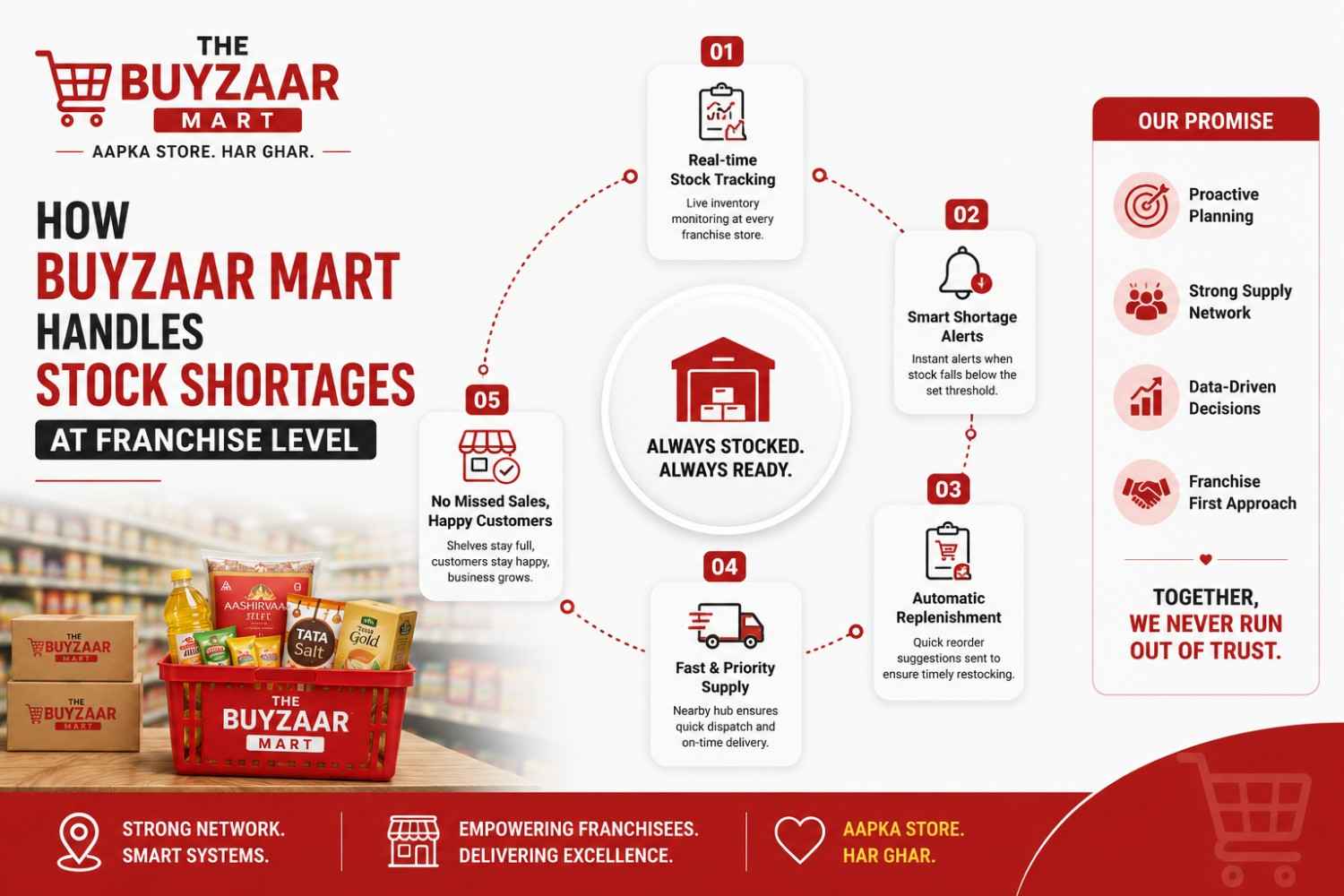
How Buyzaar Mart Handles Stock Shortages at the Franchise Level (2026)
Discover how Buyzaar Mart prevents stock shortages at franchise stores with POS alerts, centralized supply chain, and reorder systems. Apply now.
A customer walks in asking for her usual brand of atta. The shelf is empty. She doesn't wait — she walks to the next store, and quietly starts shifting her weekly shopping habit elsewhere. For an independent kirana owner, this happens silently. For a Buyzaar Mart franchise partner, it's a different story, because stock shortages are engineered out of the business, not left to chance.
Why This Matters
- •Out-of-stock situations cost retailers a significant share of potential sales every year, with the impact felt across organised retail globally
- •A large share of shoppers who hit an empty shelf go straight to a competitor, and many never return
- •A stockout doesn't just cost one sale — it costs the entire basket of items that customer would have bought alongside it
- •Predictive inventory management has meaningfully reduced stockout incidents in India's organized retail sector compared to manual reordering
Why Stock Shortages Happen in Most Grocery Stores
- •Manual stock counts and memory-based reordering, with no alert until the shelf is already empty
- •Dependence on a single local distributor, with no backup if that supplier delays delivery
- •No historical sales data to plan for festivals, salary weeks, or seasonal demand spikes
- •Last-mile delivery gaps that still affect FMCG supply in tier-2 and tier-3 North Indian markets
- •Wrong pack sizes or wrong brand variants stocked, because buying decisions are based on guesswork
Pillar 1: Centralized Supply Chain Partnerships
- •Buyzaar Mart franchise stores are not dependent on one local distributor
- •Direct partnerships with major FMCG brands including Adani Wilmar, ITC, HUL, Nestle, Dabur, Britannia, Patanjali, and Tata Consumer
- •If one supply channel is delayed, the centralized network can source through an alternate route
- •Franchise partners get access to procurement pricing and reliability that individual kirana owners cannot negotiate on their own
Pillar 2: POS-Based Inventory Tracking and Reorder Alerts
- •Every Buyzaar Mart store runs on a POS-enabled billing system that tracks stock in real time
- •A minimum stock threshold is set for every core SKU — when stock drops to that level, a reorder alert is triggered automatically
- •This removes the guesswork that causes most kirana stockouts, where a shortage is only noticed when a customer asks for the product
- •Stores using automated reorder alerts have seen a marked drop in stockout incidents in comparable Indian retail case studies
Pillar 3: Inventory Return and Slow-Moving Stock Support
- •Near-expiry or slow-moving stock can be flagged and managed through Buyzaar Mart's inventory return policy
- •This reduces the risk of franchise capital getting locked into unsold stock
- •It also means franchise partners can stock confidently, including premium or newer variants, without the fear of being stuck with dead inventory
- •This is a major structural advantage over independent kirana owners, who absorb expiry losses entirely on their own
Pillar 4: Demand-Based Stocking by Store Format
- •Franchise stores are categorized into Mini Mart, Super Mart, and Hyper Mart formats based on size
- •Stock planning and reorder quantities are matched to the format and local catchment, rather than a one-size-fits-all approach
- •Pack size and brand mix can be adjusted based on early sales data from the store's own customer base
- •This localized flexibility helps avoid both shortages on fast-moving items and overstocking on items that don't suit that particular locality
What This Means for a Franchise Owner Day to Day
- •You are not personally responsible for chasing distributors or guessing when to reorder
- •The POS system tells you what's running low before the shelf is actually empty
- •The centralized supply chain backs you up if one brand partner has a delay
- •Slow-moving stock has a return pathway instead of becoming a permanent loss
- •The result is a store that customers can rely on for availability — which is the single biggest driver of repeat footfall in Indian grocery retail
Final Thoughts
- •Stock shortages are not just a missed sale — they are a trust problem that can cost a store its regular customers permanently
- •Most kirana stores lose this battle because they're fighting it alone, with no system, no backup supplier, and no real-time visibility
- •Buyzaar Mart franchise partners start with a structural advantage: centralized procurement, POS-driven reorder alerts, return support for slow stock, and format-based planning
- •This is built into the franchise model so a new owner doesn't need prior retail experience to run a well-stocked, reliable store
Stay stocked. Stay trusted. Start your Buyzaar Mart franchise journey at thebuyzaarmart.com/franchise or call 9217991727 (Monday to Saturday, 9 AM to 7 PM)
Frequently Asked Questions
How does Buyzaar Mart prevent stockouts at franchise stores?
Through POS-based reorder alerts, centralized FMCG supply partnerships, and inventory return support for slow-moving or near-expiry stock.
What happens if a local distributor delays delivery?
Buyzaar Mart's centralized procurement network sources through alternate channels, so franchise stores aren't dependent on one single supplier.
Can franchise owners return unsold or near-expiry stock?
Yes, Buyzaar Mart's inventory return policy helps franchise partners manage slow-moving stock without absorbing the full capital loss.
Do I need retail experience to manage stock effectively?
No, the POS system and centralized supply chain handle most reorder decisions, making it manageable for first-time entrepreneurs.
How is stocking different across Mini Mart, Super Mart, and Hyper Mart?
Reorder quantities and pack-size mix are matched to store format and local catchment area demand patterns.
Related Articles
Why Staples (Atta, Rice, Dal) Still Drive the Highest Volume in Indian Grocery Stores (2026)
Atta, rice, and dal are not glamorous — but they are the backbone of every profitable Indian grocery store. Discover why staples drive the highest volume, build repeat footfall, and why no grocery franchise can afford to get them wrong.
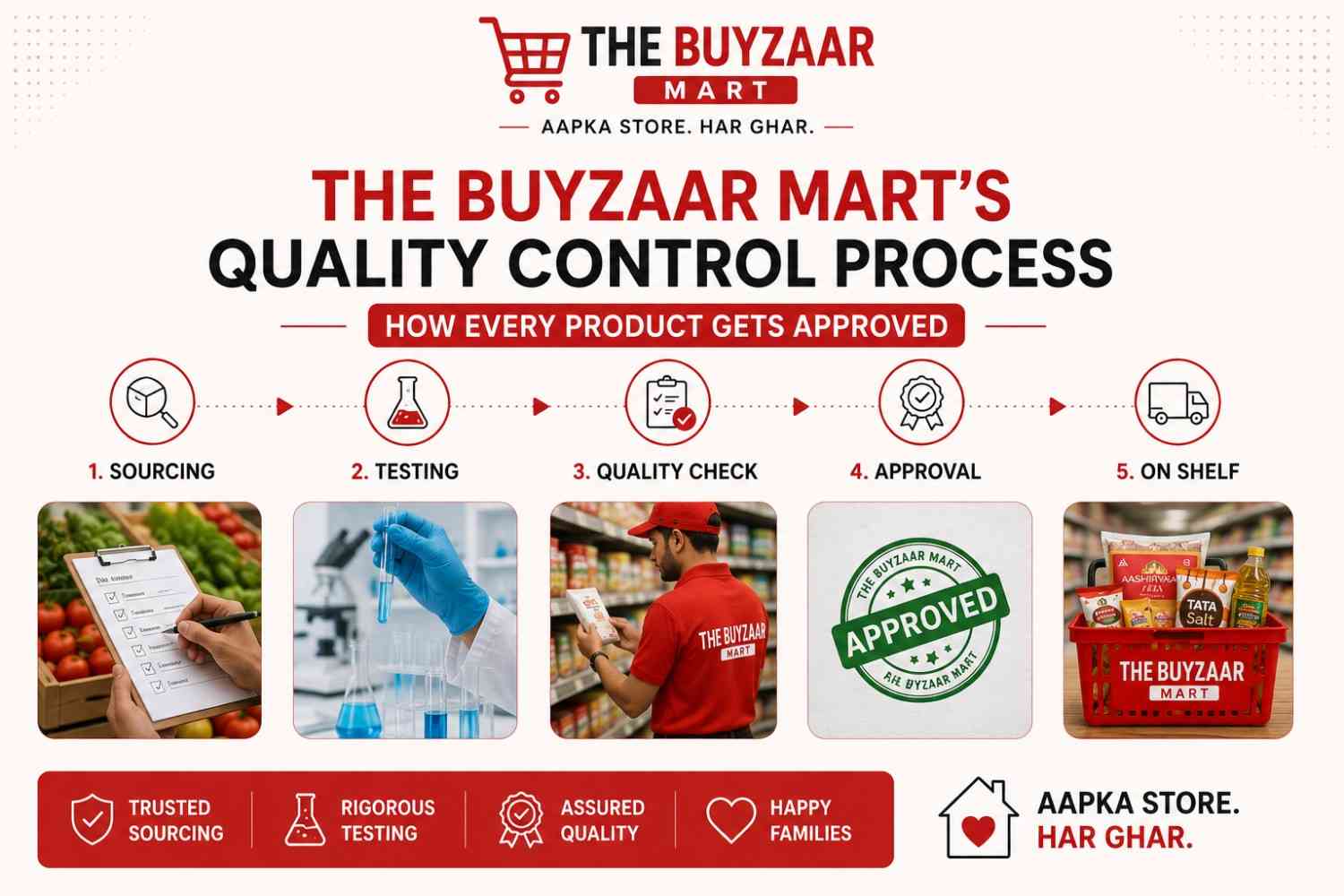
Buyzaar Mart's Quality Control Process: How Every Product Gets Approved (2026)
Ever wondered how Buyzaar Mart decides which products make it to the shelf? Discover the end-to-end quality control process that ensures every product in a Buyzaar Mart franchise store meets the highest standards of safety, authenticity, and customer trust.