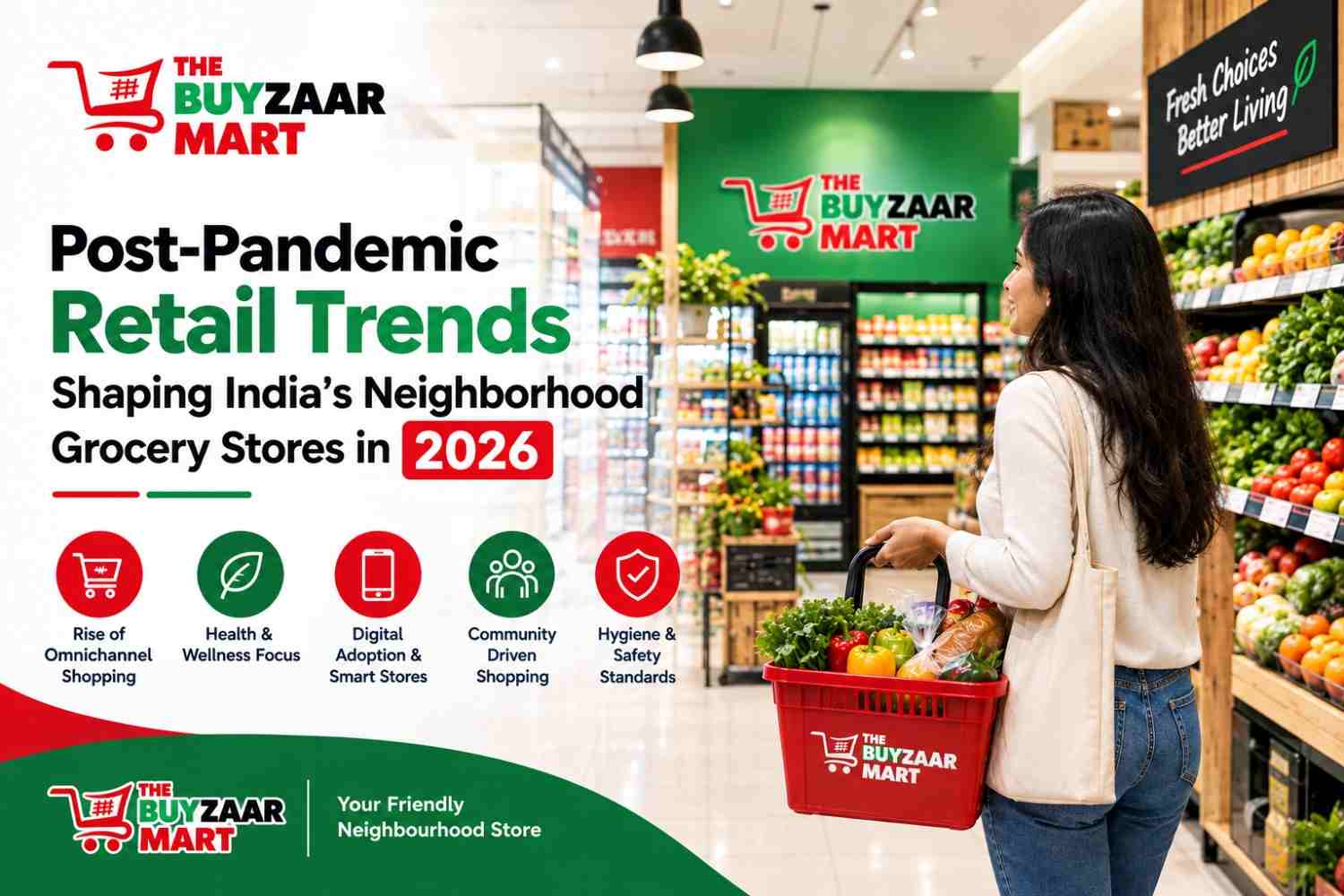
Post-Pandemic Retail Trends Shaping India's Neighborhood Grocery Stores in 2026
Explore key 2026 retail trends transforming India's neighborhood grocery stores — quick commerce, private label, technology adoption & franchise growth.
The neighborhood grocery store in India has changed more in the last few years than in the previous two decades combined. What began as a pandemic-driven shift toward local, trusted shopping has evolved into a lasting transformation of how small and mid-sized grocery formats operate, compete, and grow. For store owners and franchise operators, understanding these shifts isn't optional — it's central to staying relevant in 2026's retail landscape. Here's a detailed look at the trends reshaping neighborhood grocery retail in India this year, and what store owners need to do about them.
The New Baseline: Local Grocers Are Still Growing, But Growth Is Maturing
- •Small local grocers in India saw steady but slightly softer growth in 2025, with sales reaching around INR 33.24 trillion, up 9% from the previous year
- •This signals a maturing, more price-conscious retail environment rather than a slowdown — customers are still shopping locally, but they're more deliberate about value
- •Kirana and mom-and-pop stores continue to account for the large majority of India's consumer goods market, proving that neighborhood retail remains deeply embedded in how Indian households shop
- •The takeaway for store owners: local trust and convenience remain powerful, but pricing strategy and value communication now matter more than ever
Quick Commerce Has Changed Customer Expectations, Not Replaced Local Stores
- •Rapid delivery platforms have raised customer expectations around speed and convenience, pushing neighborhood stores to rethink their own service speed
- •Rather than competing purely on delivery time, successful local grocery stores are focusing on same-day, hyperlocal fulfillment and strong in-store experience as differentiators
- •Customers increasingly use quick commerce for emergency top-ups while continuing to rely on neighborhood stores for their main weekly or monthly grocery runs
- •Offering a simple, reliable local delivery option — even a basic phone-order or WhatsApp-based system — helps small stores stay competitive without heavy tech investment
Private Label and Value-Driven Products Are Reshaping Store Shelves
- •Retailers across formats are expanding private label ranges to strengthen customer loyalty and improve margins in a value-conscious market
- •Value-driven consumption is reshaping product mix and accelerating format adaptation across Indian retail
- •For neighborhood and franchise grocery stores, stocking a well-curated selection of value-focused and private label products can improve both affordability perception and margin health
- •Store owners should track which categories customers are trading down in, and adjust shelf space accordingly rather than assuming demand patterns from previous years still hold
Rural and Tier-2/3 Shoppers Are Doubling Down on In-Store Shopping
- •A recent survey found that 67% of rural shoppers still favor in-store shopping over online alternatives, underlining the continued strength of physical retail outside major metros
- •This makes smaller-format grocery stores in tier-2 and tier-3 cities a strong growth opportunity for franchise expansion in 2026
- •Store owners in these markets should prioritize familiar, trust-driven service — knowledgeable staff, consistent stock availability, and personal relationships with regular customers
- •Neighborhoods in the National Capital Region are increasingly being flagged as important retail hubs to watch, suggesting continued residential retail growth around major metro peripheries
Technology Adoption Is Now a Competitive Necessity, Not a Luxury
- •A growing share of Indian retailers now see technology as central to staying competitive, and this extends well beyond large-format stores
- •Basic digital billing, inventory tracking, and simple customer data tools are becoming standard expectations even in small neighborhood stores
- •Indian retailers are increasingly adopting AI-driven tools for tasks like demand forecasting, inventory planning, and customer insights
- •For grocery franchise owners, this means evaluating whether their current POS and billing systems can support real-time inventory visibility, sales analytics, and low-stock alerts
Store Formats Are Adapting to Smaller Basket, Higher-Frequency Shopping
- •Post-pandemic shopping habits shifted toward smaller, more frequent purchases rather than large weekly stock-ups, and this pattern has largely stuck
- •Grocery formats are responding with tighter store layouts optimized for quick, efficient visits rather than long browsing sessions
- •Fresh and daily-use categories — dairy, bread, fruits, and vegetables — are seeing more consistent daily footfall, making their in-store placement and freshness management increasingly important
- •Smaller basket sizes with higher visit frequency also mean loyalty and repeat-visit strategies now matter more than one-time promotional discounts
Health, Hygiene, and Transparency Remain Long-Term Priorities
- •Convenience and safety continue to weigh heavily in consumers' food purchase decisions, a habit that has outlasted the pandemic itself
- •Customers increasingly expect visible cleanliness standards, proper food handling practices, and clear labeling, especially for fresh and packaged food categories
- •Grocery stores that visibly maintain hygiene standards — clean storage areas, proper staff practices, and organized shelving — continue to build stronger customer trust than those competing on price alone
- •Transparent sourcing and freshness communication, even through simple in-store signage, helps build differentiation in increasingly competitive local markets
Retail Real Estate Growth Is Fueling New Franchise Opportunities
- •India's retail real estate leasing activity remained strong through the first half of 2026, with continued expansion into suburban and peripheral corridors
- •This decentralization trend is pushing retail development beyond core metro areas into growing residential neighborhoods
- •For grocery franchise brands, this signals strong opportunity in emerging residential catchments where organized retail presence is still limited
- •Store owners evaluating expansion should watch peripheral growth corridors around major cities, where rental costs remain more manageable than core urban centers
What This Means for Grocery Franchise Owners in 2026
- •Focus on value-driven merchandising without compromising on quality or trust, since price sensitivity is rising but brand trust still drives loyalty
- •Invest in basic technology upgrades — billing, inventory, and simple customer engagement tools — to stay competitive with both larger chains and quick commerce platforms
- •Prioritize hygiene, freshness, and transparent operations as long-term differentiators rather than short-term promotional tactics
- •Consider expansion into growing residential and tier-2/3 markets where in-store shopping preference remains strong
- •Stay adaptable to smaller, more frequent shopping patterns by optimizing store layout and daily-use category management
Staying Ahead in a Changing Retail Landscape
- •Neighborhood grocery retail in India isn't shrinking — it's evolving. Store and franchise owners who adapt to value-conscious shopping, invest in the right technology, and maintain strong local trust will be best positioned to grow through 2026 and beyond, even as competition from quick commerce and organized retail continues to intensify.
Frequently Asked Questions
Q1. Is quick commerce replacing neighborhood grocery stores in India?
No, quick commerce is changing customer expectations around speed, but neighborhood stores remain central to regular, trust-based grocery shopping.
Q2. Why is private label important for grocery stores in 2026?
Private label products help improve margins and offer value-conscious customers affordable alternatives without compromising store loyalty.
Q3. Are rural and tier-2 markets a good opportunity for grocery franchise expansion?
Yes, in-store shopping preference remains strong in these markets, making them attractive for franchise growth in 2026.
Q4. Do small grocery stores really need technology upgrades?
Yes, basic digital billing and inventory tools are increasingly essential for staying competitive, even for small-format stores.
Q5. What shopping pattern shift should grocery stores plan around in 2026?
Smaller, more frequent purchases rather than large weekly stock-ups, requiring layout and stocking adjustments for daily-use categories.
