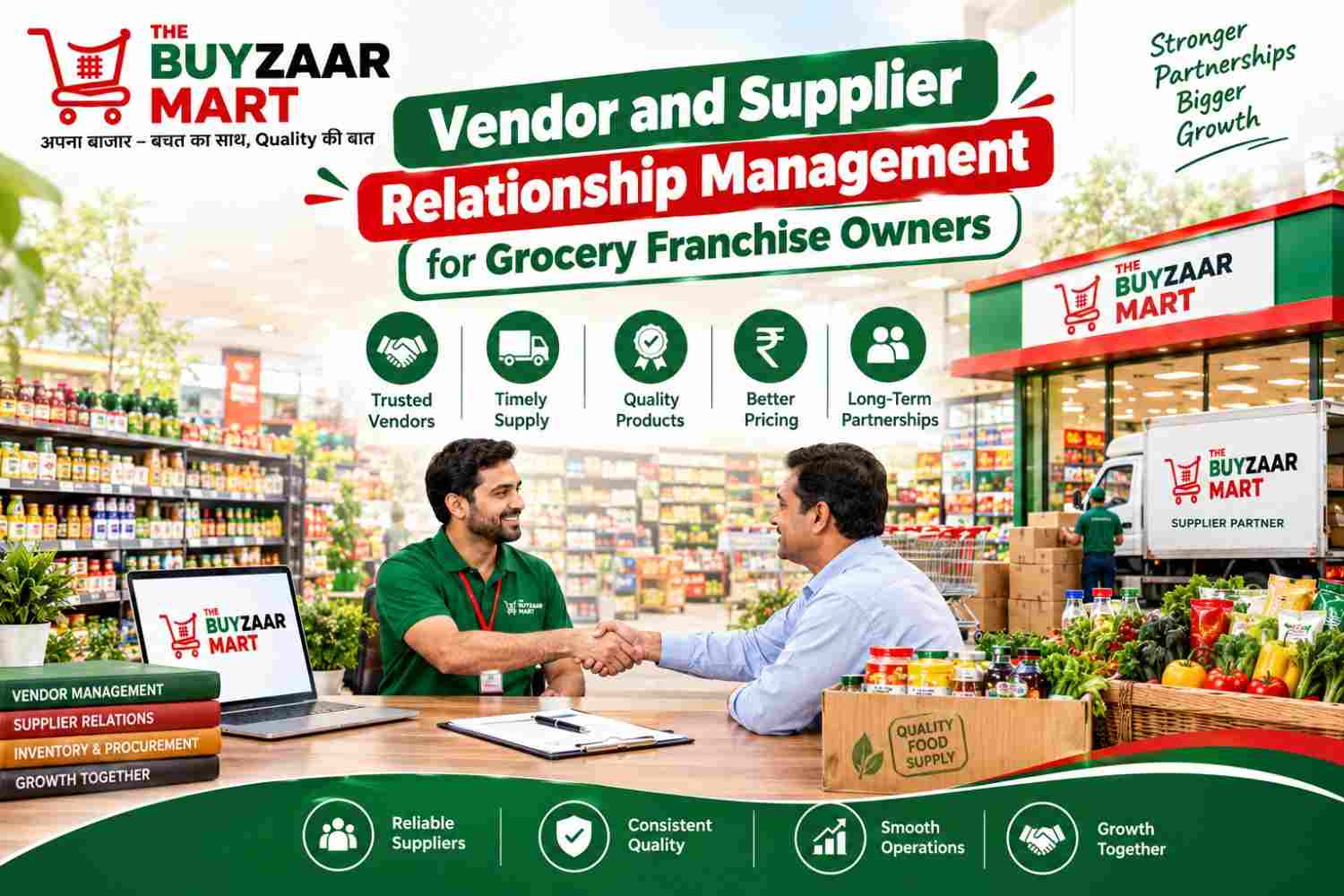
Vendor & Supplier Relationship Management for Grocery Franchise Owners
Learn how strong vendor and supplier relationships drive grocery franchise profitability, and how centralized supply chains simplify the process for franchise owners.
Running a profitable grocery store isn't just about footfall and shelf design — it's built on the strength of the supply chain behind it. For franchise owners, vendor and supplier relationship management is one of the most underrated levers for controlling costs, maintaining stock quality, and protecting margins. Whether you're running a Mini Mart or scaling toward a Hyper Mart format, understanding how supplier relationships work — and how a centralized franchise model changes the equation — can make the difference between a smoothly run store and a constant firefight over stockouts and pricing.
Why Vendor Management Matters More Than Most Franchise Owners Realize
- •Poor vendor coordination is one of the leading causes of stockouts, which directly translates to lost daily sales and frustrated repeat customers
- •Inconsistent supplier quality can damage a store's reputation faster than almost any other operational issue, especially for perishables and daily-use FMCG products
- •Strong vendor relationships often translate into better payment terms, priority stock allocation during shortages, and early access to new product launches
- •Franchise owners who actively manage supplier relationships typically see more predictable inventory costs, which protects profit margins over time
- •A well-managed vendor network reduces the operational burden on store staff, freeing up time for customer service and in-store execution instead of constant supply firefighting
Core Elements of Effective Vendor Relationship Management
- •Clear communication cadence: Regular check-ins with key suppliers help anticipate demand shifts, seasonal changes, and potential supply disruptions before they affect the store
- •Defined quality standards: Setting explicit expectations for product freshness, packaging condition, and delivery timelines reduces disputes and returns
- •Transparent payment practices: Timely, predictable payments build supplier trust and often result in more favorable terms over time
- •Performance tracking: Monitoring fill rates, delivery punctuality, and product quality by vendor helps identify which relationships are working and which need attention
- •Contingency planning: Maintaining backup supplier options for critical categories protects against disruption from any single vendor's operational issues
How Centralized Supply Chains Change the Equation for Franchise Owners
- •Independent kirana store owners typically manage dozens of individual vendor relationships themselves, each requiring separate negotiation, quality checks, and payment tracking
- •A franchise model with centralized supply chain management consolidates this complexity, letting the franchisor negotiate bulk terms, quality standards, and delivery schedules on behalf of all franchise partners
- •Centralized procurement typically results in more consistent product availability, since the franchisor is managing supplier relationships at scale rather than store-by-store
- •Franchise owners under this model spend far less time on vendor-side negotiation and more time on store operations, customer experience, and local marketing
- •Standardized SKU catalogs — often running into the thousands of products — reduce the guesswork around what to stock and from whom, particularly valuable for first-time retail owners
Common Vendor Management Challenges in Grocery Retail
- •Inconsistent delivery schedules: Especially common with smaller or unorganized suppliers, leading to unpredictable shelf gaps
- •Quality variability: Particularly an issue with fresh produce and dairy, where even small lapses can affect customer trust quickly
- •Price fluctuations: Unorganized supply chains often pass on price volatility unpredictably, making margin planning difficult
- •Limited negotiating leverage: Individual store owners typically lack the purchase volume to negotiate favorable terms with larger distributors or brands
- •Fragmented vendor communication: Managing multiple suppliers across phone calls, WhatsApp, and informal arrangements creates room for missed orders and miscommunication
Best Practices for Franchise Owners Managing Local or Supplementary Vendors
- •Even within a centralized supply model, franchise owners often work with a few local vendors for hyperlocal or perishable items — treat these relationships with the same rigor as any core supplier
- •Document agreed terms in writing wherever possible, even for informal local arrangements, to avoid disputes over pricing or delivery expectations
- •Build a simple vendor scorecard tracking on-time delivery, quality consistency, and responsiveness — even a basic spreadsheet adds real visibility
- •Rotate secondary suppliers periodically to benchmark pricing and service quality against your primary vendors
- •Maintain open communication about upcoming demand spikes (festivals, local events) so vendors can plan ahead rather than scrambling to fulfill last-minute orders
How Strong Vendor Relationships Support Long-Term Franchise Profitability
- •Reliable supply reduces the hidden costs of stockouts — lost sales, customer attrition, and emergency sourcing at higher prices
- •Consistent product quality builds the kind of customer trust that drives repeat visits, which matters more for grocery retail than almost any other category
- •Predictable input costs make it easier to plan promotions, pricing strategies, and monthly budgets with confidence
- •Strong vendor relationships often surface early warning signs of supply chain disruptions, giving store owners time to adjust before customers notice
- •Over time, well-managed supplier relationships become a genuine competitive advantage, particularly in markets where unorganized retail still struggles with basic consistency
Why This Matters More for Franchise Owners in Growing Markets
- •In Tier-2 and Tier-3 cities where organized retail is still establishing itself, supply chain reliability is often the single biggest differentiator between a trusted store and an inconsistent one
- •New franchise markets typically have fewer backup supplier options locally, making the centralized supply chain model even more valuable for maintaining consistency
- •Franchise owners entering underserved markets benefit disproportionately from not having to build vendor networks from scratch — a major head start compared to independent retail
- •As store networks scale across a city or region, centralized vendor management also enables consistent pricing and promotions across all outlets, strengthening brand trust
How The Buyzaar Mart Supports Franchise Partners on This Front
- •Centralized supply chain management removes the burden of individual vendor sourcing and negotiation from franchise owners
- •Hassle-Free Inventory Assurance is designed specifically to protect partners from the stock-loss and inconsistency issues that plague independently managed vendor relationships
- •A catalog of 15,000+ SKUs, including established FMCG brands, is sourced and quality-checked at the company level before reaching franchise stores
- •Technology-enabled inventory and POS systems give franchise owners real-time visibility into stock levels, reducing the guesswork typically involved in vendor-dependent reordering
- •Ongoing operational support means franchise partners can focus on running a great store locally, while supply chain complexity is handled centrally
Frequently Asked Questions
Q1. Why is vendor management important for grocery franchise owners?
It directly affects product availability, quality consistency, and cost control — all of which shape customer trust and store profitability.
Q2. Does a franchise model eliminate the need for vendor management entirely?
Not entirely — centralized supply chains handle most core sourcing, but franchise owners may still manage a few local or hyperlocal vendors for specific needs.
Q3. What's the biggest vendor-related challenge for independent grocery stores?
Inconsistent delivery and quality from unorganized suppliers, which leads to stockouts and unpredictable customer experience.
Q4. How does centralized procurement benefit franchise partners?
It consolidates negotiation, quality checks, and logistics at scale, giving individual store owners more consistent stock and less operational burden.
Q5. Should franchise owners still track vendor performance under a centralized model?
Yes, especially for any local or supplementary suppliers — basic tracking of delivery and quality helps catch issues early.
Q6. How does The Buyzaar Mart help franchise partners manage supply chain complexity?
Through centralized procurement, Hassle-Free Inventory Assurance, technology-enabled stock tracking, and a pre-vetted catalog of 15,000+ SKUs.
Related Articles

Is Grocery Franchise Profitable in India? 2026 Numbers
Real investment figures, profit margins, and ROI timelines for grocery franchise businesses in India in 2026. Honest numbers that reveal why neighborhood grocery franchises deliver 15-22% returns for smart investors.
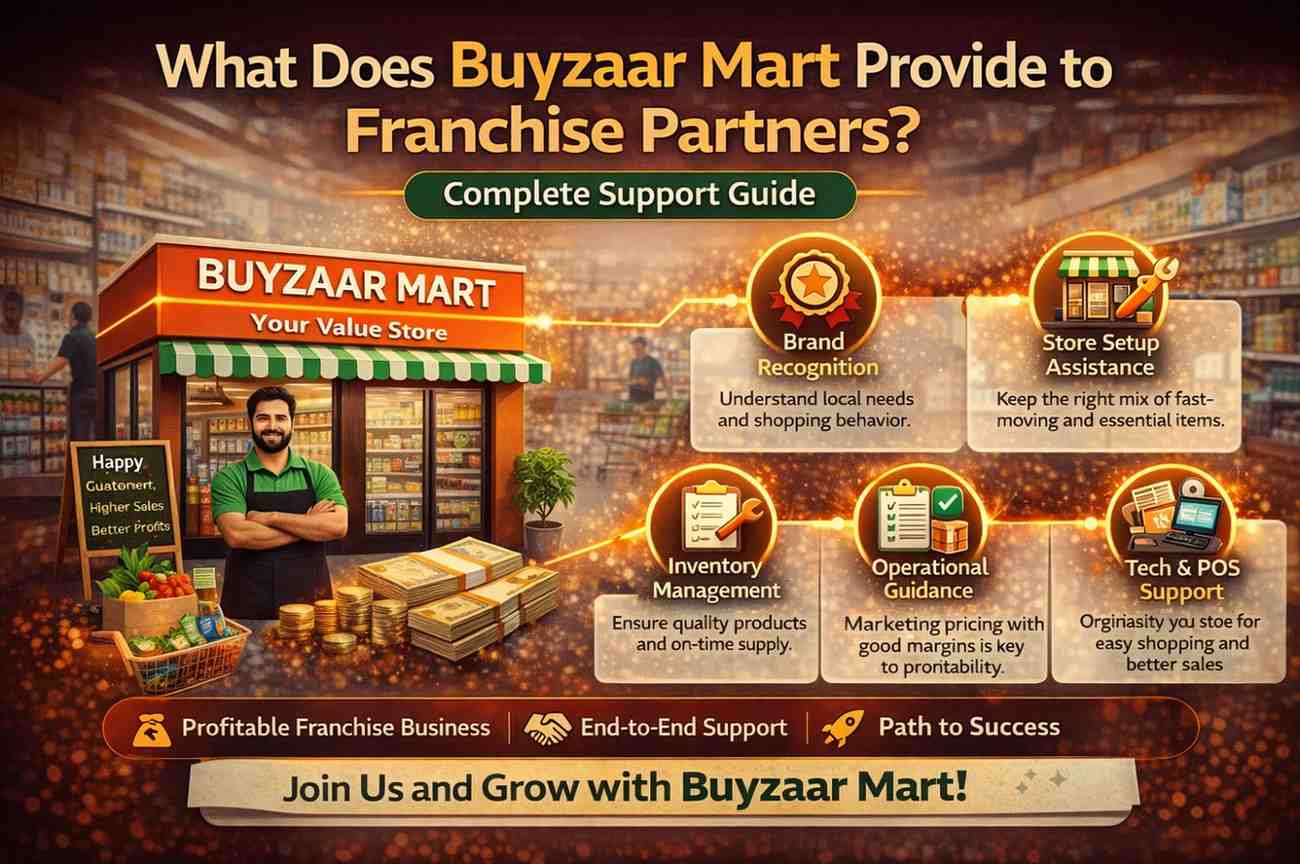
What Does Buyzaar Mart Provide to Franchise Partners? Complete Support Guide
Discover everything Buyzaar Mart offers to franchise partners — from store setup and training to marketing, inventory assurance, and technology. Your complete support guide to joining India's growing retail franchise network.
Expanding to a Second Buyzaar Mart Outlet: When and How to Scale
Planning a second Buyzaar Mart outlet? Learn when you're ready to expand, how to choose the right location, format, and avoid common franchise mistakes.