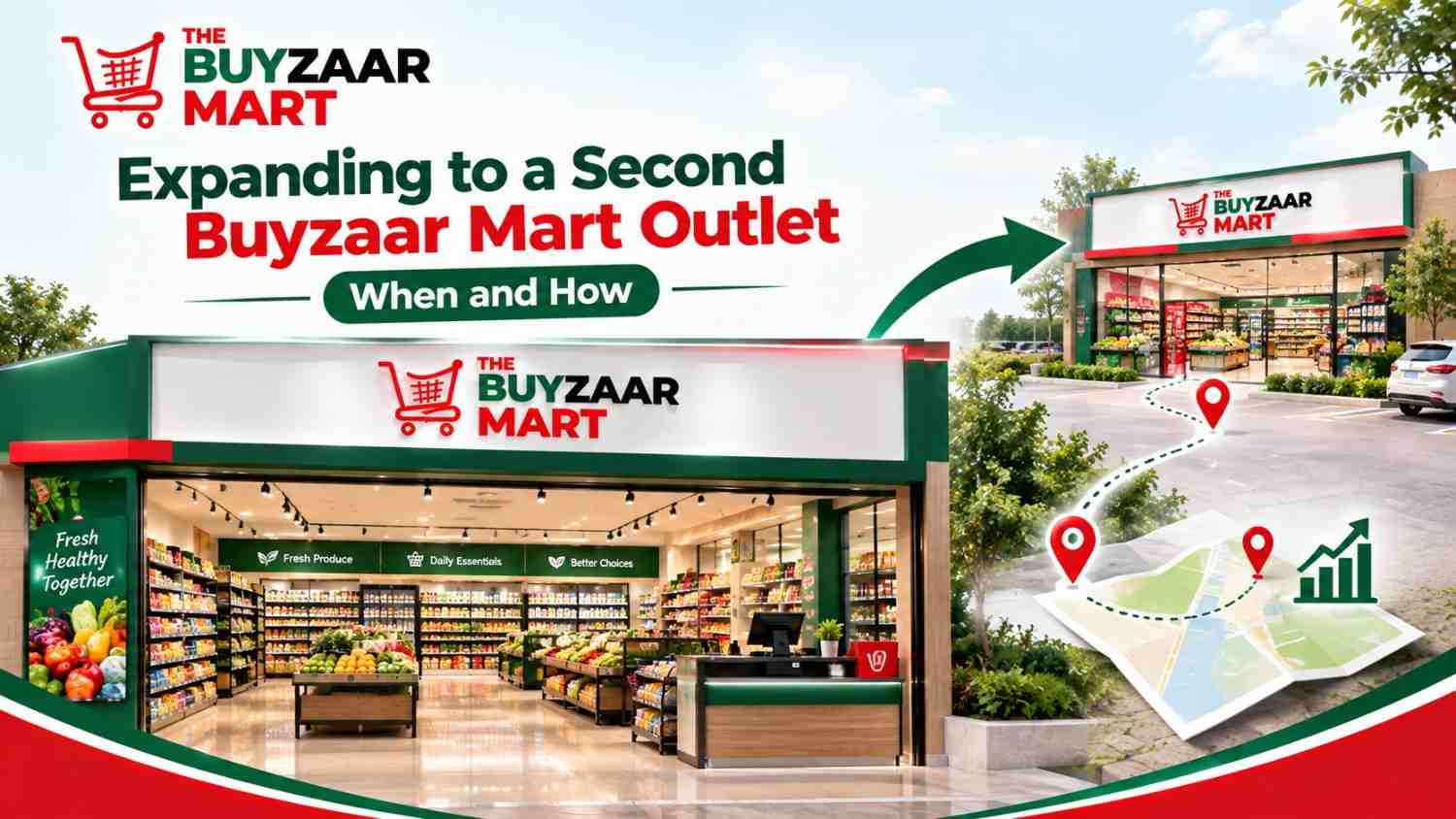
Expanding to a Second Buyzaar Mart Outlet: When and How to Scale
Planning a second Buyzaar Mart outlet? Learn when you're ready to expand, how to choose the right location, format, and avoid common franchise mistakes.
Running one successful Buyzaar Mart store is a significant milestone, but many franchise partners eventually ask: is it time to open a second outlet? Multi-unit ownership represents one of the fastest pathways to scale income from a proven retail model, but expanding too early — or without proper groundwork — can strain both your finances and existing store operations. This comprehensive guide walks through when a second Buyzaar Mart outlet makes strategic sense and exactly how to plan the expansion correctly for maximum ROI.
Why Consider a Second Buyzaar Mart Outlet
- •Opening a second store isn't just about doubling revenue potential — it's about building a stronger, more resilient retail business portfolio
- •A second outlet spreads your fixed costs like staff training systems and supplier relationships across two revenue streams, improving overall profitability
- •Multi-store ownership improves your negotiating position with local vendors and landlords, often securing better terms and pricing
- •Having multiple locations strengthens your brand presence and market share in a city or region, creating competitive advantages
- •For entrepreneurs who already understand the FOCM (Franchise Owned Company Managed) or FOCO (Franchise Owned Company Operated) model from running their first store, a second unit is significantly easier to execute since the learning curve has already been mastered
- •Economies of scale from multi-unit operations can reduce per-store operational costs by 15-20% compared to single-store ownership
Critical Signs You're Ready to Expand Your Franchise
- •Your first store has stabilized with consistent monthly sales — Before expanding, your existing Mini Mart, Super Mart, or Hyper Mart should demonstrate steady, predictable footfall and revenue for at least 6–12 months, not just an early post-launch spike
- •You have positive cash flow beyond operating expenses — A second outlet requires fresh capital investment, so your first store should be generating surplus profit after covering rent, staff salaries, and inventory costs, not just breaking even
- •Your first store runs smoothly without your constant daily presence — If your existing outlet depends entirely on your hands-on involvement, you are not yet ready to split attention across two locations effectively
- •You understand your local market demand patterns deeply — Successful expansion depends on recognizing which product categories, price points, and store formats perform best in your area, insights only your first store's sales data can provide
- •You have identified a genuinely underserved location with real demand — A second outlet should target a neighborhood with substantial grocery demand and limited organized retail competition, not simply a convenient spot near your first store
- •You have access to additional expansion capital without overleveraging — Expansion funding should ideally come from accumulated profits or manageable financing, not funds that compromise your first store's working capital or operational stability
Strategic Location Selection for Your Second Outlet
- •Avoid cannibalizing your existing store's customer base — Select a location far enough from your first outlet that the two stores serve distinct catchment areas rather than competing for the same shoppers
- •Study footfall patterns and demographics in the target neighborhood — Look for areas with dense residential population, limited large-format supermarkets, and steady daily foot traffic near markets, schools, or residential societies
- •Evaluate rent-to-revenue ratio carefully for maximum ROI — A slightly higher rent in a high-footfall area is often more profitable long-term than a cheaper space with weak walk-in traffic
- •Consider proximity for supply chain efficiency and cost optimization — Locations closer to your existing store or within the same logistics zone reduce delivery costs and simplify inventory coordination between outlets
- •Assess local competition honestly and strategically — A neighborhood already saturated with kirana stores or organized retail chains will make it harder for a new outlet to capture footfall quickly
- •Analyze parking availability and accessibility — Easy customer access with adequate parking or two-wheeler space significantly impacts daily footfall and customer convenience
Choosing the Optimal Store Format for Expansion
- •Mini Mart (600–1,000 sq. ft.) — A practical, lower-risk choice if you want to replicate your first store's proven format with minimal capital investment, ideal for testing a new locality before scaling further
- •Super Mart (1,000–3,000 sq. ft.) — Suitable if your target location demonstrates stronger footfall potential and you're ready to offer a wider product range, including higher-margin categories and fresh produce
- •Hyper Mart (3,000+ sq. ft.) — Best considered only after successfully operating multiple smaller outlets, since it requires significantly higher investment (₹80 lakh–₹2 crore) and more complex staff management
- •Match the format to local demand dynamics, not personal preference — The right format depends on the neighborhood's population density, purchasing power, and competitive landscape, not simply what worked for your first outlet
- •Consider future scalability — Choose a format that allows for potential expansion or format upgrades as the neighborhood develops and customer base grows
Comprehensive Financial and Operational Planning
- •Implement separate accounting for each outlet from day one — Track revenue, expenses, and profitability independently for each store so you can accurately measure performance and identify underperforming areas early
- •Budget for a complete independent investment cycle — A second outlet typically requires a similar investment range as the first (starting around ₹15 lakh for Mini Mart depending on format), so plan comprehensively for setup costs, initial inventory, and 3-6 months working capital
- •Hire a dedicated, trained store manager for the new outlet — Relying on yourself to manage two locations simultaneously is unsustainable long-term; a qualified, accountable manager is essential for smooth day-to-day operations
- •Leverage the brand's centralized supply chain and inventory management systems — Since Buyzaar Mart outlets benefit from Hassle-Free Inventory Assurance and centralized supply coordination, expansion becomes easier as procurement doesn't need to be rebuilt from scratch for each new store
- •Ensure complete regulatory compliance for the new location — Every outlet requires its own FSSAI license, GST registration, and local trade compliance, so factor this documentation timeline (typically 2-4 weeks) into your launch schedule
- •Plan a phased staffing and training rollout — Recruit and train staff for the second outlet using the same proven systems and processes from your first store to maintain consistent customer experience across all locations
- •Set up integrated POS and inventory tracking systems — Technology-enabled systems provide real-time visibility across both stores, enabling better decision-making and inventory optimization
Critical Mistakes to Avoid During Franchise Expansion
- •Expanding too soon after opening the first store — Rushing into a second outlet before your first has stabilized (minimum 6-12 months) often stretches resources thin and risks underperformance at both locations
- •Underestimating working capital requirements — Many franchise partners budget only for setup costs and forget that a new outlet needs 3-6 months of operating cushion before it becomes self-sustaining
- •Choosing a location based on convenience rather than data-driven analysis — Picking a site simply because it's close to home, without studying local demand, footfall patterns, and competition, is one of the most common reasons second outlets underperform
- •Neglecting the first store's performance during expansion — Diverting too much attention, inventory, or key staff to the new outlet can unintentionally hurt the store that's funding the expansion in the first place
- •Failing to standardize operations across outlets — Inconsistent customer experience, pricing, or product availability between stores can damage brand reputation and customer trust
- •Not having a contingency plan — Always prepare for scenarios where the second store takes longer to become profitable than expected, including backup funding sources
Leveraging Buyzaar Mart's Expansion Support Systems
- •Centralized supply chain management ensures consistent product availability across all outlets without additional vendor management burden
- •Hassle-Free Inventory Assurance protects against stock-outs and overstocking risks during the critical launch phase
- •Technology-enabled POS and inventory systems provide real-time performance tracking across multiple locations
- •Standardized training programs ensure staff at new outlets maintain the same service quality as your flagship store
- •Marketing and promotional support helps drive initial footfall to the new location through coordinated campaigns
- •Ongoing operational guidance from the franchise team helps navigate challenges specific to multi-unit management
Final Strategic Considerations
- •Expanding to a second Buyzaar Mart outlet is a natural progression for franchise partners who have built a stable, profitable first store and deeply understand their local retail market dynamics
- •The key is timing the expansion based on concrete performance data and financial readiness — not ambition alone — and approaching the second outlet with the same discipline, planning, and brand support systems that made your first store successful
- •Multi-unit ownership, when executed strategically, can transform a single grocery store into a growing, sustainable retail business with significantly higher valuation and exit opportunities
- •Document all processes and systems from your first store to create an expansion playbook that can be replicated for future outlets
- •Consider forming a legal entity (LLP or Private Limited) for multi-store operations to optimize taxation and limit liability as you scale
Frequently Asked Questions
Q1. How soon can I open a second Buyzaar Mart outlet after my first?
Most franchise partners are advised to wait until their first store demonstrates 6–12 months of stable, consistent sales and positive cash flow before expanding to ensure financial readiness.
Q2. Do I need separate FSSAI and GST registration for a second outlet?
Yes, each store location requires its own FSSAI license and GST registration, regardless of ownership under the same franchise partner, as per Indian regulatory requirements.
Q3. Should my second store be the same format as my first?
Not necessarily — the ideal format depends on the new location's footfall potential, local demographics, and demand patterns, not your existing store's format. A Mini Mart might work better in one area while a Super Mart suits another.
Q4. Can I manage two Buyzaar Mart outlets myself?
It's possible short-term, but a dedicated, trained store manager for the second outlet is strongly recommended for sustainable, hands-off operations and to prevent burnout from managing multiple locations.
Q5. How much investment is typically needed for a second outlet?
Investment requirements are similar to opening a first store, generally starting around ₹15 lakh for Mini Mart and scaling up to ₹1.8 crore for Hyper Mart, depending on the chosen format, location, and local real estate costs.
Q6. What are the biggest risks when expanding to a second store?
The primary risks include expanding too early before the first store stabilizes, underestimating working capital needs, choosing locations without proper market research, and neglecting the first store's performance during the expansion phase.
Related Articles

Is Grocery Franchise Profitable in India? 2026 Numbers
Real investment figures, profit margins, and ROI timelines for grocery franchise businesses in India in 2026. Honest numbers that reveal why neighborhood grocery franchises deliver 15-22% returns for smart investors.
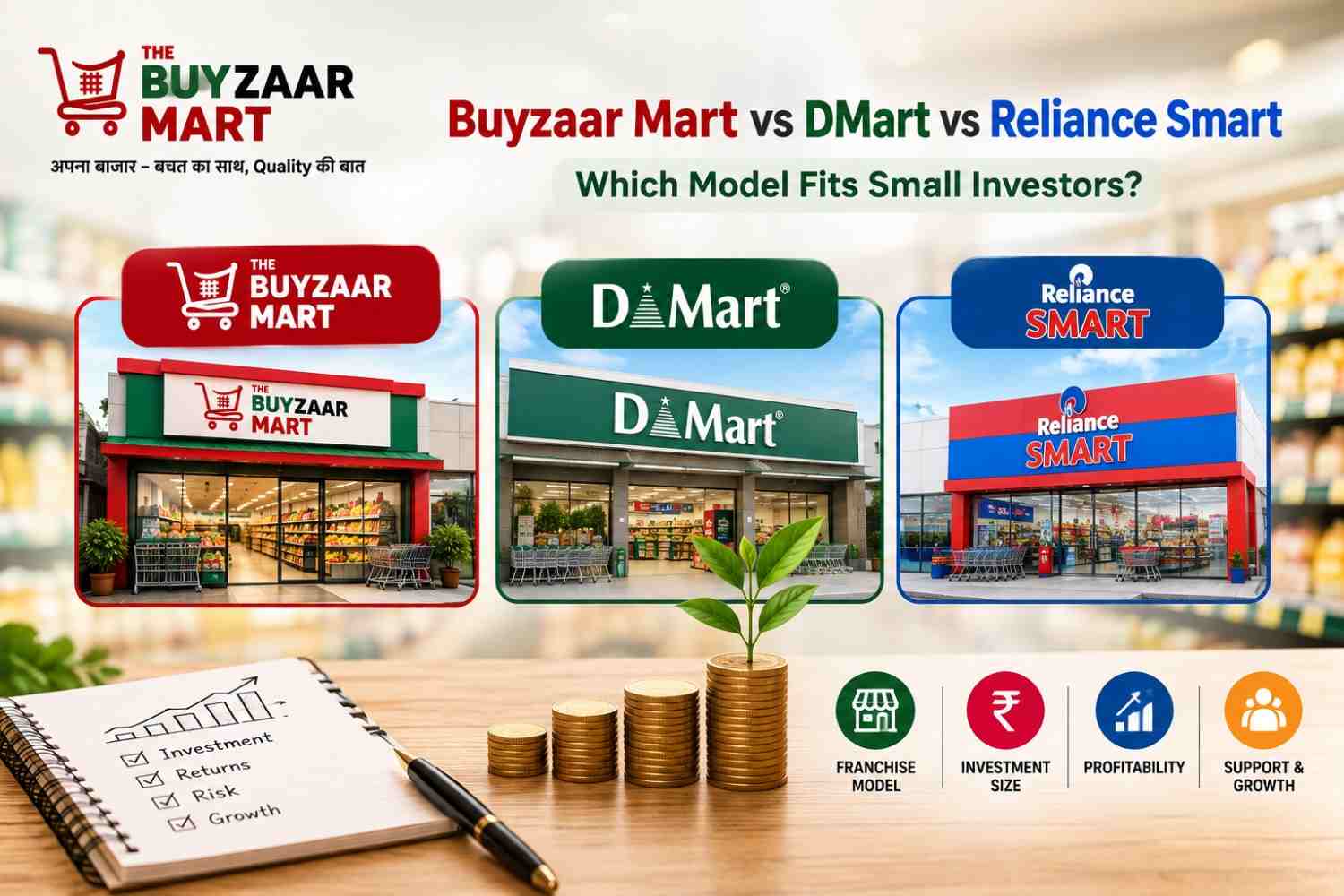
Buyzaar Mart vs DMart vs Reliance Smart: Which Model Fits Small Investors?
Compare Buyzaar Mart, DMart & Reliance Smart franchise models. Find out which grocery retail investment fits small investors with ₹15 lakh capital.
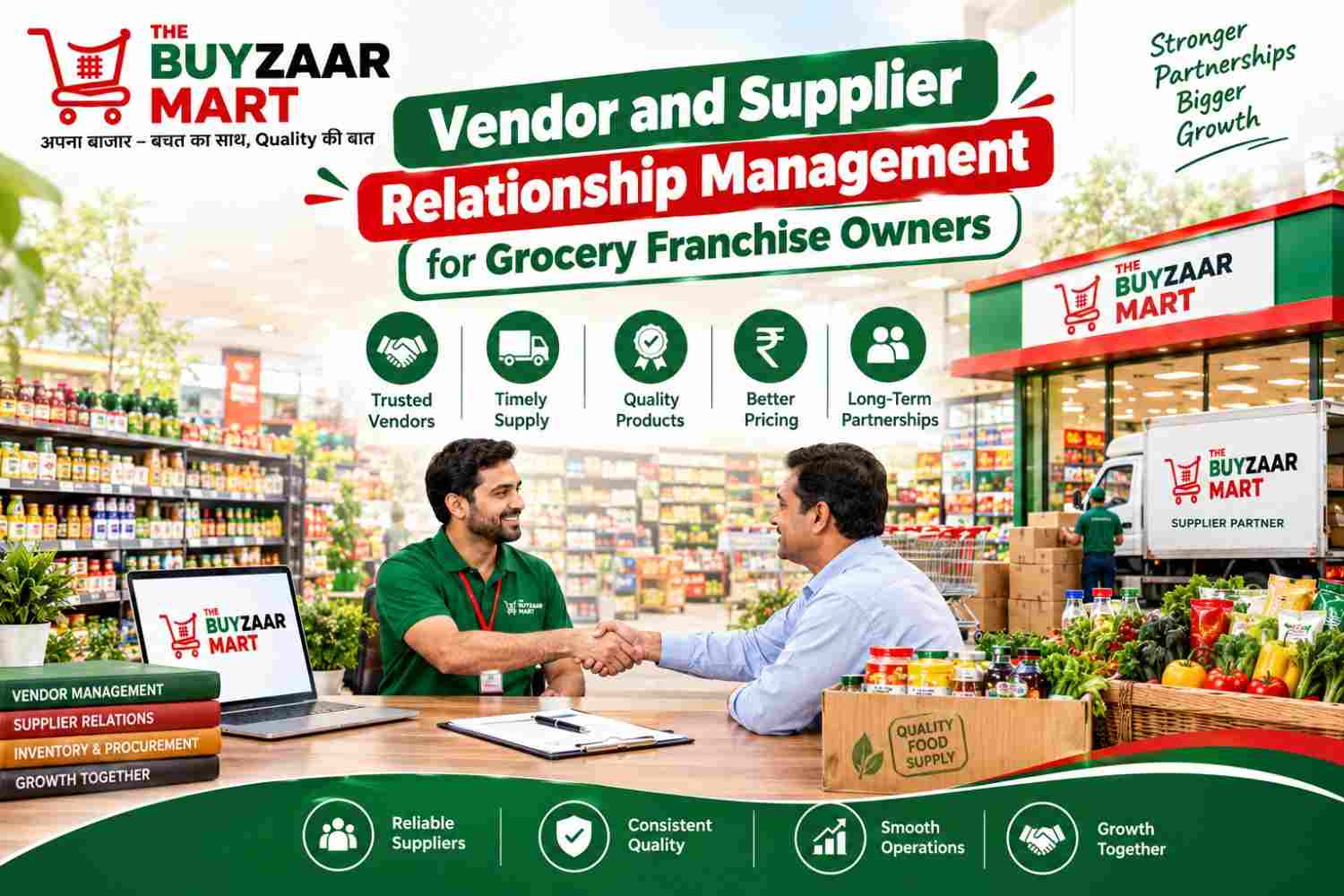
Vendor & Supplier Relationship Management for Grocery Franchise Owners
Learn how strong vendor and supplier relationships drive grocery franchise profitability, and how centralized supply chains simplify the process for franchise owners.