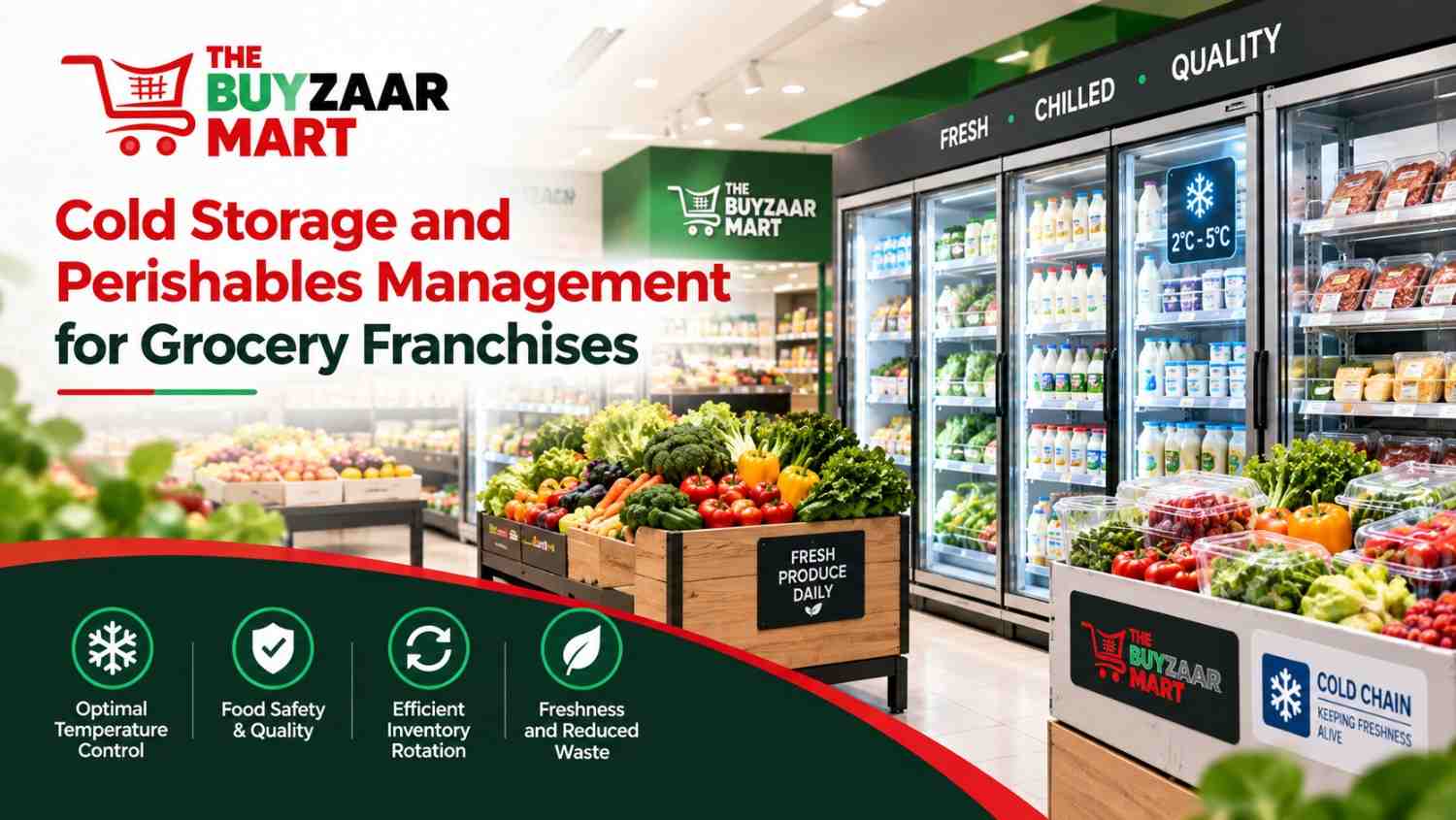
Cold Storage & Perishables Management Tips for Grocery Franchises
Learn cold storage best practices, FIFO/FEFO inventory tips & perishables handling strategies to reduce wastage and boost profitability in grocery franchises.
For any grocery franchise — whether it's a Mini Mart, Super Mart, or Hyper Mart format — perishables are both the biggest footfall driver and the biggest source of avoidable loss. Fresh produce, dairy, frozen items, and packaged perishables bring customers in regularly, but poor cold storage and inventory handling can quietly destroy margins through spoilage, wastage, and quality complaints. This guide covers practical cold storage and perishables management strategies every grocery franchise owner should implement to protect product quality, reduce shrinkage, and build customer trust.
Why Perishables Management Is Critical for Grocery Franchise Profitability
- •Perishable categories like dairy, fruits, vegetables, and frozen goods typically carry lower margins than packaged FMCG, which makes wastage control essential to profitability
- •Spoiled or expired stock doesn't just mean lost inventory value — it also damages customer trust when discovered on shelves
- •Franchise brands are judged on consistency; a single outlet with poor perishables handling can affect the reputation of the entire brand
- •Proper cold chain management reduces the frequency of emergency restocking, improving overall supply chain efficiency
- •Well-managed perishables sections are proven footfall generators, since customers associate fresh produce and dairy availability with overall store quality
Understanding the Perishables Categories in a Grocery Store
- •Fresh produce — fruits and vegetables with the shortest shelf life, requiring daily monitoring
- •Dairy products — milk, curd, paneer, and cheese, which need strict temperature control and fast turnover
- •Frozen goods — ready-to-eat items, frozen vegetables, and ice cream requiring consistent sub-zero storage
- •Bakery items — bread and baked goods with a short shelf window, needing careful stock rotation
- •Meat, poultry and seafood (where applicable) — the most temperature-sensitive category, requiring dedicated cold storage units
- •Semi-perishables — items like eggs and certain packaged foods that need cool, dry storage rather than deep refrigeration
Cold Storage Equipment Every Grocery Franchise Needs
- •Walk-in cold rooms for bulk storage of fruits, vegetables, and dairy, ideal for mid-sized and large format stores
- •Display chillers and glass-front refrigerators for dairy and beverages, allowing customers to browse while maintaining temperature
- •Deep freezers for frozen food categories, kept separate from chiller units to avoid temperature fluctuation
- •Visi-coolers near the billing counter for high-turnover chilled items like beverages and dairy snacks
- •Backup power or inverter support for cold storage units, since even short power outages can compromise perishable quality
- •Temperature monitoring devices or digital thermometers to track and log cold storage conditions daily
Best Practices for Cold Chain Management
- •Maintain separate temperature zones for different categories — dairy, frozen, and fresh produce each have different ideal temperature ranges
- •Avoid overloading cold storage units, since restricted airflow leads to uneven cooling and faster spoilage
- •Check and record temperatures at fixed intervals throughout the day, not just once during opening
- •Position cold storage units away from direct sunlight or heat sources like billing counters and entrances
- •Train staff to minimize the time refrigerator and freezer doors remain open during restocking
- •Schedule regular maintenance and servicing for cooling equipment to prevent unexpected breakdowns during peak season
FIFO and FEFO: The Foundation of Perishables Inventory Management
- •FIFO (First-In-First-Out) ensures older stock is sold before newer stock, which is essential for high-turnover perishable categories
- •FEFO (First-Expiry-First-Out) prioritizes selling items closest to their expiry date first, which is especially important for dairy and packaged perishables with printed expiry dates
- •Train staff to always restock shelves from behind, pushing older stock to the front
- •Conduct daily visual checks of perishable shelves to identify and remove items nearing expiry before they become unsellable
- •Use clear date-labeling systems for items repacked in-store, such as cut fruits or bulk produce
Reducing Spoilage and Wastage in Daily Operations
- •Order perishable stock based on actual daily sales data rather than fixed quantities, adjusting for weekday versus weekend demand patterns
- •Build strong relationships with local suppliers for fresh produce to enable smaller, more frequent deliveries instead of large infrequent ones
- •Introduce end-of-day discounting for perishables nearing their sell-by window to recover value instead of writing off stock as a total loss
- •Monitor seasonal demand shifts, since festivals and weather changes significantly affect perishable consumption patterns
- •Keep a simple daily wastage log to identify recurring problem categories and adjust ordering accordingly
Staff Training for Effective Perishables Handling
- •Train staff to inspect incoming deliveries for temperature compliance, packaging integrity, and visible quality issues before accepting stock
- •Assign clear daily responsibility for perishables sections, rather than leaving stock rotation as a general task
- •Educate staff on proper handling techniques for fragile produce to minimize bruising and damage during restocking
- •Reinforce hygiene protocols for staff handling fresh produce, dairy, and bakery items
- •Conduct periodic refresher training as new perishable categories or seasonal products are introduced
Compliance and Food Safety Considerations
- •Follow FSSAI guidelines for storage temperature, labeling, and handling of perishable food categories
- •Maintain visible expiry date labeling on all repacked or loose perishable items sold in-store
- •Keep supplier invoices and batch records for traceability in case of quality complaints
- •Ensure regular pest control and hygiene audits, particularly around cold storage and fresh produce zones
- •Display clear signage on food safety practices where required, reinforcing customer confidence in store standards
Technology's Role in Modern Perishables Management
- •Use inventory management software integrated with your billing system to track perishable stock levels in real time
- •Set up automated low-stock and near-expiry alerts to reduce manual monitoring effort
- •Leverage sales data analytics to forecast perishable demand more accurately across seasons and local events
- •Consider IoT-based temperature sensors for larger cold storage setups, enabling remote monitoring across multiple franchise outlets
- •Integrate perishables tracking with centralized franchise systems so brand owners can maintain quality consistency across locations
Building a Reliable Perishables System Across Your Franchise Outlet
- •Strong cold storage and perishables management isn't a one-time setup — it's a daily operational discipline. Grocery franchise owners who combine the right equipment, consistent staff training, and data-driven ordering consistently see lower wastage, better product quality, and stronger customer loyalty, all of which directly protect long-term franchise profitability.
Frequently Asked Questions
Q1. What is the ideal temperature for storing dairy products in a grocery store?
Dairy products should typically be stored between 2°C and 4°C to maintain freshness and prevent spoilage.
Q2. What is the difference between FIFO and FEFO in perishables management?
FIFO rotates stock by arrival date, while FEFO prioritizes items closest to their expiry date, which is more precise for perishable goods.
Q3. How often should cold storage temperatures be checked?
Temperatures should be checked and logged at least 3-4 times daily to catch fluctuations early.
Q4. How can grocery franchises reduce perishable wastage?
By ordering based on actual sales data, applying FEFO rotation, and using end-of-day discounting for near-expiry stock.
Q5. Is backup power necessary for grocery store cold storage?
Yes, backup power or inverter support is essential to prevent spoilage during outages, especially for dairy and frozen categories.
Q6. What FSSAI guidelines apply to perishables in retail stores?
FSSAI mandates proper storage temperature, hygiene standards, and accurate expiry labeling for all perishable food items sold in-store.
Related Articles

Is Grocery Franchise Profitable in India? 2026 Numbers
Real investment figures, profit margins, and ROI timelines for grocery franchise businesses in India in 2026. Honest numbers that reveal why neighborhood grocery franchises deliver 15-22% returns for smart investors.
Vendor & Supplier Relationship Management for Grocery Franchise Owners
Learn how strong vendor and supplier relationships drive grocery franchise profitability, and how centralized supply chains simplify the process for franchise owners.
Expanding to a Second Buyzaar Mart Outlet: When and How to Scale
Planning a second Buyzaar Mart outlet? Learn when you're ready to expand, how to choose the right location, format, and avoid common franchise mistakes.