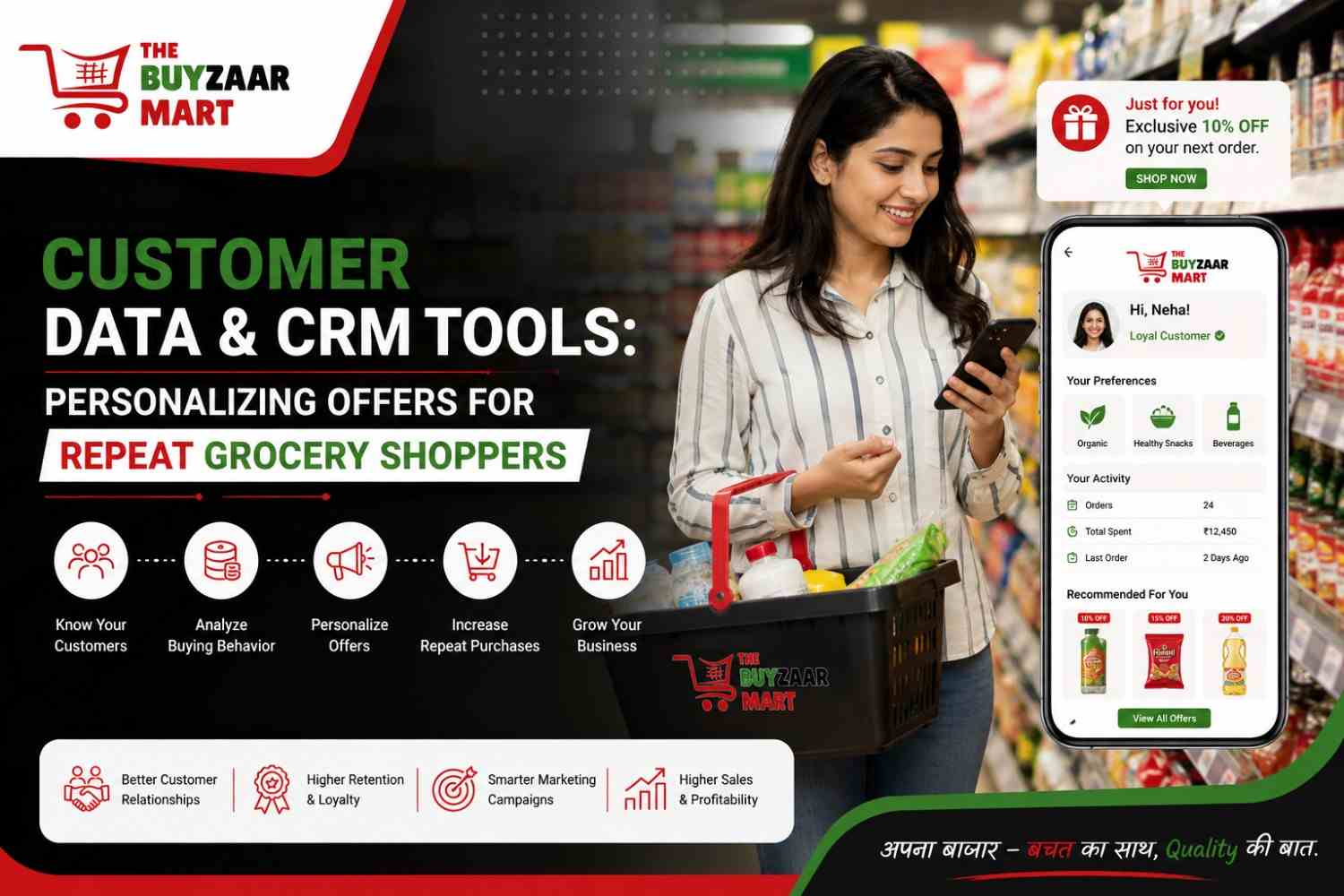
Customer Data & CRM Tools: Personalizing Offers for Repeat Grocery Shoppers
Learn how CRM tools and customer data help grocery stores personalize offers, boost loyalty, and increase repeat shoppers with practical, low-cost strategies.
Grocery shopping has changed. Customers today expect more than just stocked shelves — they expect stores to understand their habits and needs. Repeat shoppers are the backbone of any neighborhood grocery business, contributing consistent, predictable revenue. Generic discounts and blanket promotions no longer capture attention the way personalized offers do. Shoppers are more likely to stay loyal to a store that remembers their preferences and rewards their loyalty. Personalization increases basket size, visit frequency, and overall customer lifetime value. The Buyzaar Mart model is built around understanding local shopping patterns and translating them into smarter customer engagement.
Understanding CRM and Customer Data in Grocery Retail
- •CRM, or Customer Relationship Management, is the system that helps a grocery store track, organize, and act on customer information.
- •CRM tools store purchase history, visit frequency, preferred categories, and basic demographic details
- •For a grocery format, CRM works best when connected directly to the POS (Point of Sale) system
- •Data collected at billing counters becomes the foundation for future personalization
- •Even a small Mini Mart format can benefit from a lightweight CRM setup, not just large Hyper Marts
- •The goal is not to collect data for its own sake, but to convert it into better customer experiences
Key Data Points to Track for Repeat Grocery Shoppers
- •Effective personalization starts with tracking the right information, not excessive information.
- •Purchase frequency: how often a customer visits in a week or month
- •Basket composition: which categories a customer regularly buys — staples, dairy, snacks, personal care, etc.
- •Average bill value: helps identify high-value versus occasional shoppers
- •Preferred shopping time: morning stock-up shoppers versus evening top-up shoppers
- •Seasonal buying patterns: festival stocking, monthly ration cycles, or weekend bulk purchases
- •Response to past offers: which discounts or schemes a customer actually redeemed
Building Customer Profiles for Repeat Shoppers
- •Once data is collected, the next step is organizing it into usable customer profiles.
- •Group customers into simple segments such as daily shoppers, weekly shoppers, and occasional visitors
- •Identify high-frequency, high-value customers who deserve priority engagement
- •Flag customers who have reduced their visit frequency, as they may be shifting to a competitor
- •Track family-size indicators through basket size to tailor pack-size offers
- •Maintain profiles at the store level so local staff can also recognize regular customers personally
Personalizing Offers and Promotions Using CRM Tools
- •This is where CRM data turns into real business impact — offers that feel relevant instead of random.
- •Send targeted discounts on categories a customer already buys frequently, rather than generic storewide sales
- •Offer reminder-based promotions, such as a discount on a staple item the customer typically repurchases every 20-25 days
- •Use purchase-history triggers to suggest complementary products, like offering a discount on cooking oil when atta purchase frequency is high
- •Create time-based personalized offers, such as evening discounts for customers who typically shop after work
- •Design festival and seasonal offers around what specific customer segments have purchased in previous years
- •Send offers through SMS, WhatsApp, or in-store counters based on customer contact preferences
Loyalty Programs and Data-Driven Rewards
- •A well-structured loyalty program becomes far more effective when it is powered by CRM data instead of a flat point system.
- •Reward high-frequency shoppers with tiered benefits rather than one-size-fits-all discounts
- •Offer milestone rewards, such as a bonus after a customer's tenth visit in a month
- •Provide category-specific loyalty points that push customers toward higher-margin products
- •Use redemption data to understand which rewards actually motivate repeat visits
- •Combine loyalty data with CRM profiles to identify your most valuable long-term customers
Local Store-Level Personalization Strategies
- •Personalization is not only digital — it also happens through everyday store operations.
- •Train billing staff to recognize regular customers and mention relevant ongoing offers
- •Adjust shelf placement based on locality-specific buying trends identified through CRM data
- •Stock seasonal or regional preferences based on what repeat customers in that specific catchment area purchase most
- •Use local language communication for offers, since this improves recall and response among neighborhood shoppers
- •Keep store-level staff informed about which customer segments are being targeted with which offers
CRM Tools and Technology Options for Neighborhood Grocery Stores
- •Modern grocery retail does not require expensive enterprise software to begin personalizing offers.
- •Simple POS-integrated CRM modules can capture basic purchase and contact data automatically
- •Mobile-based CRM apps allow store owners to manage customer profiles without heavy infrastructure
- •WhatsApp Business tools can be used alongside CRM data to send personalized offer messages directly
- •Cloud-based systems allow data to be accessed across multiple store locations under the same brand
- •The Buyzaar Mart franchise model supports its partner stores with structured POS and customer-data tools, making personalized marketing accessible even for first-time retail owners
Benefits of Personalized Offers for Grocery Retailers
- •Personalization is not just a customer-facing improvement — it directly affects business performance.
- •Higher customer retention, since shoppers feel recognized and valued
- •Increased average transaction value through relevant cross-selling and upselling
- •Reduced marketing waste, since offers are targeted instead of blanket-distributed
- •Better inventory planning, as purchase-pattern data helps predict demand for specific products
- •Stronger brand trust and word-of-mouth referrals within the local community
- •A competitive edge over unorganized local kirana stores that do not track customer behavior
Best Practices for Data Privacy and Customer Trust
- •Collecting and using customer data comes with a responsibility to protect it.
- •Collect only the data necessary for improving customer experience, not excessive personal information
- •Clearly inform customers when their number or details are being used for offers and updates
- •Avoid sharing customer data with third parties outside the intended CRM or marketing use
- •Allow customers to opt out of promotional messages if they choose to
- •Store data securely and limit access to authorized staff only
- •Building trust around data usage strengthens long-term loyalty rather than discouraging it
How This Fits Into the Buyzaar Mart Franchise Model
- •For store owners running a Buyzaar Mart franchise, CRM-driven personalization becomes a practical growth tool rather than a technical burden.
- •Franchise partners get access to standardized POS systems that make data capture consistent across stores
- •Head-office support helps translate raw purchase data into actionable, store-level offer strategies
- •Personalization strengthens the "neighborhood store" positioning that Buyzaar Mart is built around
- •Repeat-customer focus aligns directly with the brand's emphasis on community-based, trust-driven retail
- •Store owners do not need prior CRM experience, as the franchise structure is designed to support this from day one
Frequently Asked Questions
Do small grocery stores really need a CRM system?
Yes. Even a Mini Mart format benefits from tracking repeat customers, since it directly improves retention and sales without large investment.
What kind of customer data should a grocery store collect?
Basic details such as purchase frequency, preferred categories, and contact information are sufficient to begin meaningful personalization.
How often should personalized offers be sent to customers?
Frequency should be based on individual purchase cycles rather than a fixed schedule, so offers feel timely and relevant.
Can personalization work without expensive software?
Yes. POS-integrated CRM tools and mobile-based apps allow small and mid-sized grocery stores to personalize offers affordably.
Is customer data collection safe for local grocery businesses?
When collected transparently and used responsibly, data collection builds trust rather than raising privacy concerns among regular shoppers.
Related Articles
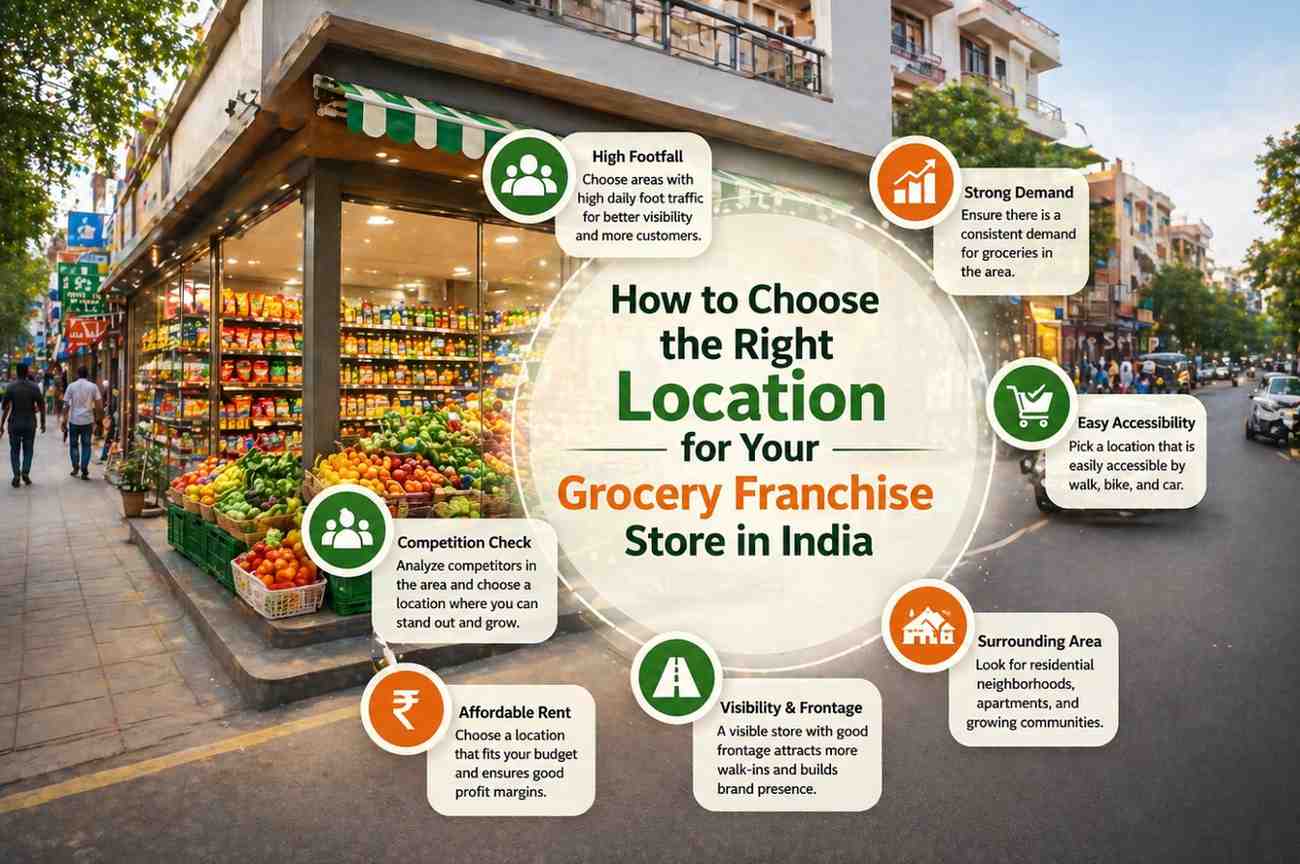
How to Choose the Right Location for Your Grocery Franchise Store in India (2026)
Location can make or break your grocery franchise store. Learn the key factors — footfall, demographics, competition, rent & more — to find the perfect spot for your Buyzaar Mart store in India.
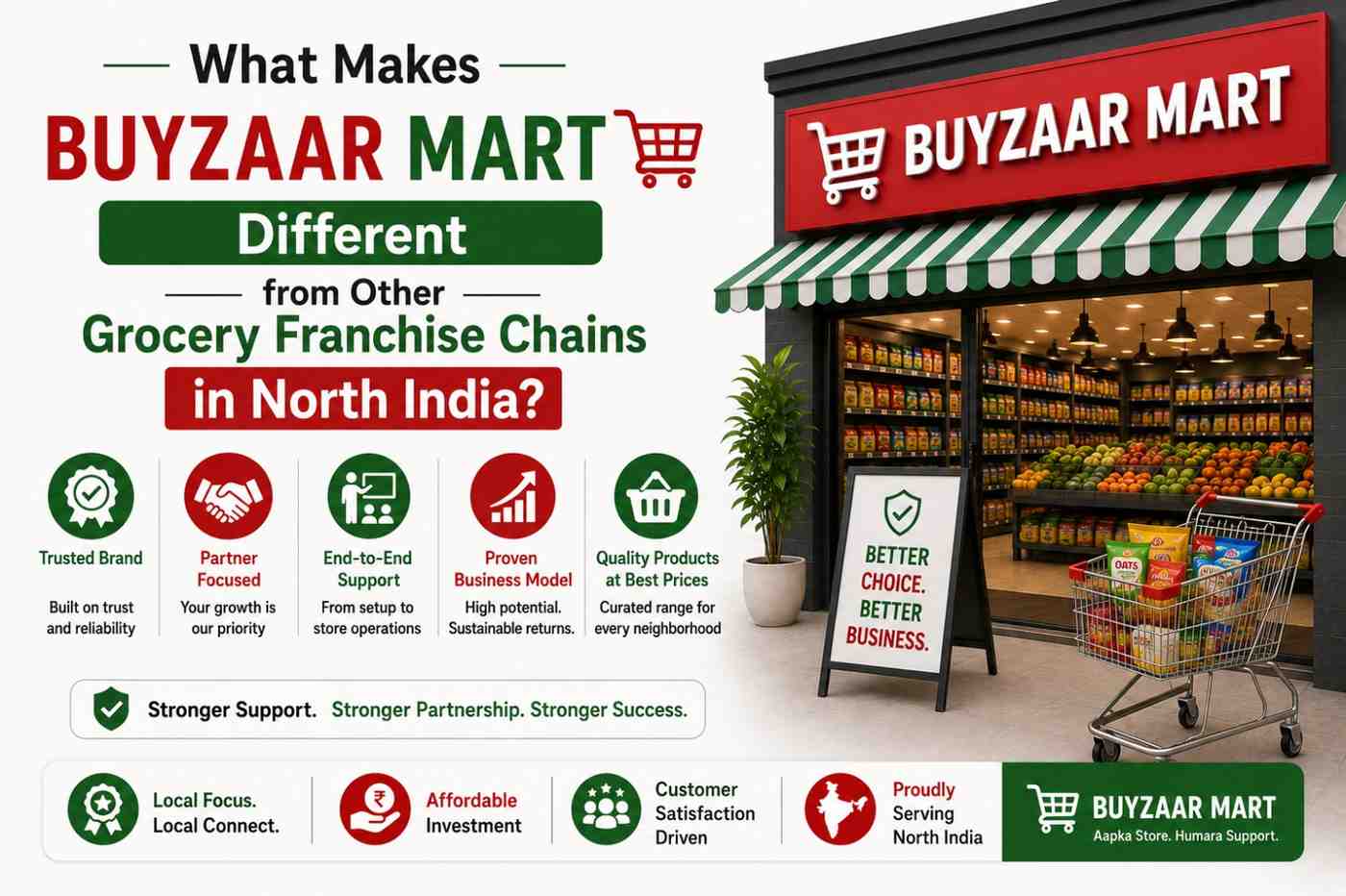
What Makes Buyzaar Mart Different from Other Grocery Franchise Chains in North India? (2026)
Wondering what sets Buyzaar Mart apart from other grocery franchise chains in North India? Discover the key differentiators — from tech-enabled operations and FMCG brand partnerships to franchisee-first support and profit margins.
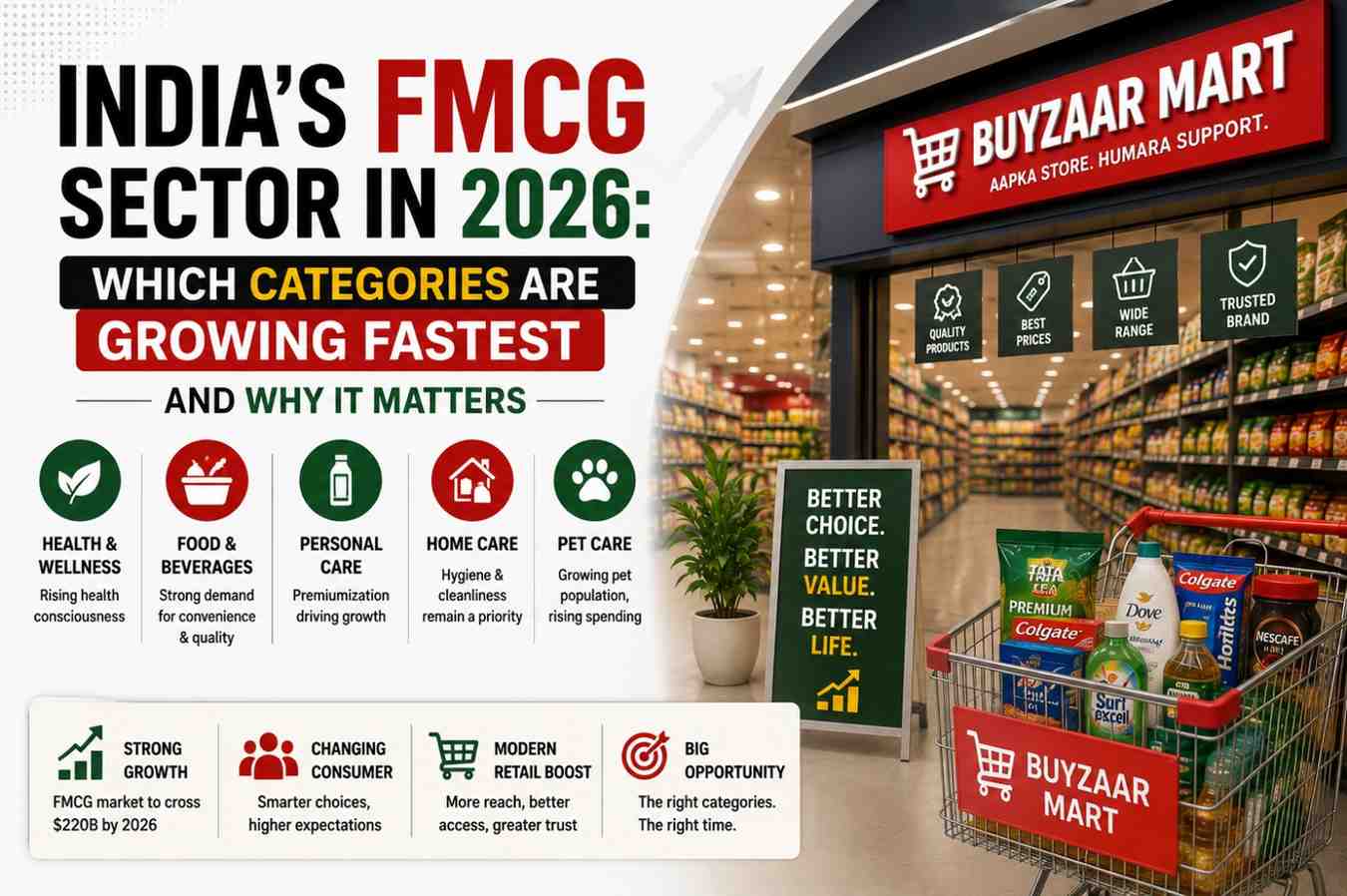
India's FMCG Sector in 2026: Which Categories Are Growing Fastest and Why It Matters
India's FMCG market is projected to hit ₹10.2 lakh crore by 2026. Discover which categories are growing fastest — from health foods to personal care — and what it means for grocery franchise owners across North India.