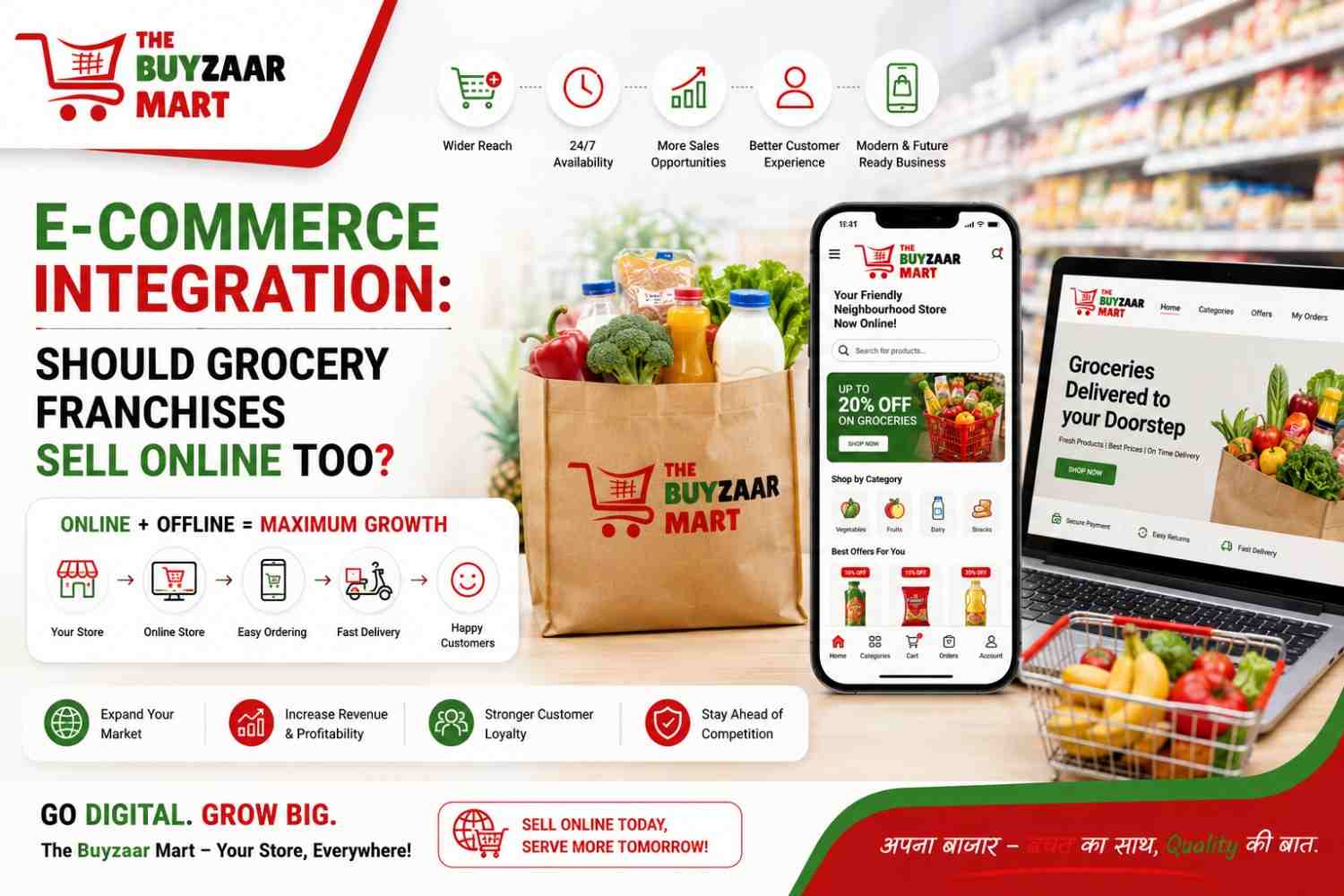
E-commerce Integration: Should Grocery Franchises Sell Online Too?
Explore whether grocery franchise stores should add online ordering, covering costs, formats, customer expectations, and practical starting points.
As online shopping habits grow across India, many grocery franchise owners are questioning whether their physical store model still needs a digital sales channel. Customers increasingly expect the option to order groceries online, even from neighborhood stores. Competing quick-commerce and online grocery platforms have shifted customer expectations around convenience. Franchise owners want to know if adding e-commerce will genuinely increase sales or simply add operational complexity. The answer often depends on store format, locality, and available resources rather than a one-size-fits-all approach. For Buyzaar Mart franchise partners, understanding this decision early helps shape long-term growth strategy.
Why This Question Matters for Grocery Franchise Owners
- •As online shopping habits grow across India, many grocery franchise owners are questioning whether their physical store model still needs a digital sales channel.
- •Customers increasingly expect the option to order groceries online, even from neighborhood stores
- •Competing quick-commerce and online grocery platforms have shifted customer expectations around convenience
- •Franchise owners want to know if adding e-commerce will genuinely increase sales or simply add operational complexity
- •The answer often depends on store format, locality, and available resources rather than a one-size-fits-all approach
- •For Buyzaar Mart franchise partners, understanding this decision early helps shape long-term growth strategy
Understanding the Current Grocery E-Commerce Landscape
- •Before deciding whether to go online, it helps to understand how the broader grocery e-commerce space is evolving.
- •Quick-commerce platforms have popularized fast, app-based grocery delivery in urban markets
- •Many customers now compare in-store convenience against the speed of online delivery options
- •Tier-2 and tier-3 cities are gradually seeing increased demand for local online ordering options
- •Not all localities have strong quick-commerce coverage, creating opportunities for local stores to fill the gap
- •Understanding local competition and customer behavior is essential before investing in an online channel
Benefits of Adding an Online Sales Channel
- •For many grocery franchise owners, e-commerce integration can offer real advantages when implemented thoughtfully.
- •Expands reach beyond customers who can physically visit the store regularly
- •Captures sales from customers unable to visit during store hours, such as working professionals
- •Provides an additional revenue stream alongside in-store sales
- •Builds customer convenience through home delivery, especially for bulk or heavy grocery items
- •Strengthens brand visibility in the locality through app or website presence alongside the physical store
Challenges of Running an Online Grocery Channel
- •At the same time, going online is not without its operational and financial challenges, especially for smaller store formats.
- •Requires additional investment in delivery infrastructure, packaging, and logistics
- •Demands accurate real-time inventory management to avoid order cancellations due to stock mismatches
- •Increases staffing needs for order picking, packing, and delivery coordination
- •Delivery radius limitations may restrict the actual reach of online orders
- •Margins on online orders can be tighter once delivery and platform costs are factored in
Which Store Formats Benefit Most From E-Commerce Integration
- •Not every grocery franchise format is equally suited to running an online channel, and format plays a major role in this decision.
- •Mini Mart formats may find online integration harder due to limited staff and inventory depth
- •Super Mart formats, with broader product ranges, are often better positioned to support online ordering
- •Hyper Mart formats typically have the infrastructure and staff capacity to handle both in-store and online demand
- •Locality density also matters, since online delivery works best in areas with concentrated residential clusters
- •Franchise owners should evaluate their specific format and locality before committing to e-commerce investment
Key Components Needed for E-Commerce Integration
- •For store owners considering this step, certain foundational components are necessary to support online sales effectively.
- •A reliable inventory management system that syncs stock levels between in-store and online listings
- •A simple ordering platform, whether through a dedicated app, website, or WhatsApp-based ordering
- •A defined delivery process, either through in-house staff or third-party delivery partners
- •Clear packaging standards to maintain product quality during transit
- •A system for handling returns, order issues, and customer support for online transactions
WhatsApp-Based Ordering as a Low-Investment Starting Point
- •For franchise owners hesitant about full e-commerce platforms, WhatsApp-based ordering offers a simpler entry point.
- •Customers can send order requests directly through WhatsApp Business
- •Store staff can confirm order availability and pricing before finalizing the sale
- •Reduces the need for complex app development or platform integration costs
- •Allows store owners to test online demand before committing to larger e-commerce investment
- •Works particularly well for loyal, repeat customers already familiar with the store
Balancing In-Store and Online Operations
- •For stores that do choose to go online, maintaining balance between physical and digital operations is essential.
- •In-store customer experience should not be compromised to prioritize online order fulfillment
- •Staff roles should be clearly divided between in-store service and online order handling
- •Peak online order times should be planned around, rather than in conflict with, in-store footfall hours
- •Inventory allocation should prevent stockouts for either in-store or online customers
- •Regular review of both channels helps identify which is driving more consistent returns
Evaluating Costs Versus Returns Before Going Online
- •Before committing resources to e-commerce, franchise owners should carefully assess whether the investment aligns with expected returns.
- •Calculate additional costs, including packaging, delivery, and any platform or commission fees
- •Estimate potential order volume based on locality size and existing customer base
- •Compare projected online margins against current in-store margins
- •Consider starting with a limited online offering, such as select high-demand categories, before scaling further
- •Reassess periodically based on actual order volume and customer response after initial launch
Customer Expectations for Online Grocery Ordering
- •Understanding what customers expect from an online grocery experience helps set realistic service standards.
- •Timely delivery, even if not as fast as large quick-commerce platforms
- •Accurate order fulfillment matching what was selected online
- •Transparent pricing without hidden delivery or handling charges
- •Easy communication channels for order tracking or issue resolution
- •Consistent product quality matching what customers would find in-store
Making the Decision: Should Your Store Go Online
- •Ultimately, the decision to integrate e-commerce should be based on a store's specific circumstances rather than general industry trends alone.
- •Assess whether the local customer base is actively seeking online ordering options
- •Evaluate whether current staffing and inventory systems can support additional online demand
- •Consider starting small, such as WhatsApp ordering, before investing in a full digital platform
- •Weigh the added operational complexity against realistic revenue expectations
- •Recognize that not every store needs to go online immediately, and phased adoption can be equally effective
How This Fits Into the Buyzaar Mart Franchise Model
- •For Buyzaar Mart franchise partners, e-commerce integration is offered as a flexible, format-based decision rather than a mandatory requirement.
- •Franchise partners receive guidance on whether their specific store format and locality suit online integration
- •Support is available for setting up basic digital ordering options where appropriate
- •This allows owners to make informed decisions based on their store's actual operational capacity
- •The brand's focus remains on strong in-store experience first, with online channels as a strategic addition
- •This balanced approach helps franchise partners grow sustainably without overextending resources
Frequently Asked Questions
Do all grocery franchise stores need to sell online?
No. The decision depends on store format, locality demand, and available operational capacity.
Is WhatsApp ordering a good starting point for going online?
Yes. It offers a low-cost, low-complexity way to test online demand before investing in a full platform.
Which store format benefits most from e-commerce integration?
Larger formats like Super Mart and Hyper Mart are generally better positioned than smaller Mini Mart formats.
Does going online guarantee higher profits for a grocery store?
Not necessarily. Margins can be tighter online once delivery and operational costs are factored in.
Can a store start small and expand its online presence later?
Yes. Many stores begin with limited online offerings and scale gradually based on customer response.
Related Articles
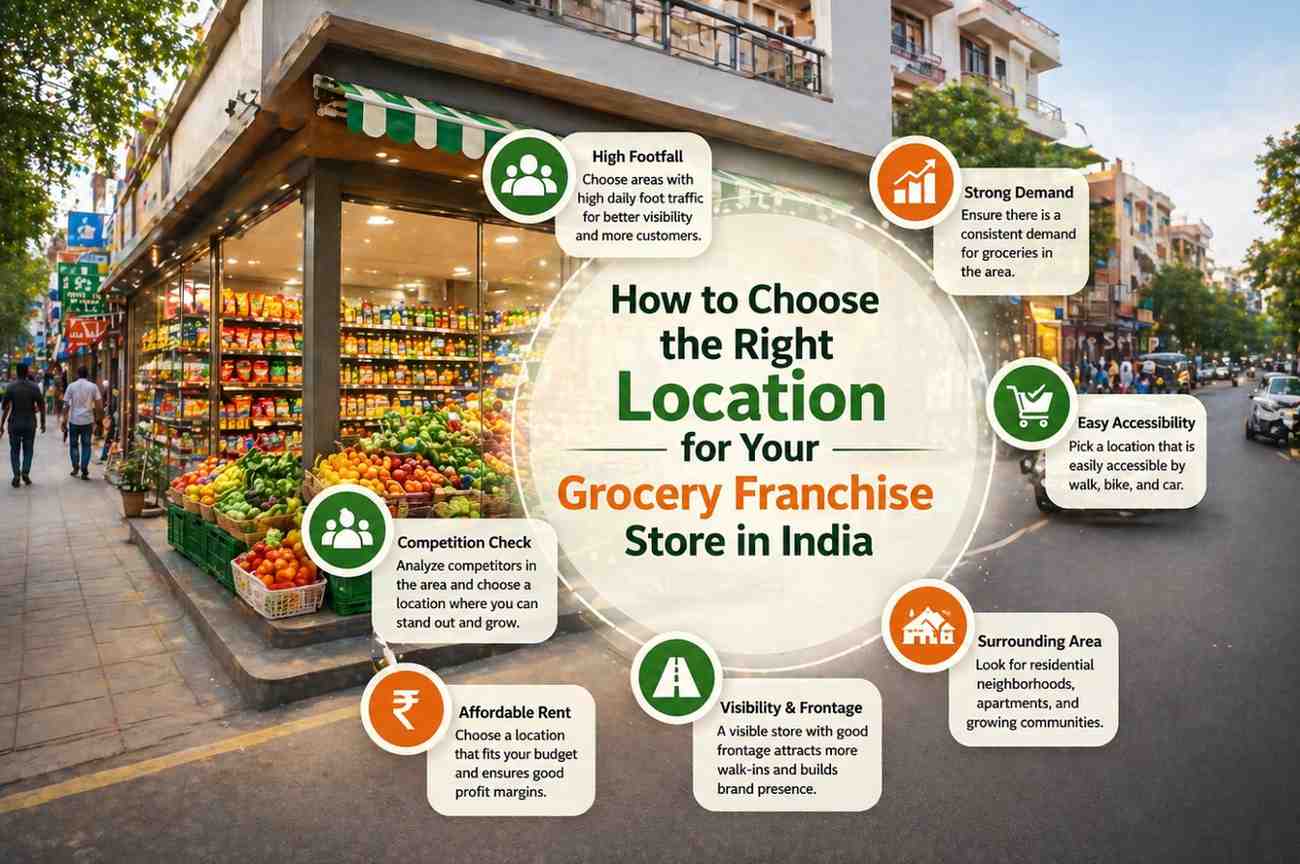
How to Choose the Right Location for Your Grocery Franchise Store in India (2026)
Location can make or break your grocery franchise store. Learn the key factors — footfall, demographics, competition, rent & more — to find the perfect spot for your Buyzaar Mart store in India.
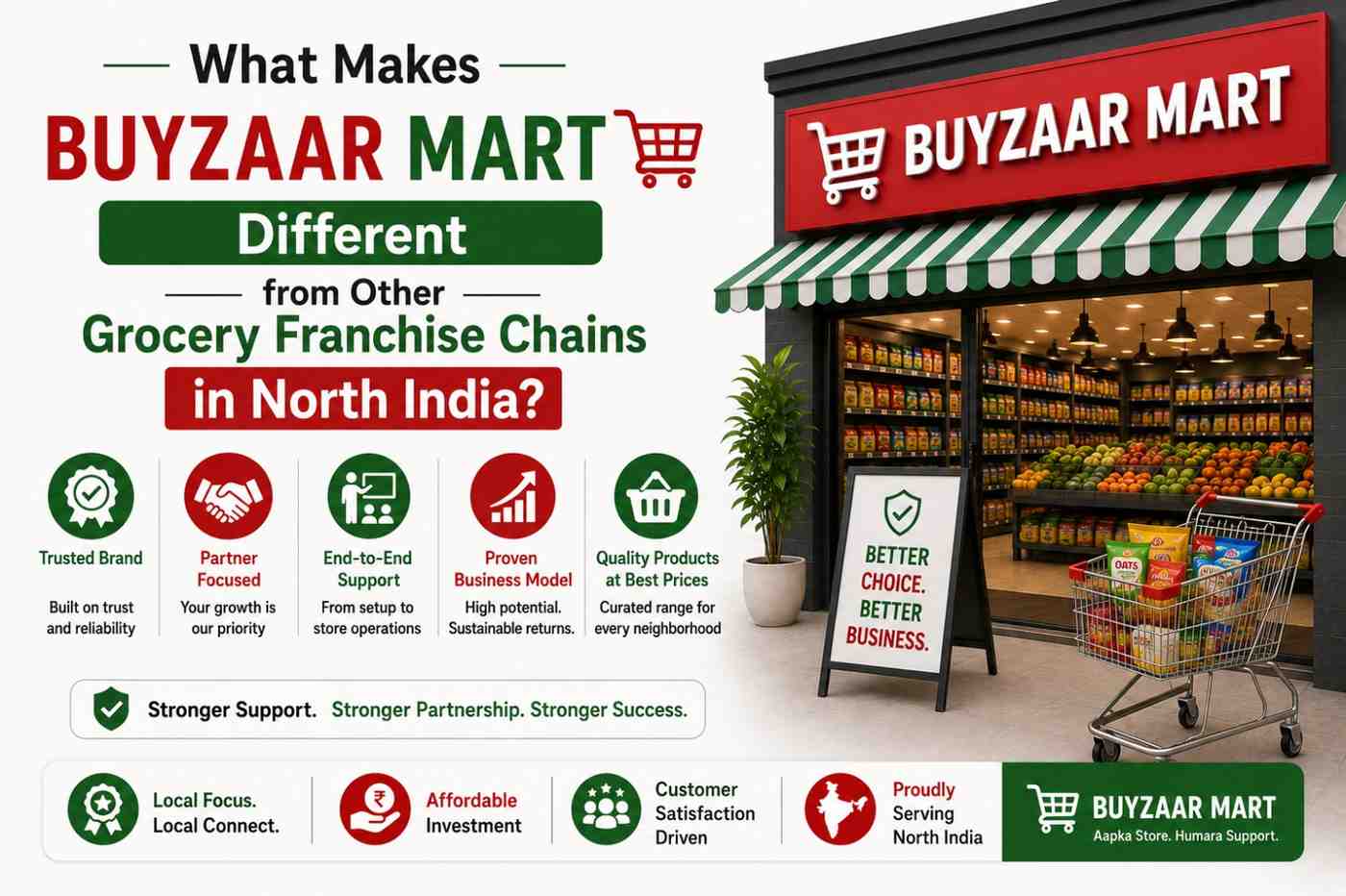
What Makes Buyzaar Mart Different from Other Grocery Franchise Chains in North India? (2026)
Wondering what sets Buyzaar Mart apart from other grocery franchise chains in North India? Discover the key differentiators — from tech-enabled operations and FMCG brand partnerships to franchisee-first support and profit margins.
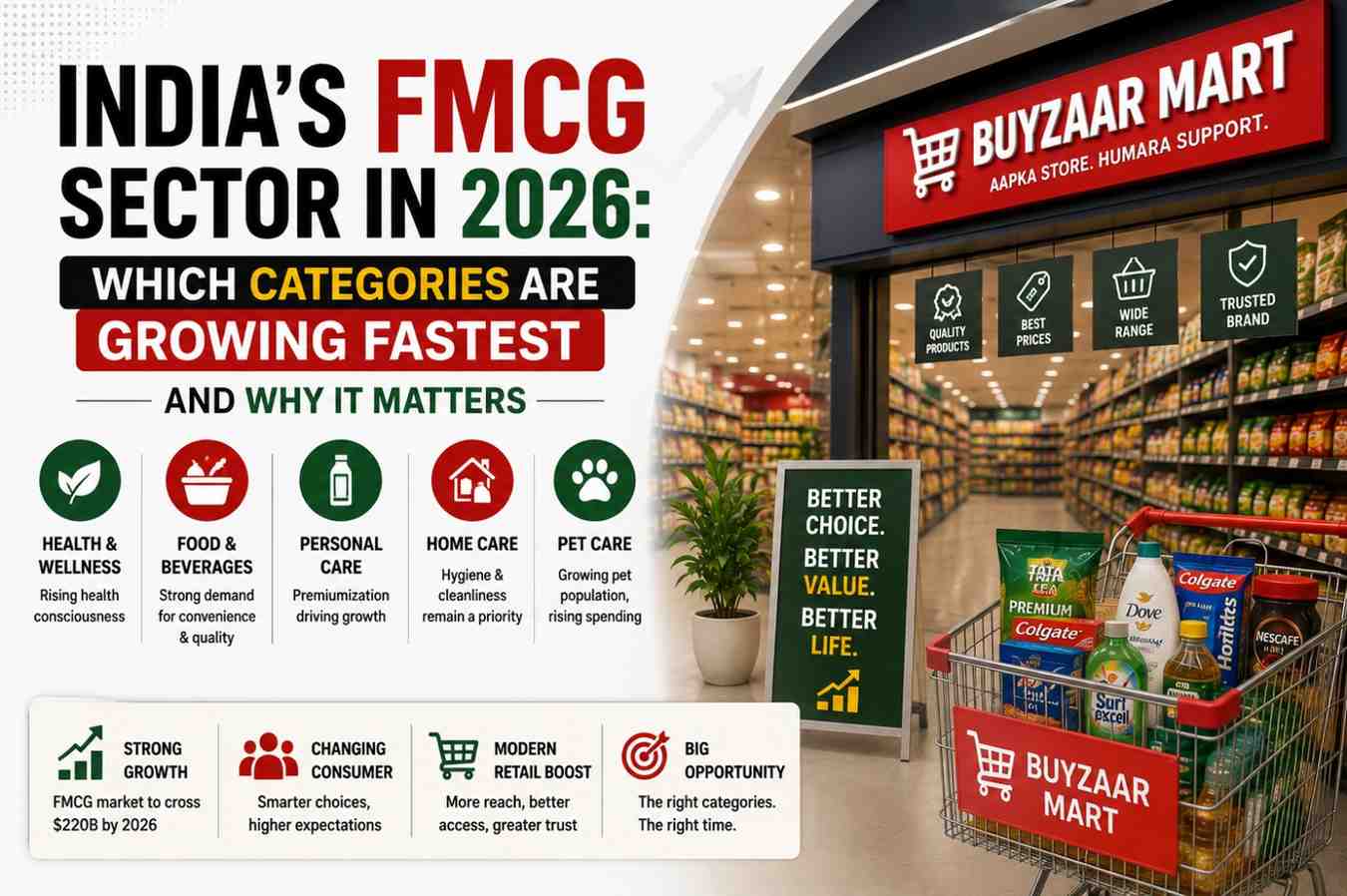
India's FMCG Sector in 2026: Which Categories Are Growing Fastest and Why It Matters
India's FMCG market is projected to hit ₹10.2 lakh crore by 2026. Discover which categories are growing fastest — from health foods to personal care — and what it means for grocery franchise owners across North India.