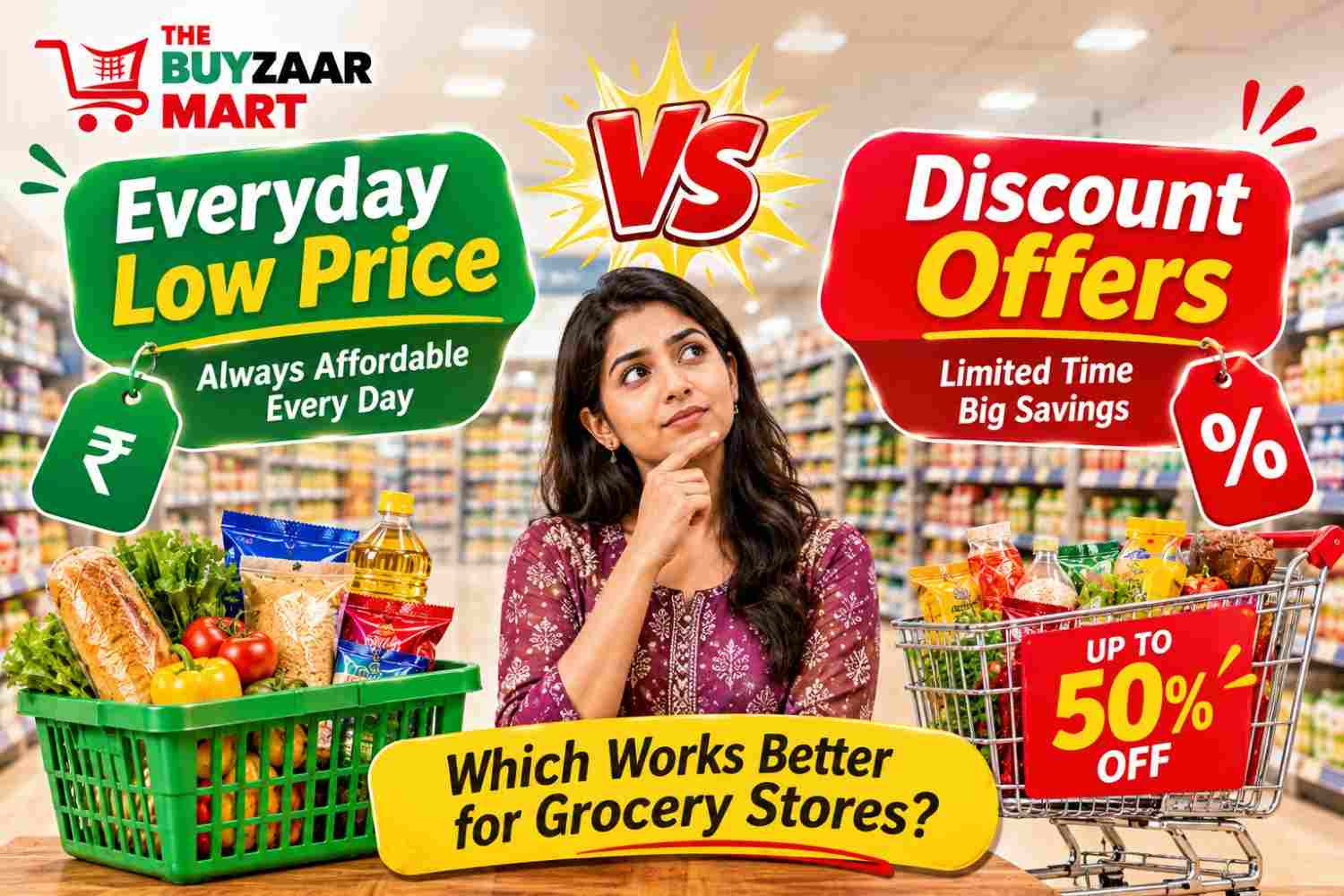
EDLP vs Discount Offers: Which Works Better for Grocery Stores?
Everyday Low Price or discount offers? Learn which pricing strategy builds loyalty, protects margins and grows footfall for your grocery store, with a smart hybrid plan.
Everyday Low Price or discount offers? Learn which pricing strategy builds loyalty, protects margins and grows footfall for your grocery store, with a smart hybrid plan.
What Is Everyday Low Price (EDLP)?
- •EDLP means keeping prices consistently competitive every day, without waiting for a sale or festival to offer value.
- •The customer always knows the price is fair, so they don’t need to hunt for deals or compare shops before buying.
- •Daily-need categories such as atta, rice, dal, oil, sugar and milk, where shoppers notice price changes and buy again and again.
What Are Discount Offers?
- •Discount offers are temporary price cuts, combo deals, “buy more, save more” packs, or festival promotions that run for a limited period.
- •The customer feels urgency and excitement because the deal won’t last.
- •Weekend sales, bundle offers, clearance discounts, loyalty-card deals and brand-sponsored promotions.
Key Differences Between the Two Strategies
- •When prices stay steady, customers start believing your store is “always cheap”, which is hard for competitors to copy.
- •Offers create buzz and a sense of winning, but shoppers may begin to feel regular prices are too high.
- •With steady prices, you can forecast margins more accurately and avoid sudden dips caused by deep discounts.
- •Heavy markdowns on high-volume items can wipe out margin unless they’re funded by the brand or balanced by higher-margin products in the basket.
- •Shoppers return for their regular monthly and weekly needs because they trust the price.
- •Offers pull in deal-seekers and occasional shoppers, but they often disappear when the offer ends.
- •Demand is steadier, so ordering, stocking and billing are easier for staff to manage.
- •Every promotion means new shelf tags, billing updates, extra stock and staff briefings, and more room for errors.
Pros and Cons of Everyday Low Price
- •Families who trust your pricing do their monthly shopping with you instead of splitting it across stores.
- •You don’t need constant advertising to announce offers, because the price itself is the message.
- •Fewer price changes mean fewer billing disputes and less shelf-label confusion.
- •Low prices on key items leave little room for error, so purchasing and wastage control must be sharp.
- •Without visible offers, the store can feel ordinary unless service, freshness and range make up for it.
Pros and Cons of Discount Offers
- •A well-timed offer can lift footfall during slow days or help clear slow-moving stock before expiry.
- •Diwali, Holi, wedding season and monsoon stocking are natural moments when shoppers expect deals.
- •Customers may wait for the next offer before buying, which weakens regular full-price sales.
- •Frequent discounts can make the store look as though its normal prices are inflated.
Which Works Better for Grocery Stores?
- •Staples and high-frequency items should carry steady, competitive prices so customers trust you on the things they buy most.
- •A customer who sees fair prices on atta and oil assumes the rest of the store is fair too.
- •Snacks, beverages, personal care, home care and seasonal products respond well to combos and limited-time deals.
- •These categories usually carry better margins and give you room to run offers without hurting profit.
- •Small and mid-size stores depend on repeat shoppers from the same lanes and colonies, so consistency and relationships matter more than flashy sales.
- •For most neighbourhood grocery stores, EDLP on staples plus selective offers on other categories works better than either strategy alone.
How to Build a Smart Hybrid Pricing Plan
- •Identify 30–40 high-frequency items customers compare most, and keep them at honest, competitive prices every day.
- •Mark categories with healthier margins, where offers and combos make sense.
- •Run bigger promotions during festivals, wedding season and the change of weather, when baskets naturally grow.
- •Use small weekday deals to even out footfall instead of discounting every day.
- •Lean on FMCG partners’ schemes and launch offers so a large share of the discount cost is not coming from your own margin.
- •Display offers clearly at the shelf and billing counter so customers see the saving immediately.
- •Check which offers moved stock and which only reduced profit, then drop the weak ones.
- •Their comments, complaints and repeat-buying patterns will tell you when a price feels right.
Common Pricing Mistakes to Avoid
- •When every product is on offer, nothing feels special and margins suffer across the entire store.
- •Compare prices with nearby stores on key items, but don’t copy them blindly; compete where it matters most.
- •A good price that customers don’t notice does nothing, so make EDLP items visible with clear shelf tags.
- •A low price on stale or poorly stored products loses trust faster than any offer can win it.
- •Freshness, hygiene and FSSAI-compliant handling should never be compromised.
How The Buyzaar Mart Approaches Value for Shoppers
- •Our tagline, "अपना बाजार – बचत का साथ, Quality की बात," reflects a simple belief that savings and quality must go together.
- •Partnerships with 50+ FMCG brands help stores offer branded products at fair prices and access manufacturer schemes.
- •Mini Mart, Super Mart and Hyper Mart formats let owners adapt pricing and promotions to their locality and customer mix.
- •The buyback policy on expired or damaged goods reduces stock risk, so store owners can plan offers with more confidence.
Frequently Asked Questions
Is EDLP better than discounts for small grocery stores?
For most small stores, a mix works best: EDLP on staples to build trust, and selective discounts on other categories to add excitement.
Do discount offers reduce profit?
They can if used on everything. Targeted offers backed by brand schemes protect margins better.
Which items should be on EDLP?
High-frequency essentials such as atta, rice, dal, oil, sugar and milk, which customers compare most.
How often should a grocery store run offers?
Around festivals, seasonal changes and slow weekdays, rather than all the time.
Can a hybrid strategy work for a mart franchise?
Yes. A hybrid model suits franchise stores well, as it balances daily trust with promotional spikes.
Related Articles
Dairy & Bakery Section in a Grocery Store: Profit Guide
Learn how to stock, price and display the dairy and bakery section in a grocery store to cut wastage, lift basket size and boost daily profit.
Should a Grocery Store Sell Fruits & Vegetables? Pros & Cons
Should a grocery store sell fruits and vegetables? Compare the pros and cons, from footfall and margins to wastage, and decide what suits your store.
Personal Care Products in a Grocery Store: Display & Margins
Learn how to display, stock and price personal care products in a grocery store. Understand margins, shelf placement and brand mix to lift basket size.