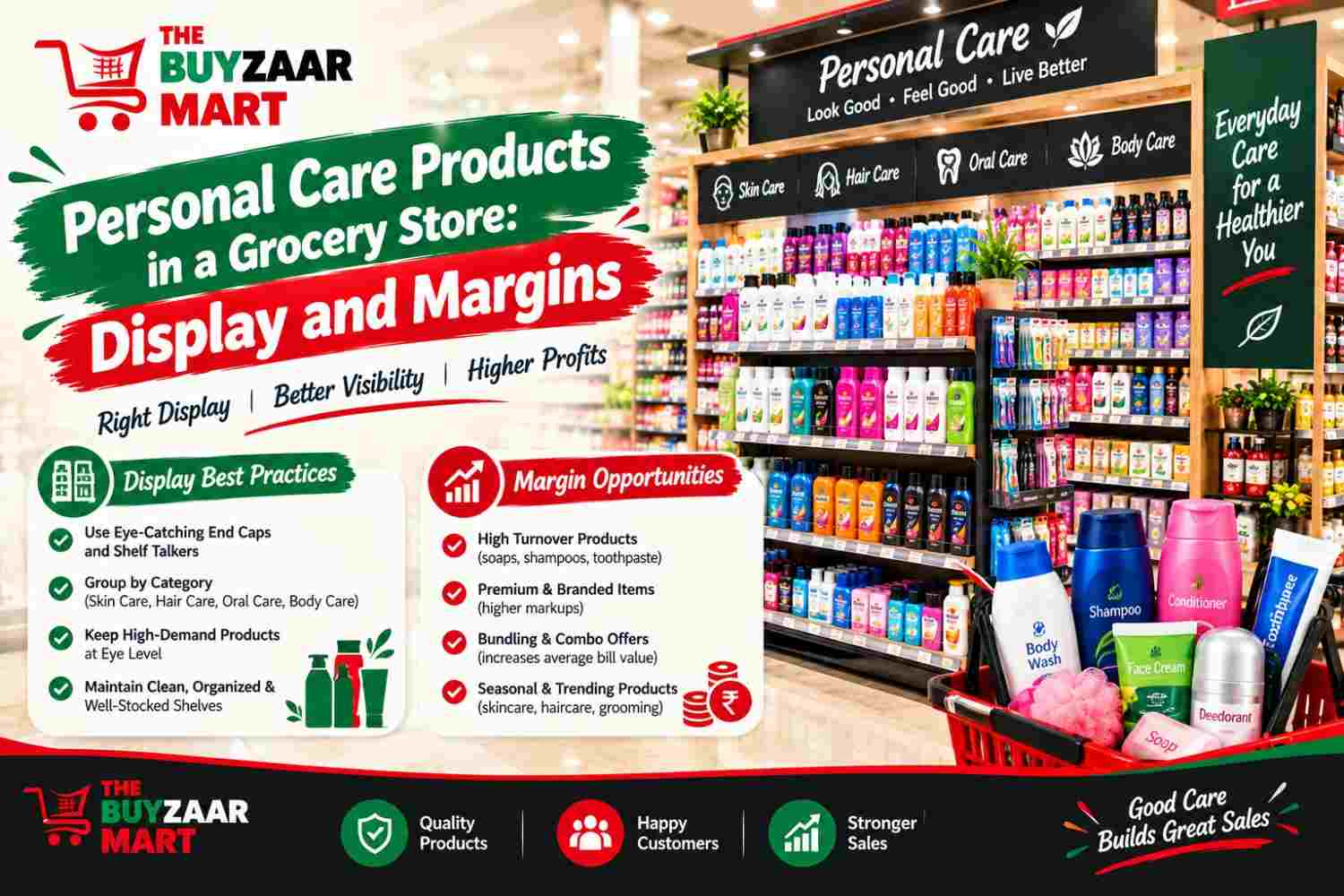
Personal Care Products in a Grocery Store: Display & Margins
Learn how to display, stock and price personal care products in a grocery store. Understand margins, shelf placement and brand mix to lift basket size.
Soap, shampoo, toothpaste, face wash and hair oil are bought in almost every household, month after month. That makes personal care one of the most dependable non-food categories in a neighbourhood grocery store. The category also offers better margins than many staples and plenty of room for add-on sales. But it only performs when products are displayed well, ranged carefully and priced with clear thinking. This guide explains how to display, stock and manage personal care for better margins.
Why Personal Care Matters in a Grocery Store
- •Toothpaste, soap and shampoo are used daily and replaced on a regular cycle.
- •This steady demand brings customers back and supports stable monthly sales.
- •Personal care items often carry higher price per unit than many food staples.
- •A single shampoo or face wash purchase can noticeably raise the bill.
- •Offering personal care lets customers finish household shopping in one visit.
- •This convenience reduces the chance that they shift part of their spending elsewhere.
Understanding Margins in Personal Care
- •Branded personal care generally offers margins that compare well with many staple food items.
- •Premium and value-added products usually earn more per unit than basic packs.
- •Brand, pack size, trade schemes, discounts and your buying rate all influence profit.
- •Margins differ across brands and distributors, so track actual profit by product.
- •A fast-selling item with a modest margin can earn more than a slow item with a higher one.
- •Judge each product by margin, speed of sale and the space it uses.
Core Categories to Stock
- •Toothpaste, toothbrushes, bathing soap, hand wash and sanitary products form the base of the range.
- •Keep these always in stock, since customers rarely accept substitutes for them.
- •Shampoo, hair oil, conditioner and hair colour sell in many price points and pack sizes.
- •Stock sachets and small bottles alongside larger packs to serve every budget.
- •Face wash, creams, lotions, talc, deodorant, razors and shaving products suit most households.
- •Offer men’s and women’s options, and one or two value-driven choices in each type.
- •Baby soap, baby oil, diapers and wipes bring loyal, repeat-buying parents.
- •A small, well-chosen baby range builds long-term trust.
Building the Right Brand Mix
- •Well-known brands move quickly and need little selling effort.
- •Make sure the top two or three brands in each category are always available.
- •Include one or two value brands for price-conscious shoppers.
- •Customer requests at the counter show which local or regional brands to add.
- •Private label can improve margin where quality and trust are good.
- •Introduce it in simple categories first, and expand only if customers accept it.
Display Strategy: Where and How to Place Personal Care
- •Place personal care in a clear zone of its own, away from strong food odours and raw items.
- •A clean, well-lit section signals quality and invites browsing.
- •Put best-sellers and higher-margin products at eye level, where most shoppers look first.
- •Keep bulky or low-priced items on lower shelves and light items on higher ones.
- •Arrange shelves by use, such as oral care, hair care, skin care and baby care.
- •Clear grouping helps shoppers find items quickly and discover related products.
- •Face every product forward, and fill gaps promptly.
- •Empty shelf space tells shoppers that the item is unavailable or the store is careless.
Smart Merchandising to Lift Basket Size
- •Place toothbrushes beside toothpaste and conditioner next to shampoo.
- •Complementary placement encourages customers to pick up both items.
- •Small items like sachets, lip balms, razors and travel packs sell well near the counter.
- •These low-price items add margin without needing extra effort.
- •Use clear category boards and visible price labels on every shelf.
- •Good signage reduces questions and speeds up decisions.
- •Combo packs such as soap multipacks or shampoo with conditioner raise basket size.
- •Use offers selectively on items with healthy margin, and avoid constant discounting.
Pricing and Pack Size Strategy
- •Small packs suit trial and low budgets, while larger packs suit regular households.
- •A range of sizes helps you serve more customers without adding many brands.
- •Sell within the printed MRP and keep price tags consistent and accurate.
- •Honest pricing protects customer trust and avoids compliance issues.
- •Distributors change schemes often, so compare offers before placing large orders.
- •Buy larger lots only on fast-moving products with a clear scheme advantage.
Inventory and Stock Control
- •Use POS reports to see which brands and sizes sell, and reorder accordingly.
- •Avoid ordering by habit, since needs differ across neighbourhoods and seasons.
- •Personal care products also carry expiry or best-before dates, especially creams and baby items.
- •Rotate stock with FIFO and check shelves regularly.
- •Identify items that sit for weeks and reduce reorder quantity.
- •Move them to a better shelf, bundle them or run a small offer before they age.
- •Store products in a dry, clean area away from heat, moisture and food odours.
- •Keep packaging intact and shelves dusted so products always look fresh and new.
- •Separate personal care from food items to avoid contamination and strong smells.
Common Mistakes to Avoid
- •Placing the category in a dark or cluttered corner.
- •Stocking too many similar brands and sizes, which ties up cash.
- •Ignoring expiry dates on creams, lotions and baby products.
- •Running heavy discounts on items that already sell well.
- •Letting shelves stay empty or untidy for days.
How a Buyzaar Mart Franchise Supports Better Personal Care Sales
- •Uniform store design and layout planning help owners place personal care where it sells best.
- •POS billing and CRM show fast and slow items, so ordering follows real demand.
- •Partnerships with leading FMCG brands cover the dependable branded personal care range.
- •Training and operational support help teams follow display, stock rotation and hygiene routines.
- •Mini Mart, Super Mart and Hyper Mart formats let you choose a size that fits your market and budget.
Final Thoughts
- •Personal care offers steady demand, healthy margins and strong add-on potential for a grocery store.
- •Results come from a focused range, clear display, careful pricing and regular stock review.
- •Aspiring store owners who want a proven retail model with these systems can explore the franchise opportunities at The Buyzaar Mart.
Frequently Asked Questions
Are personal care products profitable in a grocery store?
Yes, they generally offer steady demand and healthy margins. Profit depends on brand mix, pricing and stock control.
Where should personal care products be placed in a grocery store?
Use a clean, well-lit zone of its own, with best-sellers at eye level and related items grouped together.
How can a grocery store increase personal care sales?
Use cross-merchandising, impulse items near billing, multiple pack sizes and selective bundle offers.
Should a small store stock premium personal care brands?
Yes, in limited quantity. Start with a few popular options and expand using POS sales data.
How often should personal care stock be checked?
Review stock and expiry dates weekly, and rotate older batches forward using FIFO.
Related Articles
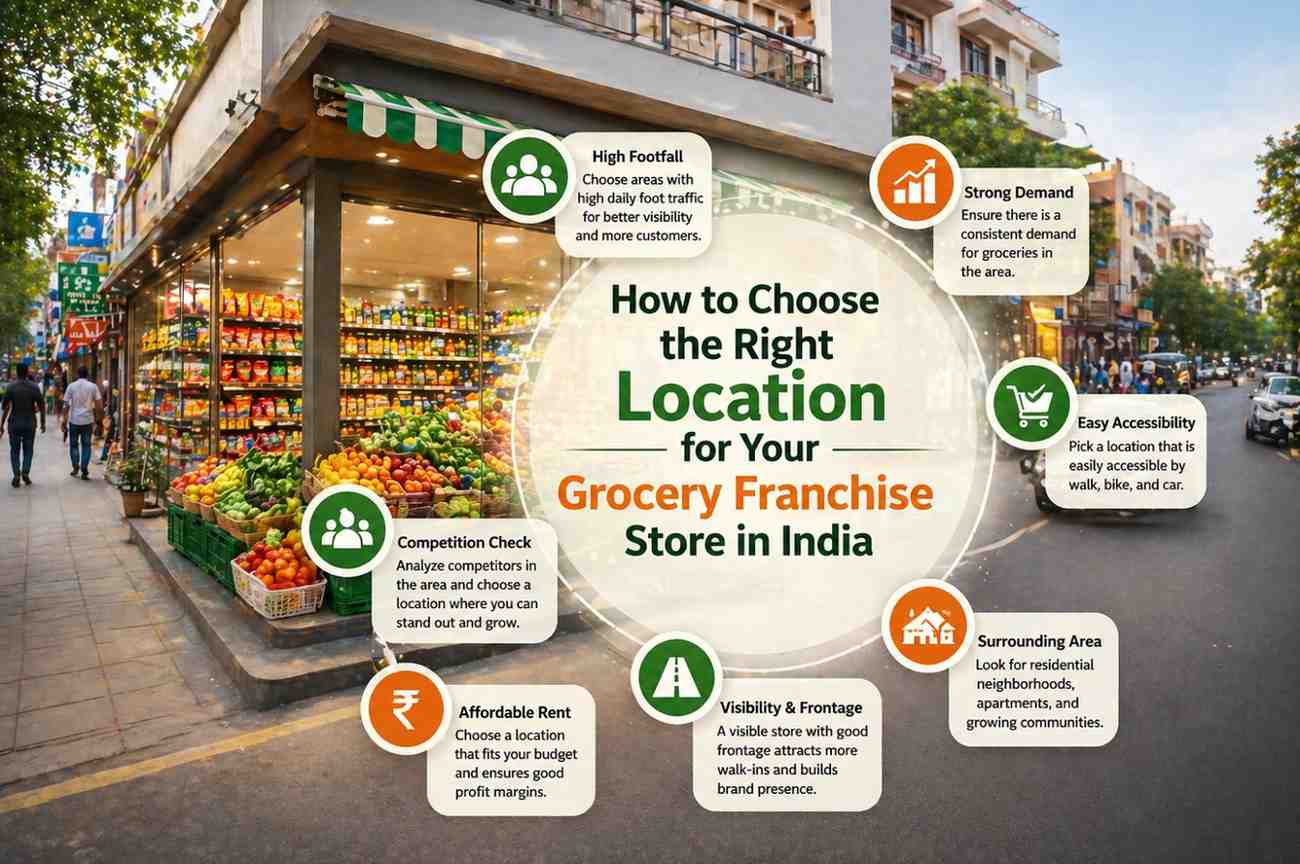
How to Choose the Right Location for Your Grocery Franchise Store in India (2026)
Location can make or break your grocery franchise store. Learn the key factors — footfall, demographics, competition, rent & more — to find the perfect spot for your Buyzaar Mart store in India.
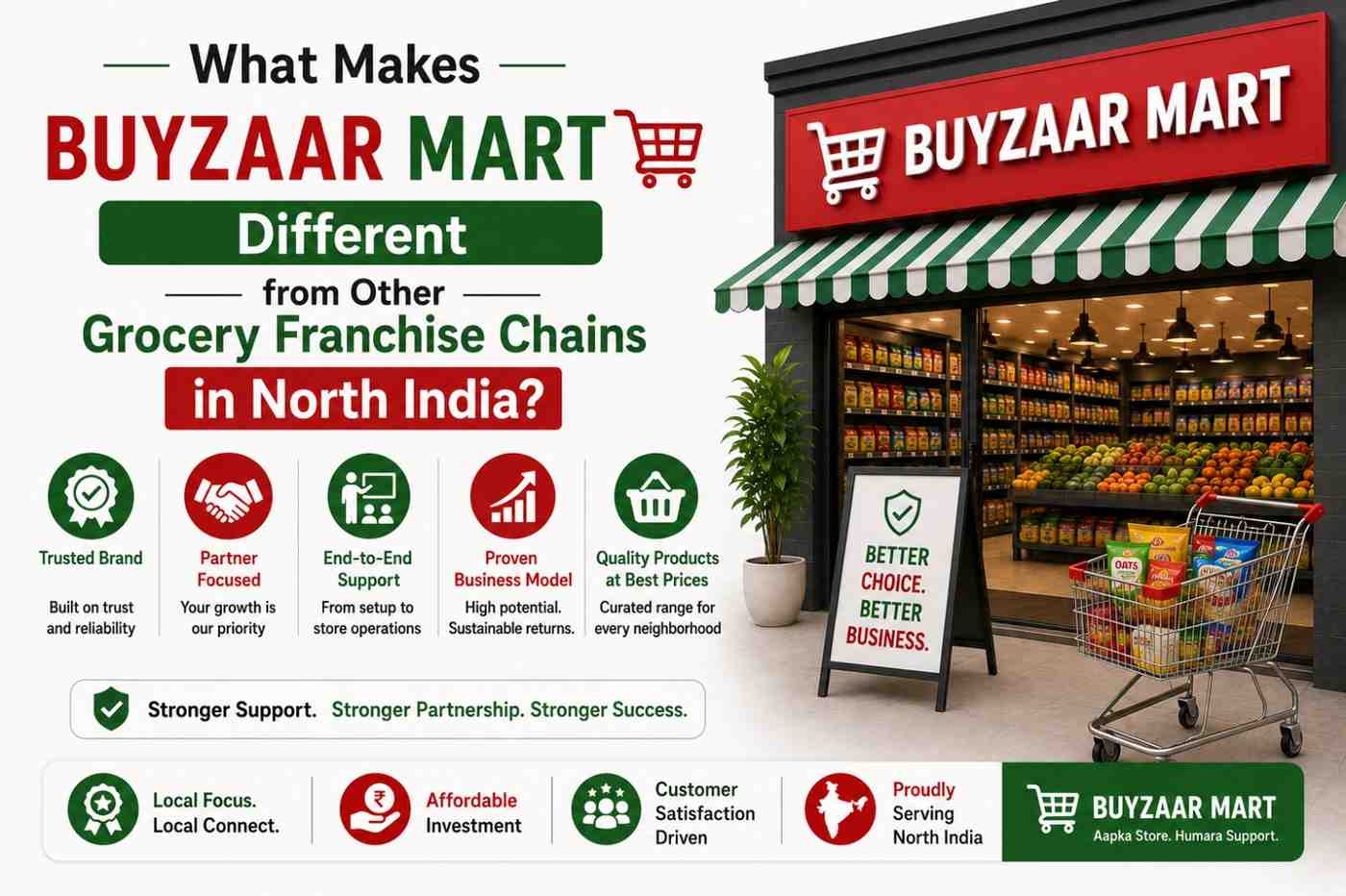
What Makes Buyzaar Mart Different from Other Grocery Franchise Chains in North India? (2026)
Wondering what sets Buyzaar Mart apart from other grocery franchise chains in North India? Discover the key differentiators — from tech-enabled operations and FMCG brand partnerships to franchisee-first support and profit margins.
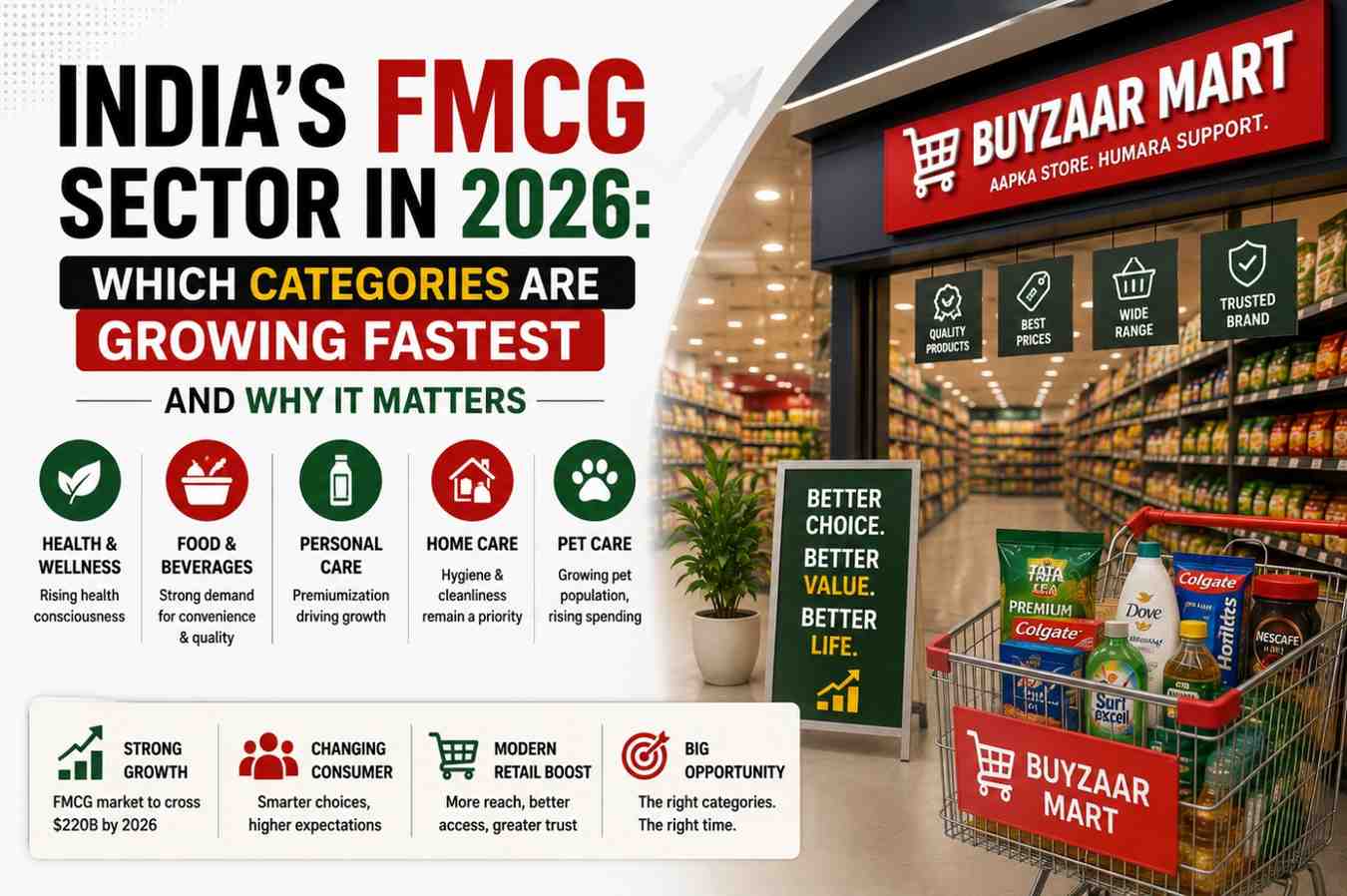
India's FMCG Sector in 2026: Which Categories Are Growing Fastest and Why It Matters
India's FMCG market is projected to hit ₹10.2 lakh crore by 2026. Discover which categories are growing fastest — from health foods to personal care — and what it means for grocery franchise owners across North India.