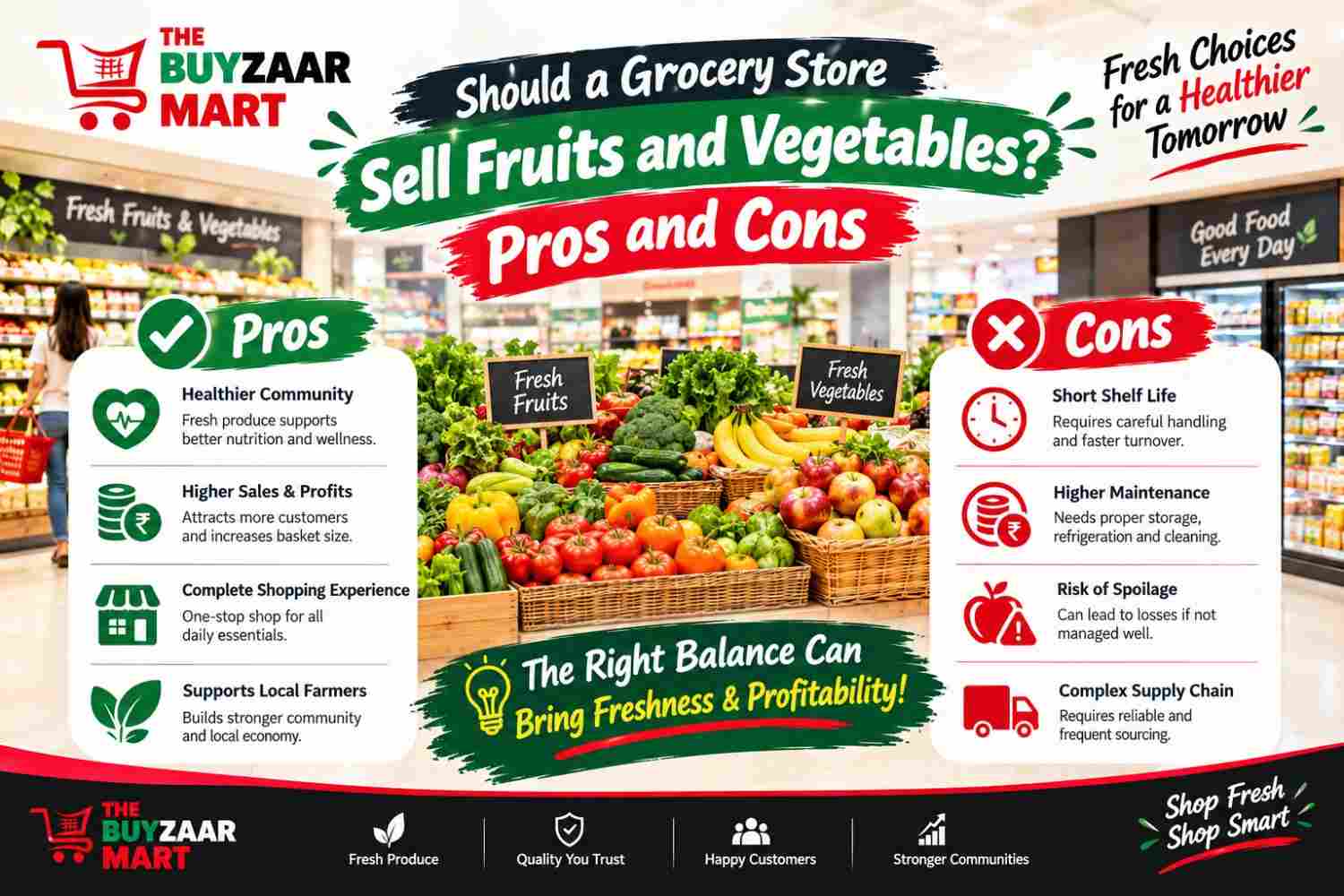
Should a Grocery Store Sell Fruits & Vegetables? Pros & Cons
Should a grocery store sell fruits and vegetables? Compare the pros and cons, from footfall and margins to wastage, and decide what suits your store.
Fruits and vegetables are among the most frequently bought items in any Indian household. Many store owners still wonder if adding a fresh produce section is worth the effort. The category can bring daily footfall and trust, but it also brings wastage, daily handling and price swings. This guide compares the pros and cons, and helps you decide whether and how to start.
Why This Question Matters for Grocery Owners
- •Most families buy vegetables every day or every second day, and fruits several times a week.
- •Few other categories bring shoppers back as often, which makes the decision important.
- •A fresh section signals that your store is a one-stop destination for household needs.
- •A poorly managed one signals the opposite, so the choice is about execution as much as intent.
Pros of Selling Fruits and Vegetables
- •Daily-need products bring customers in far more often than packaged goods alone.
- •Each extra visit is a chance to sell staples, snacks and dairy in the same trip.
- •A shopper who comes for tomatoes and onions often adds pulses, oil, spices and bread.
- •Fresh produce acts as the anchor that lifts the total bill.
- •Customers who find fresh, fairly priced produce tend to treat your store as their regular choice.
- •Trust built in this category often extends to the rest of your range.
- •Many shoppers like to pick produce by hand, which is something apps cannot fully offer.
- •A good local fresh section gives a neighbourhood store a clear edge.
- •Nearby farmers and wholesalers can supply fresh stock in smaller, frequent lots.
- •Local sourcing can improve freshness and help keep buying costs reasonable.
Cons of Selling Fruits and Vegetables
- •Produce spoils quickly, and unsold stock can turn into a loss within a day or two.
- •Weak demand forecasting, especially in hot or humid weather, makes this worse.
- •Prices change daily with mandi rates, so margins can shrink without warning.
- •Customers also compare vegetable prices closely, which limits room for markup.
- •Produce needs early sourcing, sorting, trimming, display and constant tidying.
- •This demands trained staff time every day, including mornings and weekends.
- •Fresh items need good airflow, shade and in some cases cold storage.
- •Small stores may struggle to give produce enough space without cutting other categories.
- •Customers notice bruised, wilted or dirty items instantly.
- •Wet floors, waste and pests can damage the look and trust of the whole store.
Pros vs Cons at a Glance
- •It supports frequency, basket size, loyalty and local identity.
- •It adds wastage, price volatility, labour and hygiene demands.
- •The outcome depends less on the category and more on how well you plan, source and manage it.
When You Should Sell Fruits and Vegetables
- •Families living nearby will buy daily, so demand is steady and predictable.
- •Housing societies and dense neighbourhoods are the best fit.
- •You need a dependable wholesaler or farmer within a short distance.
- •A backup supplier protects you when stock or quality drops.
- •You need a clean, ventilated display area and a trained person to manage it.
- •Without both, the category can become a burden.
When You Should Think Twice
- •If the store is tiny, fresh produce may crowd out faster-margin items.
- •A small curated range may work better than a full section.
- •Low demand means high spoilage and little reward.
- •Start small, or wait until the customer base grows.
- •Entering the category without a clear system usually leads to avoidable losses.
- •Build the process first, then scale.
How to Make Fresh Produce Profitable
- •Begin with high-turnover items like onions, potatoes, tomatoes, bananas, seasonal fruit and leafy greens.
- •Expand only after you see which items sell steadily.
- •Smaller, frequent orders keep produce fresh and reduce spoilage.
- •Match quantity to weekday, weekend and festival demand.
- •Use bright lighting, clean crates and clear price tags.
- •Put the freshest and most colourful items at eye level and near the entrance.
- •Sell older stock first and remove damaged items at once.
- •Move slow-moving but still good produce to discount shelves early in the day.
- •POS reports show which items move fast and which cause losses.
- •Review weekly and adjust your range using facts, not guesswork.
How a Buyzaar Mart Franchise Supports Fresh Categories
- •Uniform store design and layout planning help owners place fresh sections in the right spot.
- •POS billing and CRM give data on what sells, so ordering follows demand.
- •Training and operational support help teams follow hygiene, display and stock rotation routines.
- •Partnerships with leading FMCG brands cover the dependable packaged range alongside fresh items.
- •Mini Mart, Super Mart and Hyper Mart formats let you pick a size that suits your market and budget.
Final Thoughts
- •A fresh produce section can bring footfall, larger baskets and loyal customers, but it demands discipline.
- •Stores with strong demand, reliable suppliers and good systems usually benefit most.
- •Aspiring store owners who want a proven retail model with these systems can explore the franchise opportunities at The Buyzaar Mart.
Frequently Asked Questions
Is selling fruits and vegetables profitable in a grocery store?
It can be, mainly through footfall and bigger baskets. Margins are thin, so wastage control decides the result.
How can a grocery store reduce vegetable wastage?
Order small and often, follow FIFO, track daily sales and discount near-spoilage items early.
Can a small grocery store sell fresh produce?
Yes, with a limited core range of fast-moving items. Avoid a full section if space and staff are limited.
Do fruits and vegetables increase repeat customers?
Usually yes, since they are daily-need items. Fresh, well-displayed produce builds trust and encourages regular visits.
How should a store start a fruit and vegetable section?
Begin with five to ten high-turnover items, source locally, and expand using sales data.
Related Articles
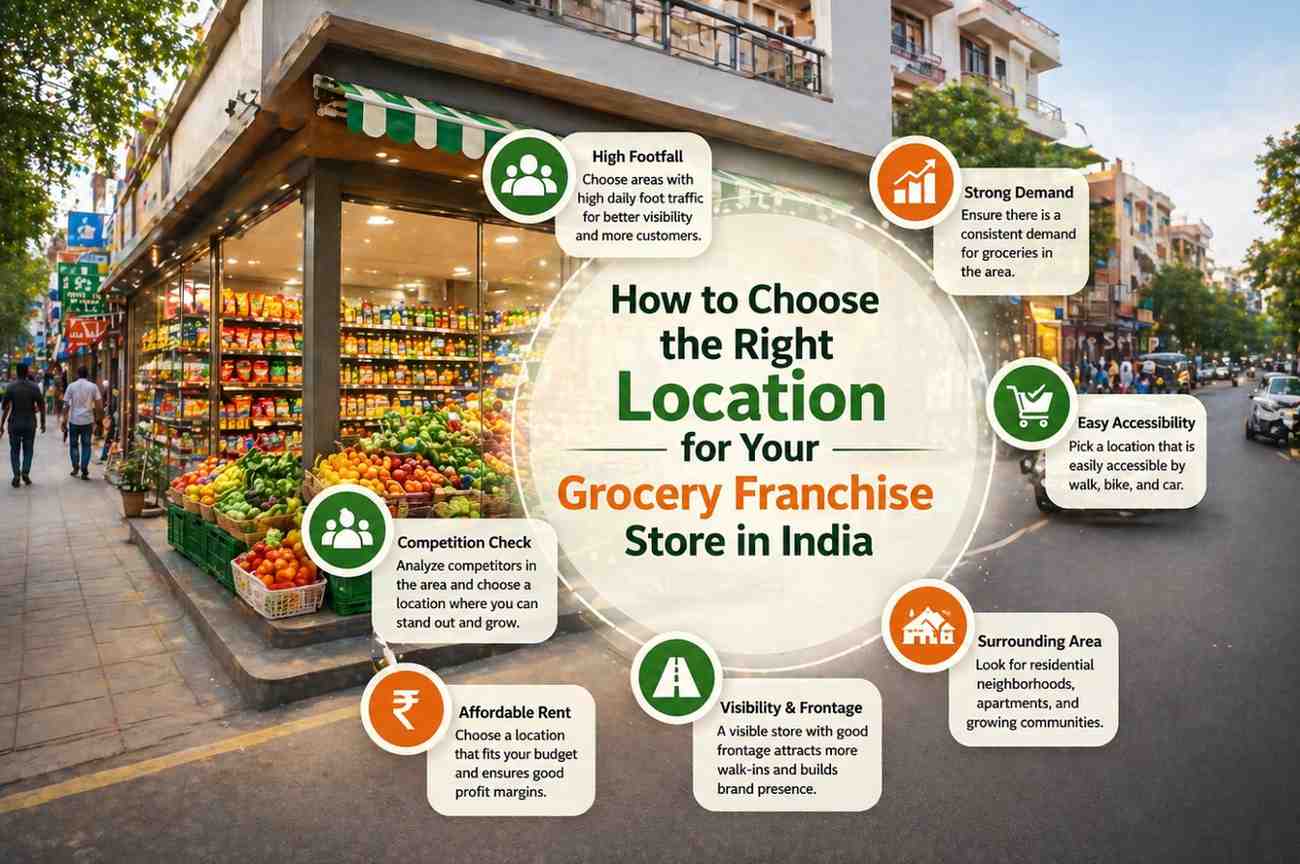
How to Choose the Right Location for Your Grocery Franchise Store in India (2026)
Location can make or break your grocery franchise store. Learn the key factors — footfall, demographics, competition, rent & more — to find the perfect spot for your Buyzaar Mart store in India.
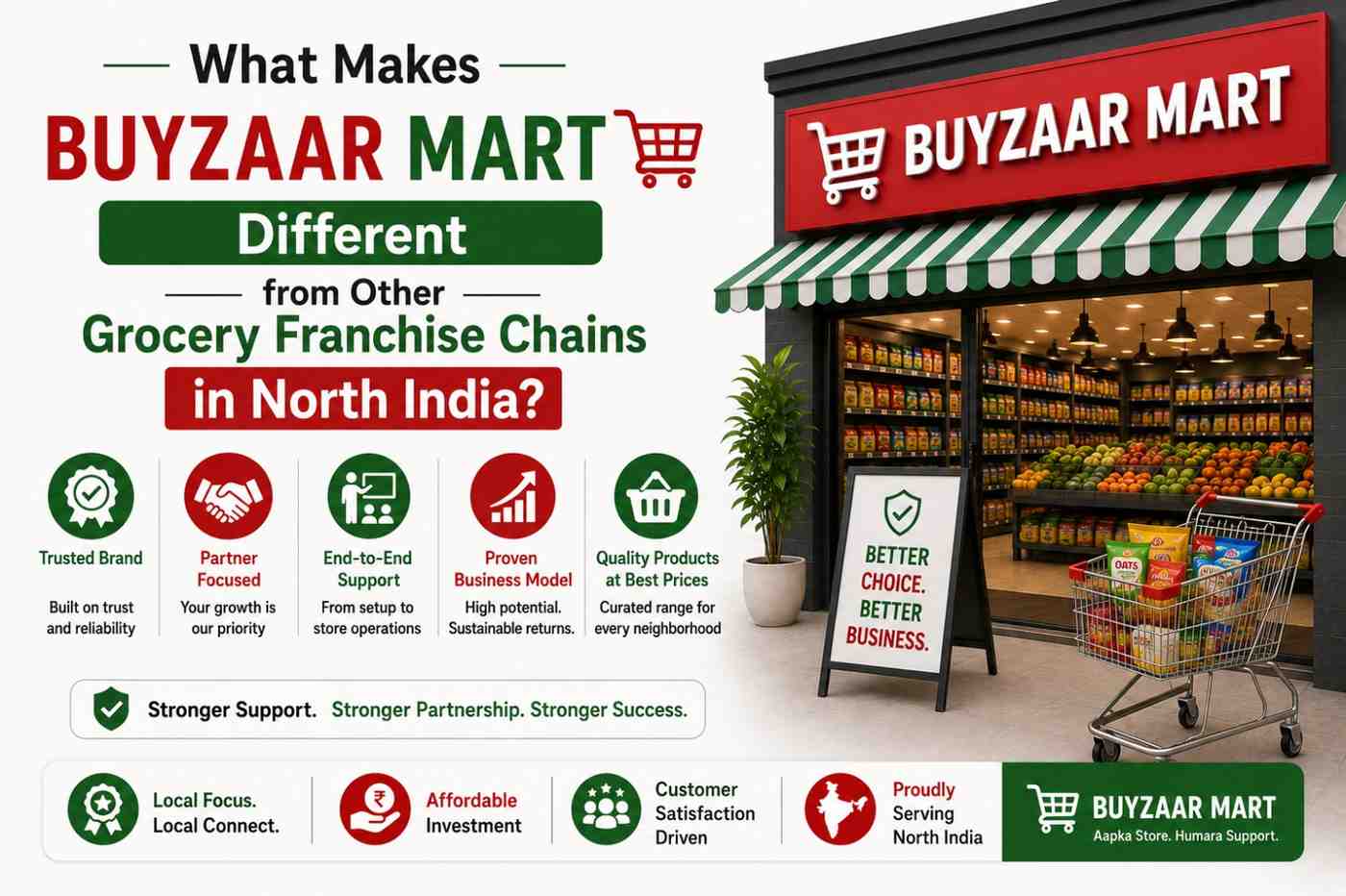
What Makes Buyzaar Mart Different from Other Grocery Franchise Chains in North India? (2026)
Wondering what sets Buyzaar Mart apart from other grocery franchise chains in North India? Discover the key differentiators — from tech-enabled operations and FMCG brand partnerships to franchisee-first support and profit margins.
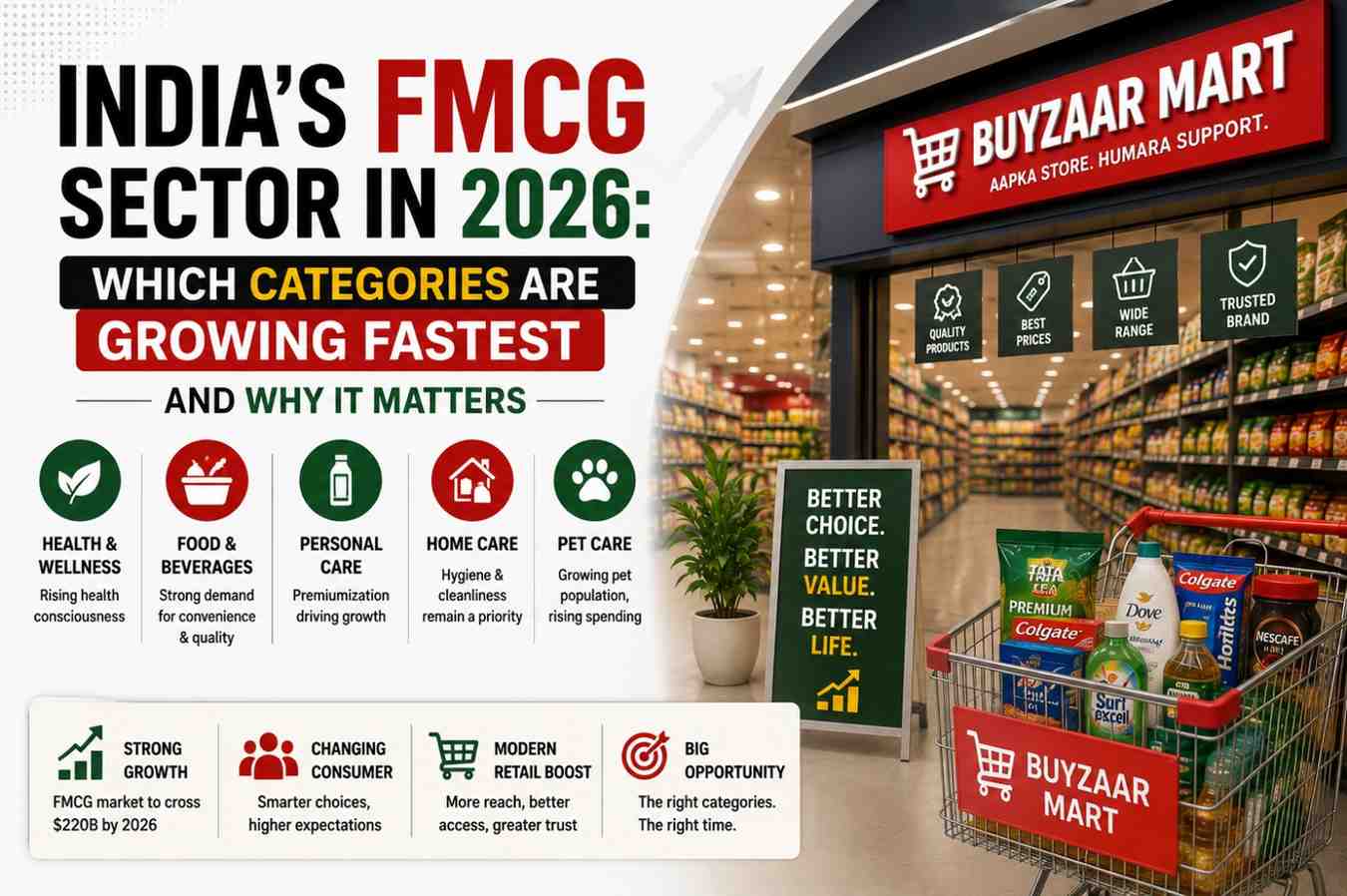
India's FMCG Sector in 2026: Which Categories Are Growing Fastest and Why It Matters
India's FMCG market is projected to hit ₹10.2 lakh crore by 2026. Discover which categories are growing fastest — from health foods to personal care — and what it means for grocery franchise owners across North India.