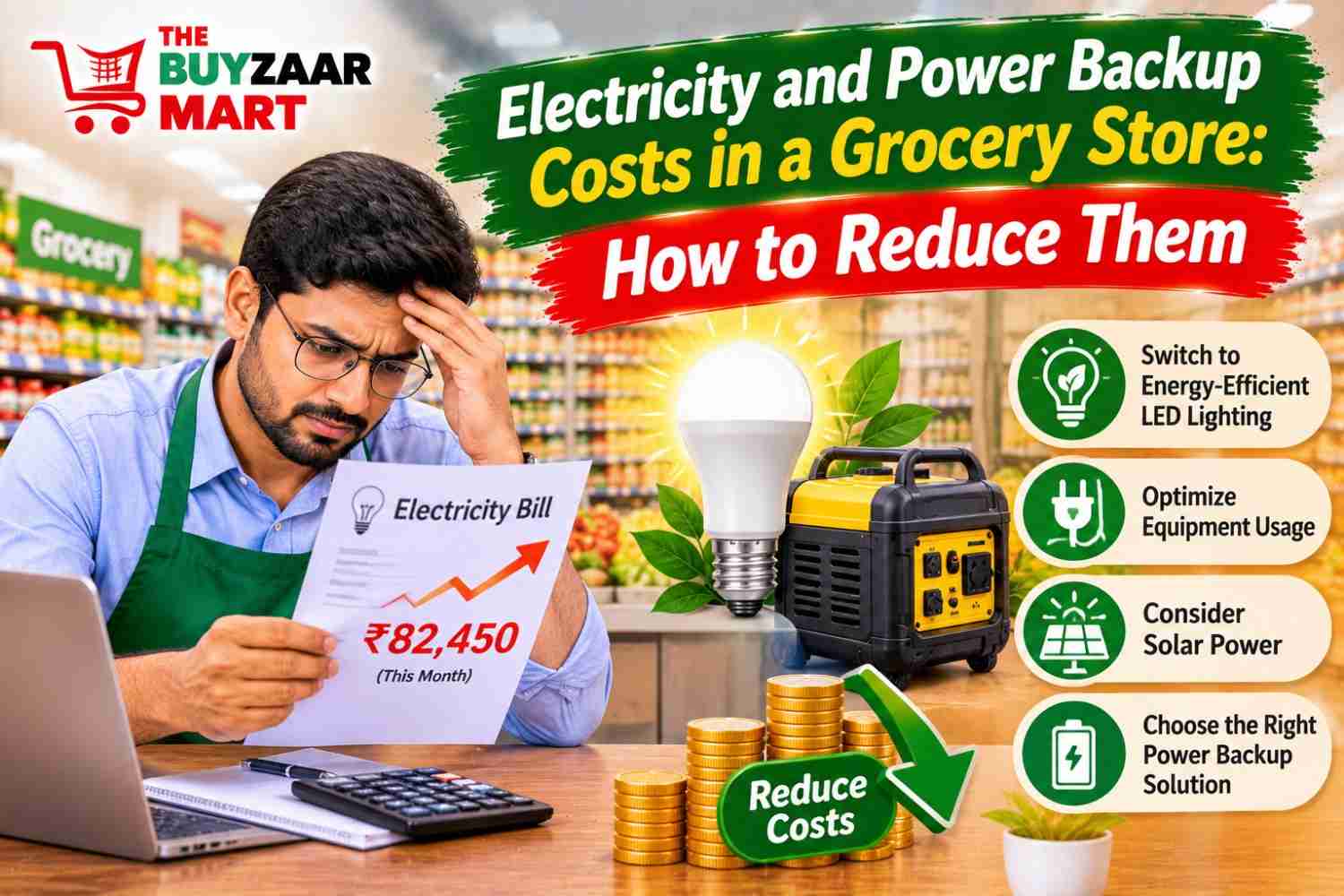
Grocery Store Electricity & Power Backup Costs: Cut Them
Cut grocery store electricity and power backup costs with practical tips on refrigeration, lighting, billing, solar and DG sets. Protect your margins.
Electricity is one of the largest recurring costs for a grocery store, right after rent, salaries and stock. Refrigeration, lighting, billing systems and air conditioning run for long hours, and power cuts add the cost of inverters and diesel generators. Small leaks in power use are easy to miss, but over a year they quietly eat into your margin. This guide shows where the money goes and the practical steps to bring the bill down without hurting customer experience or product safety.
Where a Grocery Store’s Power Goes
- •Refrigeration: chillers, deep freezers, dairy and beverage coolers, which run around the clock and usually take the biggest share.
- •Lighting: aisle lights, signage and display lighting, which run through the whole opening time.
- •Air conditioning and ventilation: more common in larger Super and Hyper formats.
- •Billing and IT: POS counters, computers, printers, CCTV and routers.
- •Others: weighing scales, water coolers, bakery or ready-to-eat equipment, and exhaust fans.
- •Old, inefficient appliances.
- •Poor insulation, door gaskets and overfilled cabinets.
- •Equipment left on after closing time.
- •Wrong tariff category or a power factor penalty on the bill.
- •Diesel generator use for short, frequent outages.
Step 1: Measure Before You Cut
- •Check your tariff category, sanctioned load, fixed charges and unit rate.
- •Look for peak-hour or time-of-day charges, power factor surcharges and demand charges, if applicable in your state.
- •Compare each month against sales to see cost per ₹100 of sales.
- •List every major appliance with its rated wattage and daily running hours.
- •Use a simple plug-in energy meter or ask an electrician for a quick load check.
- •Consider a basic energy audit, which often pays for itself through the savings it identifies.
Step 2: Cut Refrigeration Costs
- •Prefer energy-efficient, star-rated units (look for higher BEE star ratings) when replacing old ones.
- •Place coolers away from direct sunlight, ovens and heat sources.
- •Keep at least a few inches of space around the back and sides for airflow.
- •Clean condenser coils regularly, because dust forces the compressor to work harder.
- •Replace worn door gaskets so cold air doesn’t leak out.
- •Defrost deep freezers on schedule, as ice build-up reduces efficiency.
- •Set the right temperature rather than the coldest setting, and follow food safety guidelines for each product type.
- •Don’t overload or leave doors open during restocking.
- •Use night curtains or glass doors on open-front chillers where practical.
- •Group fast-moving cold items to cut door-open time.
Step 3: Switch to Efficient Lighting
- •Replace tube lights and CFLs with LED panels and tubes, which use far less power for the same brightness.
- •LEDs also produce less heat, which lowers the load on cooling.
- •Divide lighting into zones, so you can switch off storage or low-traffic areas during slow hours.
- •Use timers or sensors in storerooms and back areas.
- •Use natural light near the entrance, where the layout allows.
- •Turn off or dim signage after closing, if local rules and safety allow.
Step 4: Control Air Conditioning and Ventilation
- •Set air conditioners to a sensible temperature, since each degree of extra cooling raises consumption.
- •Service filters regularly.
- •Use ceiling and exhaust fans to support, not replace, proper cooling.
- •Keep the entrance door closed or use air curtains to hold the cold in, where the budget allows.
- •Reduce heat inside the store by shading windows and avoiding unnecessary heat-producing equipment.
Step 5: Reduce Power Backup Costs
- •Note how often power goes out, for how long and at what time of day.
- •This tells you whether you need a small inverter, a larger battery bank or a generator.
- •For short and frequent cuts, an inverter with a good battery is usually cheaper to run than a diesel generator.
- •Size it to cover only critical loads: refrigeration, billing and a minimum set of lights.
- •Maintain batteries (water levels, terminals and ventilation) to extend their life.
- •Use the DG set only for long outages, and avoid running it at very low load.
- •Service it regularly and track diesel use per hour.
- •Prevent diesel theft or wastage with simple logs.
- •Rooftop solar can reduce daytime grid consumption, which suits shops that operate mainly in daylight.
- •Ask about net metering and available subsidies in your state, and check the payback period before investing.
- •Pair solar with a battery or inverter only if your outage pattern justifies the extra cost.
Step 6: Fix Billing and Power Quality Issues
- •Power factor: if your bill shows a penalty, a capacitor or correction device may remove it.
- •Tariff category: confirm you are billed under the correct commercial category.
- •Sanctioned load: reduce it if you consistently use far less, and increase it if you are regularly exceeding it.
- •Meter and wiring checks: loose connections and faulty meters can distort readings and waste power.
- •Shift heavy loads: where time-of-day tariffs apply, run non-critical equipment outside peak hours.
Step 7: Build Daily Habits Into Your Team
- •Switch off extra lights, fans, ACs, billing machines and screens at closing.
- •Keep only the required refrigeration and security equipment on overnight.
- •Brief your team on why doors stay closed and lights go off in unused areas.
- •Assign one person per shift for the energy checklist.
- •Review the monthly bill together and celebrate savings.
Quick Wins vs Bigger Investments
- •Clean condenser coils and fix door gaskets.
- •Turn off idle lights and equipment.
- •Raise the AC temperature a little and service filters.
- •Reorganize cold shelves to reduce door-open time.
- •LED lighting upgrade.
- •Timers, zoned switches and sensors.
- •Power factor correction.
- •Replacing old refrigeration with efficient models.
- •Rooftop solar.
- •Upgraded inverter and battery systems.
Track Your Savings
- •Compare your bill month over month and season over season.
- •Measure electricity cost as a percentage of sales.
- •Note the date you made each change, so you can see which one paid off.
- •Re-check every six months, because tariffs, equipment age and store layout keep changing.
Why This Matters for Franchise and New Store Owners
- •When planning a new store, factor electricity and backup into your budget alongside rent, interior and stock.
- •Efficient equipment and good layout choices at setup cost less than fixing problems later.
- •Franchise stores with a clear operating system and consistent standards find it easier to apply these practices across outlets.
- •Smaller formats like a Mini Mart have lower loads, while Super and Hyper formats benefit more from efficiency planning.
Final Thoughts
- •Electricity and backup power are controllable costs, and small changes add up across the year.
- •Start by understanding your bill and your biggest loads, especially refrigeration.
- •Quick fixes like coil cleaning, gasket repair and switching off idle equipment cost little and pay back fast.
- •Plan bigger moves, such as LEDs, efficient refrigeration, solar and the right backup, based on your outage pattern and budget.
- •Build energy habits into your daily routine, and review the numbers regularly. Lower power costs mean better margins and a stronger, more sustainable store.
Frequently Asked Questions
What uses the most electricity in a grocery store?
Refrigeration is usually the largest consumer, followed by lighting and air conditioning. Your own mix depends on store size, climate and product range.
How can I reduce my grocery store electricity bill quickly?
Clean coils, fix gaskets, switch off idle equipment and move to LED lighting. Then check your bill for power factor penalties and tariff errors.
Is an inverter better than a generator for a grocery store?
For short, frequent outages, an inverter is often cheaper to run. For long outages or larger loads, a generator may be needed. Many stores use both.
Is solar worth it for a grocery store?
It can be, especially for stores with heavy daytime use and a suitable roof. Check the installation cost, subsidies, net metering rules and payback period first.
How often should I service refrigeration equipment?
Follow the manufacturer’s schedule, and check coils and gaskets at least every few months. Regular care keeps units efficient and prevents stock loss.
Does LED lighting really save money?
Yes, LEDs use much less power than tube lights and CFLs, and they last longer. The savings add up because lights run for the whole opening time.
Can power cuts damage my stock?
Long outages without backup can spoil dairy, frozen and chilled items. Prioritize backup for refrigeration and keep doors closed during cuts.
How do I know if I’m paying a power factor penalty?
Check your electricity bill for a power factor or surcharge line. If it appears, ask an electrician about correction equipment.
Related Articles

Why Local Sourcing Matters for a Neighborhood Grocery Store
Discover why local sourcing matters for a neighborhood grocery store: fresher produce, lower wastage, loyal customers and stronger margins. Read the guide.
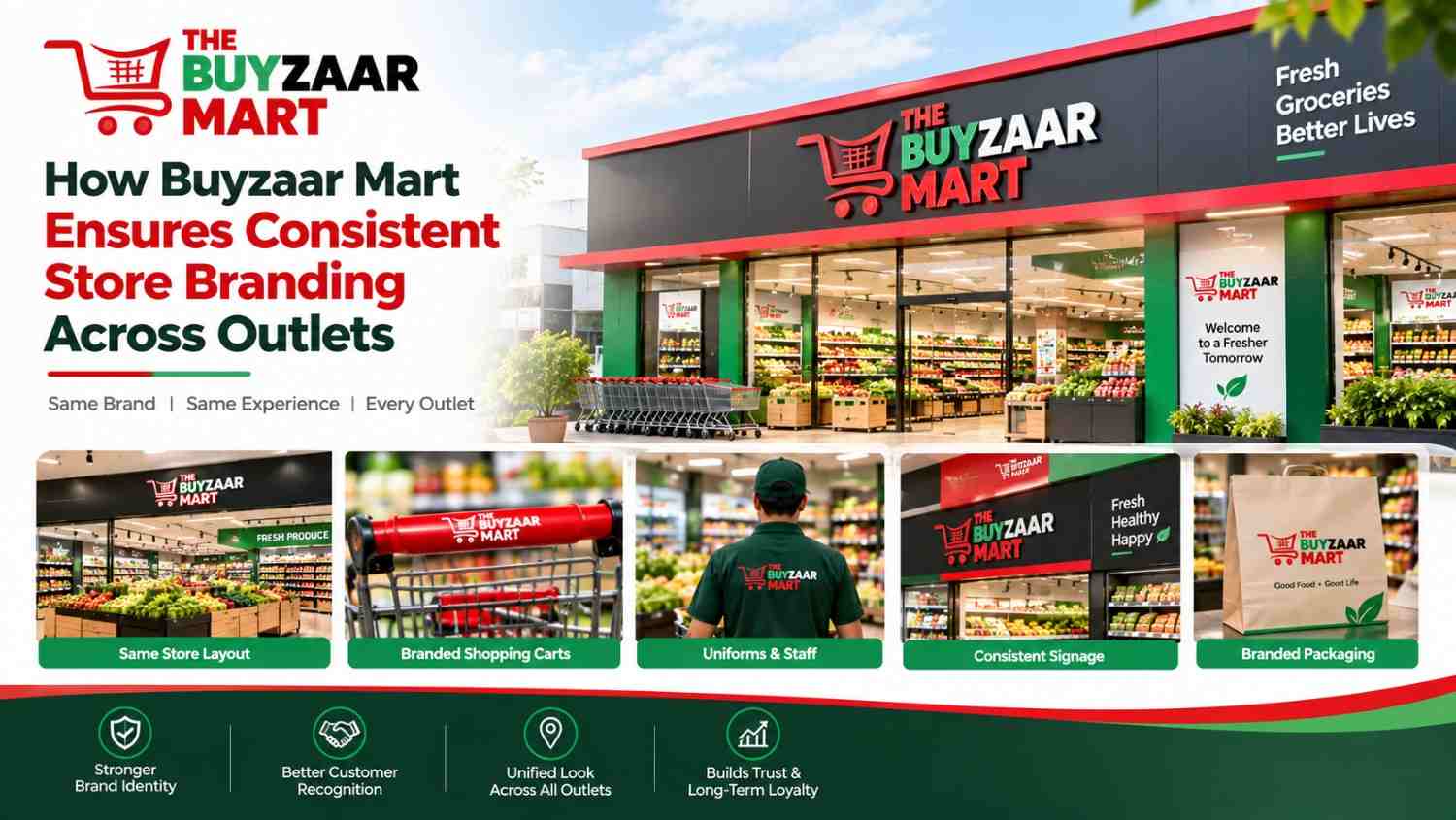
How Buyzaar Mart Ensures Consistent Store Branding Across Outlets
See how The Buyzaar Mart keeps every outlet consistent through uniform store design, POS systems, supply chain support, training and a clear brand promise.
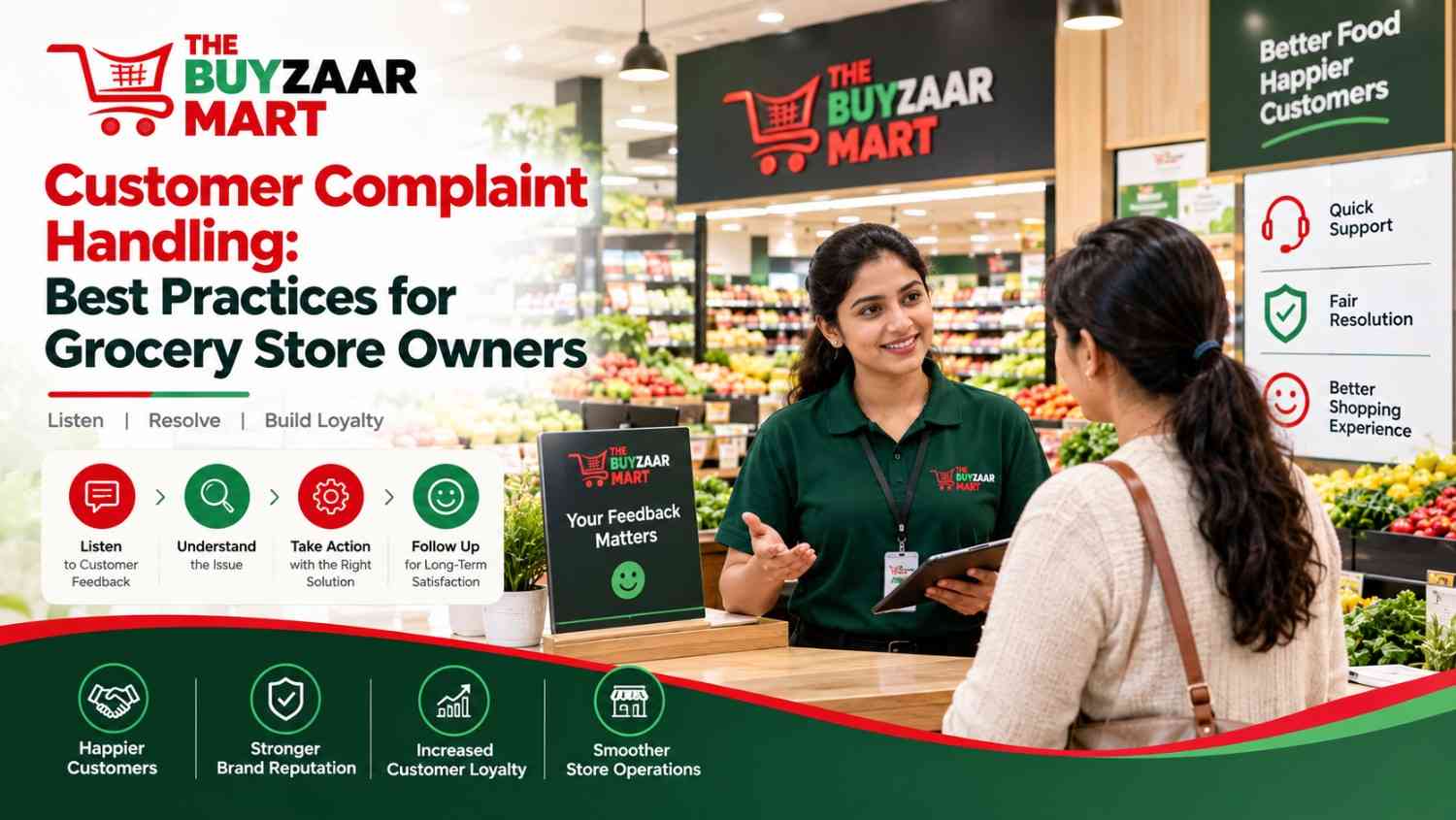
Customer Complaint Handling: Best Practices for Grocery Store Owners
Learn customer complaint handling best practices for grocery store owners: listen, resolve fast, track issues, train staff and turn complaints into loyalty.