Small Grocery Store Design & Renovation Tips for More Footfall
Learn practical grocery store design and renovation tips — layout, lighting, product placement & checkout flow — to boost footfall and increase sales.
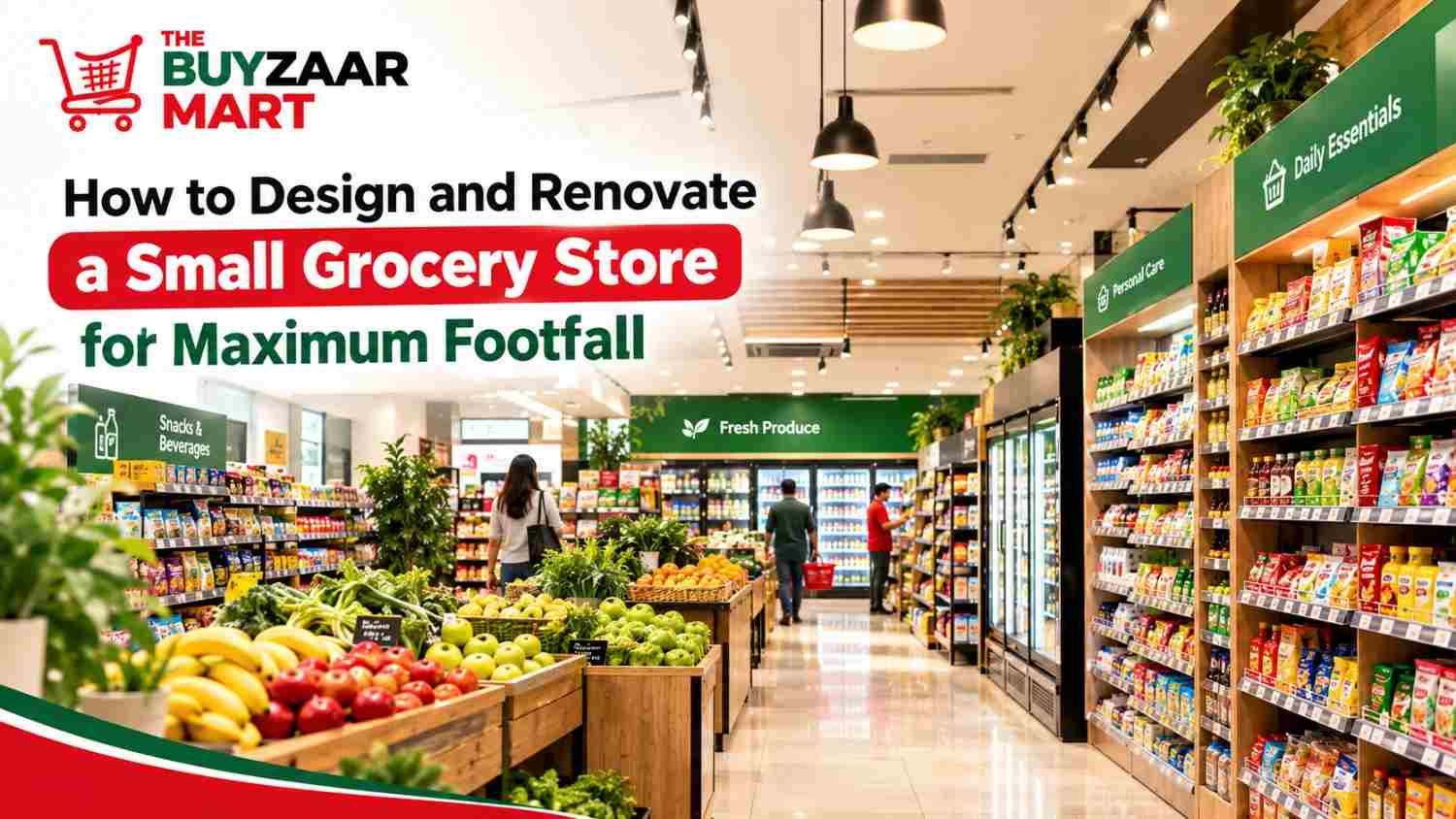
A grocery store's success depends on far more than just stocking the right products. Layout, lighting, aisle flow, and even the placement of the billing counter directly influence how long customers stay, how much they buy, and whether they come back. For small and mid-sized grocery store owners — including those running Mini Mart or Super Mart format outlets — smart design choices can significantly boost daily footfall without requiring a massive budget. This guide breaks down practical store design and renovation strategies to help you turn a small retail space into a high-footfall, high-conversion grocery destination.
Why Store Design Directly Impacts Footfall and Sales
- •A well-designed store reduces the time customers spend searching for products, which increases both satisfaction and repeat visits
- •Good layout planning encourages customers to walk through more of the store, naturally increasing exposure to additional products and impulse purchases
- •First impressions form within seconds of entering — a cluttered or poorly lit storefront can turn potential customers away before they even browse
- •Renovation isn't only about aesthetics; it directly affects operational efficiency, staff movement, and inventory management
- •Investing in design pays off through higher average bill value and stronger word-of-mouth recommendations in the neighborhood
Planning Your Store Layout: The Foundation of Footfall
- •Choose a grid layout for grocery stores — long, parallel aisles are the most efficient format for FMCG and grocery retail since customers are already familiar with navigating them quickly
- •Place daily essentials like milk, bread, and staples at the back of the store to encourage customers to walk past other product categories on their way
- •Keep high-margin and impulse items near the checkout counter — small snacks, chocolates, and seasonal products perform well in this zone
- •Create a "decompression zone" near the entrance — the first few feet of a store should be kept relatively open, since customers need a moment to adjust before they start actively shopping
- •Maintain wide, uncluttered aisles — narrow aisles feel congested and discourage browsing, especially during peak hours
- •Group complementary products together — placing tea, sugar, and biscuits near each other, for example, encourages cross-category purchases
Entrance and Storefront Design Tips
- •Ensure the store signage is clearly visible from a distance, with bright, legible branding that stands out on the street
- •Keep the entrance well-lit, especially for stores operating into the evening
- •Use glass frontage or open displays where possible, so passersby can see activity and products inside
- •Avoid blocking the entrance with promotional stands or boxes, as this creates a psychological barrier for new customers
- •Add a small welcome display featuring fresh produce or popular items to create an inviting first impression
Lighting and Ambience: Small Changes, Big Impact
- •Use bright, cool-white LED lighting for general store areas, as it makes products appear fresher and more visible
- •Add focused lighting on high-value or promotional sections to draw customer attention
- •Avoid overly dim corners, which can feel unsafe or make products harder to notice
- •Keep the store temperature comfortable, particularly in stores with a strong footfall of family shoppers
- •Consider soft background music at a low volume, which has been shown to encourage customers to spend more time browsing
Renovation Ideas That Improve Customer Flow
- •Widen the billing counter area to prevent bottlenecks during peak hours, which is one of the most common reasons customers avoid returning to a store
- •Install proper category signage above aisles so customers can locate sections instantly without asking staff
- •Upgrade shelving to adjustable, modular units that can be reorganized easily as inventory and seasonal demand change
- •Add a dedicated billing and checkout zone with a clear waiting line marker to maintain order during busy hours
- •Reserve visible shelf space for new arrivals and seasonal products to keep the store feeling fresh on repeat visits
- •Improve flooring and store cleanliness standards, since a clean, well-maintained space directly builds customer trust
- •Create a compact fresh produce zone near the entrance, since fresh fruits and vegetables are strong footfall drivers for neighborhood grocery stores
Product Placement Strategies That Increase Basket Size
- •Position best-selling and high-turnover products at eye level, since this is where customers naturally look first
- •Place lower-margin, high-frequency items like grains and pulses slightly lower or higher on shelves, encouraging customers to browse more of the aisle
- •Use end-cap displays (the shelf sections at the end of aisles) for promotions and seasonal offers, as these get the highest visibility
- •Keep related categories logically sequenced — for example, placing cooking oil near spices and packaged food near snacks
- •Rotate promotional displays regularly so returning customers always notice something new
Technology and Convenience Upgrades Worth Considering
- •Install a modern, fast billing and POS system to reduce checkout time and improve the overall customer experience
- •Use digital price tags or clear printed signage to avoid pricing confusion at the shelf
- •Consider a simple digital display near the entrance highlighting daily offers or new arrivals
- •Ensure adequate parking or two-wheeler stand space outside the store, especially in high-footfall residential neighborhoods
- •Add a small customer seating or waiting area near billing if space allows, which improves comfort during busy hours
Common Store Design Mistakes That Hurt Footfall
- •Overcrowding shelves to the point where products look cluttered rather than organized
- •Placing the billing counter too close to the entrance, which creates congestion and blocks browsing customers
- •Poor category signage, forcing customers to search or ask staff repeatedly
- •Ignoring seasonal merchandising, which makes the store feel static and less engaging over time
- •Neglecting store cleanliness and maintenance, which is one of the fastest ways to lose repeat customers
Budget-Friendly Renovation Tips for Small Grocery Stores
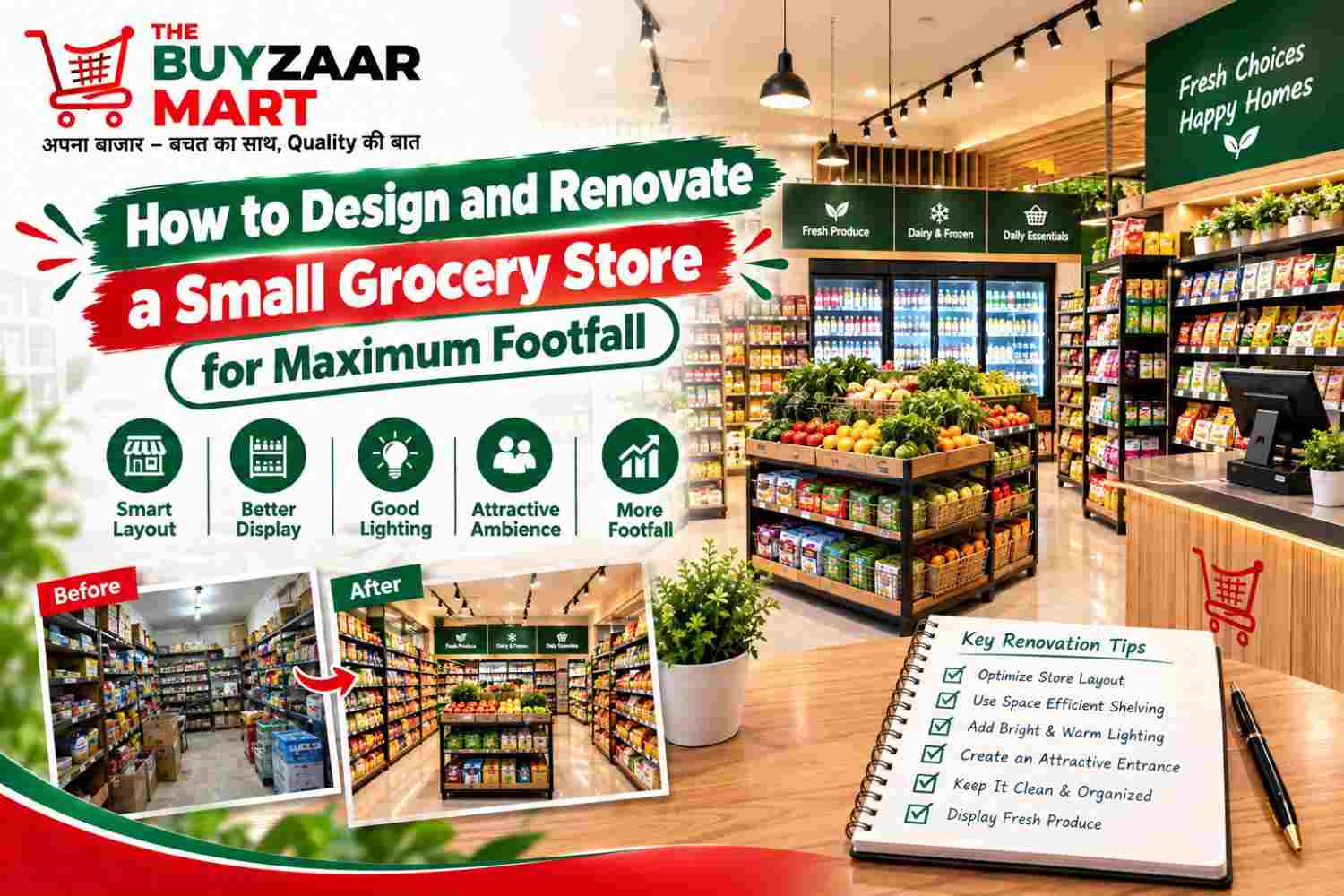
- •Start with high-impact, low-cost changes like improved lighting and clear signage before investing in structural renovation
- •Repaint and declutter before adding new fixtures — a clean, organized space often makes a bigger visual difference than expensive upgrades
- •Invest in modular shelving that can be reconfigured as your store grows, rather than fixed installations
- •Prioritize the entrance and billing counter areas first, since these have the highest impact on customer perception and flow
- •Plan renovations in phases to minimize disruption to daily operations and sales
Building a Store That Customers Want to Return To
- •Store design isn't a one-time project — it's an ongoing process of refining layout, product placement, and customer experience based on what works. Small grocery store owners who treat design and renovation as a continuous investment, rather than a one-time expense, consistently see stronger footfall, higher basket sizes, and better customer retention over time.
Frequently Asked Questions
Q1. What is the best layout for a small grocery store?
A grid layout with parallel aisles works best for grocery stores, as it's familiar to customers and maximizes product exposure along the walking path.
Q2. How much space should be left for aisles in a grocery store?
Aisles should be wide enough for two customers or trolleys to pass comfortably, typically at least 3-4 feet in small format stores.
Q3. Does store lighting really affect grocery sales?
Yes, bright, well-placed lighting makes products look fresher and more appealing, directly influencing purchase decisions.
Q4. Where should the billing counter be placed in a small grocery store?
It should be positioned away from the entrance, ideally toward the side or back, to avoid congestion and encourage full-store browsing.
Q5. How often should a grocery store update its layout or displays?
Seasonal or promotional displays should be refreshed every few weeks, while overall layout can be reviewed every 6-12 months based on sales data.
Q6. Is renovation necessary for a new grocery store franchise outlet?
Not always immediately, but following a well-planned layout from day one helps maximize footfall and avoids costly redesigns later.