Small Grocery Store Design & Renovation Guide for Maximum Footfall
Discover practical grocery store design and renovation tips to boost footfall — layout, lighting, shelving & storefront ideas for small stores in India.
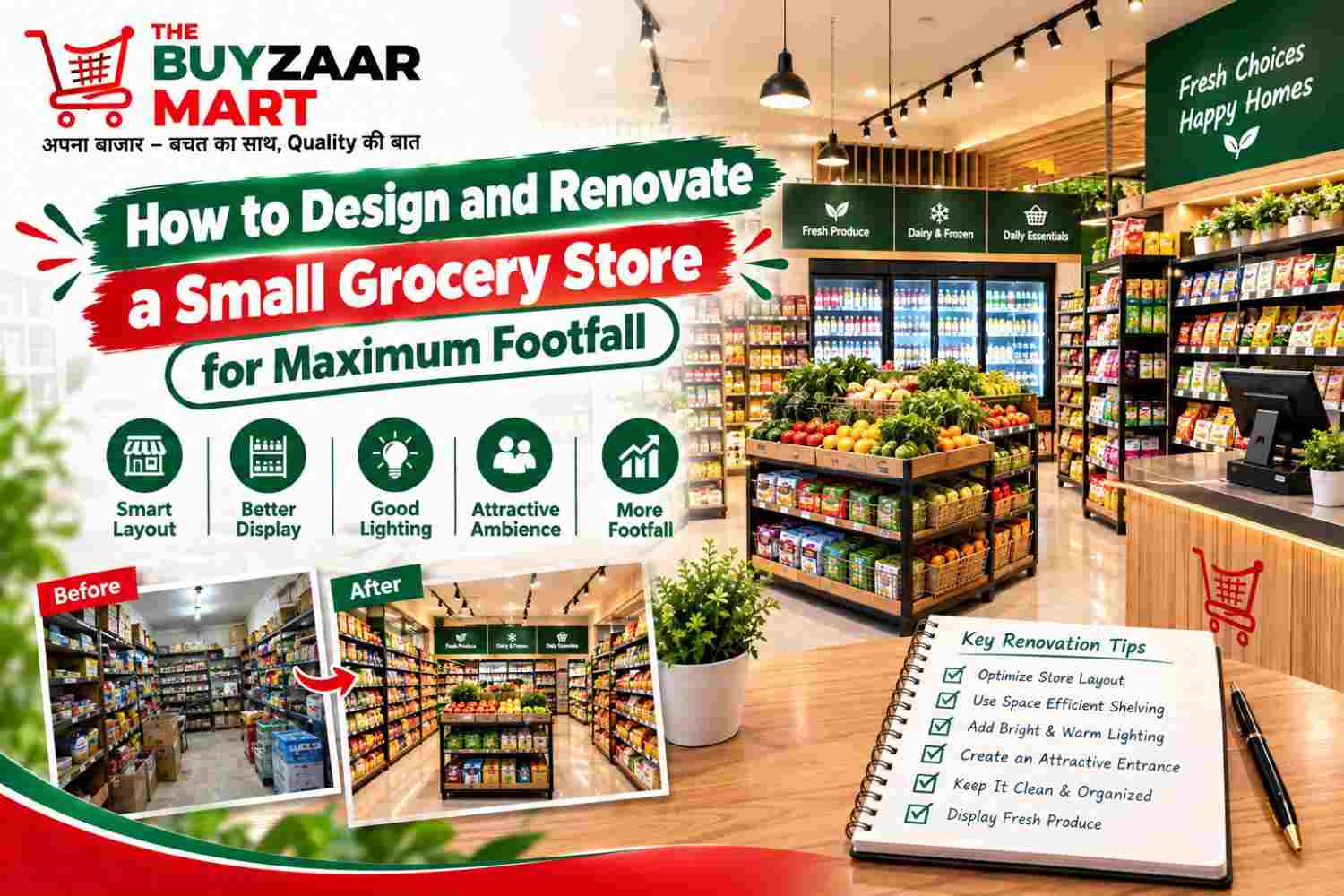
Running a small grocery store in a busy Indian neighborhood is not just about stocking the right products — it's about creating a space that pulls customers in and keeps them coming back. Whether you are opening a new Mini Mart or planning a grocery store renovation for an existing outlet, smart design choices can directly increase your daily footfall, basket size, and repeat visits. Below is a complete, practical guide to designing and renovating a small grocery store for maximum customer traffic.
Why Store Design Directly Impacts Footfall
- •Before getting into specifics, it helps to understand why design matters so much for a grocery business. A well-planned grocery store layout does more than look attractive — it influences buying psychology, reduces shopping friction, and builds trust with first-time visitors. Poor layout, cramped aisles, bad lighting, or a cluttered entrance can turn away even the most loyal neighborhood customers. Since grocery shopping is a high-frequency activity, even small design improvements compound into significant footfall gains over months.
Exterior Design: The First Impression That Drives Walk-Ins
- •Visible, well-lit signage — Your storefront board should be legible from a distance, in both daylight and evening hours, using bright brand colors and clear typography so passing foot and vehicle traffic instantly recognizes it as a grocery store.
- •Clean, uncluttered entrance — Avoid stacking delivery crates, banners, or promotional standees right at the doorway; a clear entry path signals professionalism and invites customers in rather than blocking them.
- •Attractive window or shelf display near the front — Showcase fresh produce, popular FMCG brands, or seasonal offers visible from outside to spark curiosity and impulse entry.
- •Adequate parking or two-wheeler stand — Even a small designated space for scooters and cycles outside the store removes a major barrier for local shoppers who prefer convenience over distance.
- •Accessible entry and exit — Wide doorways, ramps where possible, and no physical obstructions make the store approachable for elderly customers, families with children, and shoppers carrying bags.
Interior Layout: Designing for Flow and Discovery
- •Follow the "decompression zone" principle — Keep the first few feet inside the entrance relatively open and uncluttered; customers need a moment to adjust before they start actively shopping, so avoid placing shelves or displays immediately at the door.
- •Place high-demand essentials at the back — Staples like atta, rice, dal, and cooking oil should be positioned toward the rear of the store, encouraging customers to walk past and notice other products along the way.
- •Use a grid or racetrack layout for small formats — For stores between 600–1,000 sq. ft., a simple grid layout with parallel aisles maximizes shelf space while keeping navigation intuitive for repeat customers.
- •Keep aisle width shopper-friendly — Aisles that are too narrow discourage browsing and cause congestion; aim for enough width that two customers with baskets can comfortably pass each other.
- •Group complementary products together — Placing tea, sugar, and biscuits near each other, or snacks near cold drinks, encourages cross-category purchases and increases average basket value.
- •Position fresh and perishable items strategically — Fresh fruits, vegetables, dairy, and bakery items placed in visible, easily reachable zones create a perception of freshness that drives repeat visits.
- •Create an eye-level advantage for high-margin products — Shelf placement at eye level significantly boosts visibility, so use this space for higher-margin private labels or fast-moving branded items.
- •Design a dedicated billing and checkout zone — A clutter-free billing counter with a clear queue line and small impulse-buy items (chocolates, mouth fresheners, snacks) nearby can meaningfully lift last-minute sales.
Lighting, Flooring, and Ambience
- •Invest in bright, uniform LED lighting — Well-lit stores feel cleaner, safer, and more trustworthy; dim or uneven lighting makes even fresh products look unappealing and reduces time spent browsing.
- •Highlight specific sections with focused lighting — Use slightly brighter lighting over produce, dairy, and premium product sections to draw attention and improve perceived product quality.
- •Choose durable, easy-to-clean flooring — Anti-skid tiles or vinyl flooring not only look neat but also reduce maintenance costs and improve safety, especially in India's humid or rainy conditions.
- •Maintain comfortable in-store temperature — Proper ventilation or air-conditioning, especially in smaller enclosed spaces, keeps customers browsing longer instead of rushing through their purchase.
- •Keep noise and clutter to a minimum — A calm, organized environment with soft background music (where feasible) creates a more pleasant shopping experience than a chaotic, overstocked space.
Renovation Tips for Existing Grocery Stores
- •Audit your current layout before renovating — Walk through your store as a customer would and note where congestion, poor visibility, or dead zones occur before making structural changes.
- •Upgrade shelving to modular, adjustable racks — Modern modular shelving allows flexible reconfiguration as your inventory grows, unlike fixed wooden shelving that limits future changes.
- •Refresh the color scheme and branding — A simple repaint using your brand colors, updated signage, and refreshed price tags can make an old store feel new without major structural cost.
- •Add clear category signage above aisles — Overhead signs labeling "Dairy," "Snacks," "Personal Care," and similar categories reduce browsing time and improve customer satisfaction, especially for first-time visitors.
- •Improve billing counter technology — Upgrading to a modern POS system speeds up checkout, reduces billing errors, and improves the overall customer experience during peak hours.
- •Plan renovation in phases if the store must stay operational — Renovating in sections rather than shutting down completely helps retain regular footfall while improvements are made.
Digital and Local Visibility Enhancements
- •List your store on Google Maps and local directories — Many customers now search "grocery store near me" before visiting, so accurate map listings, business hours, and photos directly influence walk-ins.
- •Maintain consistent branding across signage and packaging — A recognizable, professional look across your storefront, bags, and bills builds trust and encourages word-of-mouth referrals in the neighborhood.
- •Encourage customer reviews online — Positive reviews on Google strengthen local credibility and influence new customers who are comparing nearby grocery options before stepping out.
Final Thoughts
- •Designing or renovating a small grocery store for maximum footfall is not about a single big change — it's the combination of exterior appeal, intuitive interior layout, quality lighting, and small operational upgrades that together shape a customer's decision to walk in and keep coming back. For entrepreneurs planning a new store or evaluating a grocery store franchise opportunity, getting these design fundamentals right from day one can significantly shorten the time it takes to build steady, loyal local footfall.
Frequently Asked Questions
Q1. What is the ideal size for a small grocery store layout?
A well-planned Mini Mart format between 600–1,000 sq. ft. is generally ideal, offering enough space for organized aisles without excessive rent or maintenance costs.
Q2. How much does grocery store renovation typically involve?
Renovation scope varies by store size and condition, but usually includes shelving upgrades, lighting improvements, flooring, signage, and POS system updates.
Q3. Does store layout really affect sales?
Yes, a customer-friendly layout with logical product grouping and clear navigation directly increases browsing time and average basket value.
Q4. Should I renovate my grocery store in phases?
Phased renovation is recommended if the store needs to stay operational, as it helps retain daily footfall during the upgrade process.
Q5. What is the fastest way to improve footfall without major renovation?
Improving exterior signage, entrance cleanliness, and lighting are low-cost changes that can noticeably increase walk-ins within weeks.