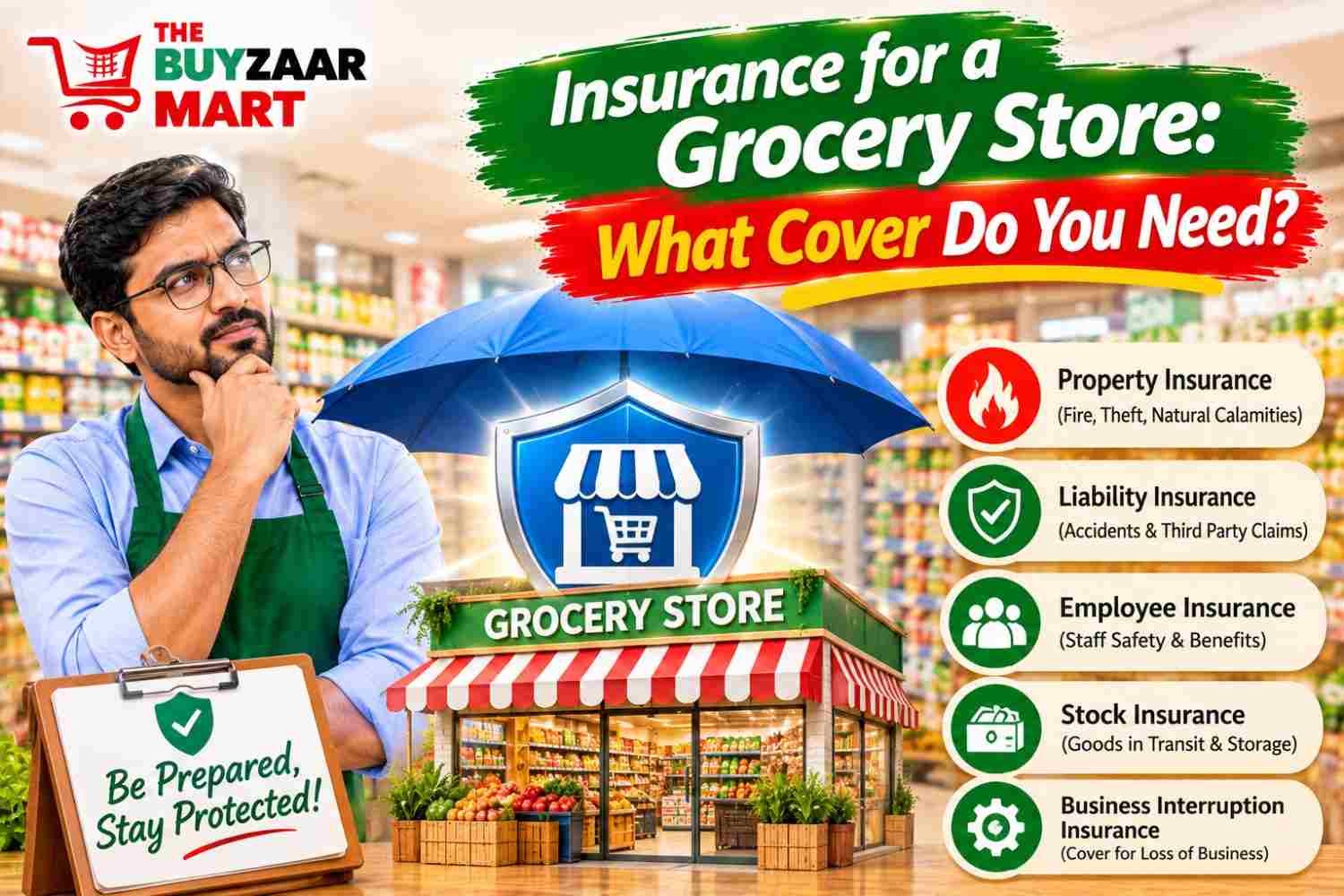
Insurance for a Grocery Store: What Cover Do You Need?
Learn which insurance a grocery store needs: fire, theft, stock, spoilage, liability and more. Simple guide to protect your shop. Compare before you buy.
A grocery store holds a lot of value in a small space: stock, refrigeration, billing systems, cash and the goodwill you have built. One fire, theft, flood or customer injury can wipe out months of profit, so insurance is a business safeguard, not a luxury. This guide explains the main covers a grocery store should consider, what each protects, and how to choose sensibly. Note: This is general information, not insurance or legal advice. Policy names, terms and exclusions differ by insurer, so confirm details with a licensed insurer or broker.
Why Grocery Stores Face Unique Risks
- •Perishable stock: dairy, frozen items, fruits and vegetables spoil quickly if power or cooling fails.
- •Electrical load: refrigeration, lighting and billing equipment raise short-circuit and fire risk.
- •High footfall: wet floors, stacked shelves and crowded aisles raise the chance of customer accidents.
- •Cash and digital payments: daily collections attract theft, and online systems attract fraud.
- •Goods in transit: stock moves between suppliers, warehouses and your store.
- •Repair, restocking and legal costs come straight out of your pocket.
- •Lost sales while the store is closed continue to hurt long after the damage is fixed.
- •Loan repayments, rent and salaries still need to be paid.
Core Insurance Covers for a Grocery Store
- •What it covers: damage to building contents, stock, furniture and fittings from fire, lightning, explosion and, depending on the policy, certain natural events such as storm, flood or earthquake.
- •Why it matters: fire is among the most damaging risks for retail stores, especially with heavy electrical use.
- •Check: whether natural calamity and riot add-ons are included or optional.
- •What it covers: loss of stock and contents from break-ins, theft and sometimes damage caused during a burglary.
- •Check: conditions such as forced entry requirements, security measures and exclusions for shoplifting or employee theft.
- •Tip: CCTV, strong locks and shutters can help meet policy conditions.
- •What it covers: the value of goods held in the store and godown.
- •Why it matters: stock is usually your biggest asset, and its value changes through the year, such as during festive seasons.
- •Check: declare accurate stock values, because under-declaring can reduce your claim.
- •What it covers: legal liability if a customer, visitor or third party is injured, or their property is damaged, because of your store.
- •Example: a customer slips on a wet floor, or a heavy item falls from a shelf.
- •Why it matters: medical and legal costs can be large.
- •What it covers: liability if a staff member is injured or ill because of work, such as lifting heavy cartons or an accident at the store.
- •Why it matters: the law may require you to compensate employees in certain situations, so confirm what applies to you.
- •Tip: also consider group health or accident cover for your team.
- •What it covers: cash lost in transit (such as taking collections to the bank) or from a safe or counter, depending on policy terms.
- •Check: limits for cash in the safe, cash at the counter and cash in transit.
- •What it covers: financial loss caused by dishonesty or fraud by employees.
- •Why it matters: staff handle cash, stock and billing, so internal fraud is a real risk.
Covers That Fit Grocery Stores Especially Well
- •What it covers: loss of perishable stock when refrigeration equipment breaks down or power fails, if the policy includes it.
- •Why it matters: dairy, frozen foods and beverages are a major share of grocery stock.
- •Check: whether the cover applies to mechanical breakdown, power cuts or both, and what excess or waiting period applies.
- •What it covers: damage to POS machines, computers, printers, CCTV and weighing scales from accidental damage or electrical faults.
- •Why it matters: billing downtime stops sales.
- •What it covers: lost income and ongoing expenses while the store is closed after an insured event such as a fire.
- •Why it matters: physical repair is only half the loss. You also lose daily sales.
- •Check: the indemnity period and the way gross profit is calculated.
- •What it covers: goods damaged or lost while being moved from suppliers or between locations.
- •Why it matters: useful if you buy in bulk or run multiple outlets.
- •What it covers: losses linked to data breaches, online fraud or system compromise, depending on the policy.
- •Why it matters: UPI, cards and online ordering expose stores to digital risks.
- •Many insurers offer shopkeeper or MSME package policies that bundle fire, burglary, money, liability and other covers into one policy.
- •Benefits: simpler management, one renewal date and often a better combined price than buying everything separately.
- •Check: what is included, the sum insured for each section, and which covers are optional add-ons.
- •Compare a package with standalone policies to see which fits your risk better.
How to Decide How Much Cover You Need
- •Stock value (average and peak), equipment, interiors, furniture, signage and cash on hand.
- •Include leased equipment and franchise-owned assets.
- •Insure for the replacement value, not the purchase price after depreciation, where the policy allows.
- •Review the amount every year, especially if stock or interiors have grown.
- •Read what is not covered: wear and tear, gradual damage, unexplained shortages and certain natural perils.
- •Check waiting periods, deductibles and claim limits.
- •A small Mini Mart may need basic fire, stock, theft and liability cover.
- •Larger Super and Hyper formats may add business interruption, equipment, cyber and employee covers.
Tips to Keep Premiums Down
- •Install fire extinguishers, smoke detectors and CCTV, and maintain them.
- •Keep wiring checked and updated by a licensed electrician.
- •Store stock properly, away from damp walls and electrical points.
- •Keep clear records of stock, purchases and cash handling.
- •Compare quotes from more than one insurer and ask about discounts for safety measures or no-claim history.
- •Avoid under-insuring just to save premium, since it can reduce your payout when you need it most.
Making a Claim: Be Ready
- •Keep copies of invoices, stock registers, GST records and photos of the store.
- •Store policy documents safely and note the insurer’s helpline.
- •Inform the insurer promptly, as most policies set time limits.
- •Report theft or fire to the police where required, and keep copies of the report.
- •Take photos or videos of the damage before cleaning up.
- •Prevent further loss, such as moving undamaged stock, and keep the receipts for those costs.
- •Cooperate with the insurer’s surveyor.
Common Mistakes to Avoid
- •Buying only fire cover and ignoring liability, spoilage and cash risks.
- •Under-declaring stock value.
- •Not renewing on time, which can leave a gap in cover.
- •Ignoring policy conditions, such as security requirements.
- •Not updating cover after expanding the store or adding equipment.
Why This Matters for Franchise Owners
- •Franchise stores often carry loans, deposits and brand obligations, so protection is even more valuable.
- •Check your franchise agreement for any insurance requirements or recommendations.
- •Include insurance cost in your startup and monthly budget, alongside rent, power and salaries.
Final Thoughts
- •Insurance protects the things a grocery store cannot afford to lose: stock, equipment, cash, staff and income.
- •Start with fire, stock, theft and public liability, then add spoilage, equipment, business interruption and cyber cover based on your risks.
- •Read the exclusions, declare accurate values and renew on time.
- •Compare quotes and speak to a licensed insurer or broker before you buy.
- •Treat insurance as part of your operating plan, because it keeps one bad day from becoming the end of your business.
Frequently Asked Questions
Is insurance mandatory for a grocery store?
Requirements vary. Employee-related cover and certain loan or lease conditions may require it. Even where it is not compulsory, it is strongly advisable.
What is the most important insurance for a grocery store?
Fire and stock cover are usually the starting point, followed by theft and public liability. Your own priorities depend on your store size, stock and location.
Does insurance cover spoilage from a power cut?
Only if the policy specifically includes it. Standard fire policies usually do not. Ask for refrigeration breakdown or spoilage cover and read the conditions.
Does it cover shoplifting or employee theft?
Shoplifting is commonly excluded. Employee dishonesty may be covered under fidelity guarantee insurance. Check the exact wording.
Can I buy one policy for everything?
Many insurers offer shopkeeper or MSME package policies that bundle several covers. Compare it with separate policies before deciding.
How is the sum insured decided?
It should reflect the value of your stock, equipment and fittings, ideally at replacement value. Review it each year.
What documents do I need to buy a policy?
Typically ID and address proof, business details, store address and an asset or stock list. Requirements vary by insurer.
What happens if I under-insure?
The insurer may reduce your claim in proportion to the shortfall. Declare accurate values to avoid disputes.
Related Articles
Why Local Sourcing Matters for a Neighborhood Grocery Store
Discover why local sourcing matters for a neighborhood grocery store: fresher produce, lower wastage, loyal customers and stronger margins. Read the guide.

How Buyzaar Mart Ensures Consistent Store Branding Across Outlets
See how The Buyzaar Mart keeps every outlet consistent through uniform store design, POS systems, supply chain support, training and a clear brand promise.
Customer Complaint Handling: Best Practices for Grocery Store Owners
Learn customer complaint handling best practices for grocery store owners: listen, resolve fast, track issues, train staff and turn complaints into loyalty.