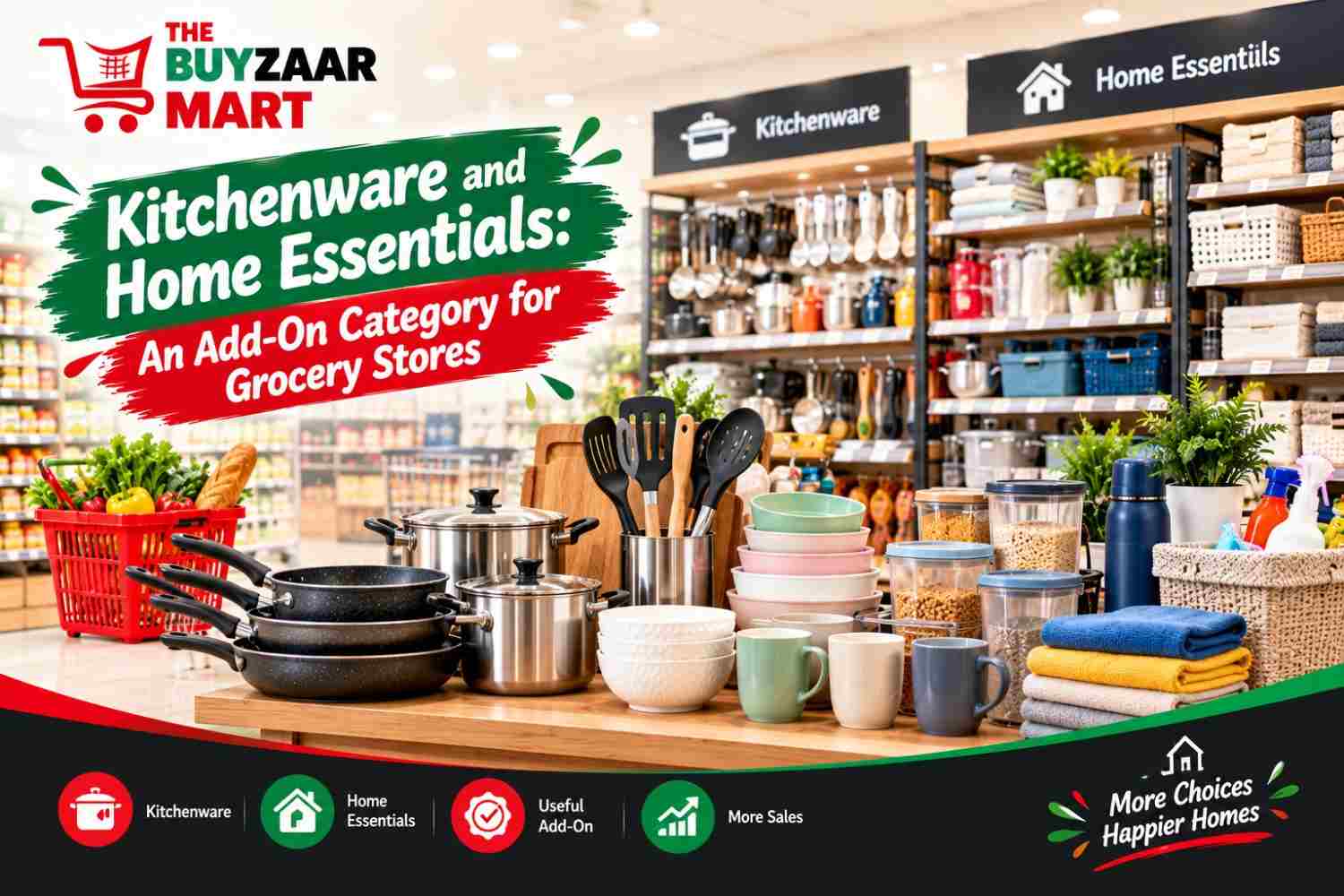
Kitchenware & Home Essentials: Grocery Store Add-On Guide
Learn how to add kitchenware and home essentials to a grocery store. Explore what to stock, pricing, display and margins to grow basket size and profit.
Customers who come for atta, oil and spices often need a tawa, a storage container or a set of dish cloths in the same week. Kitchenware and home essentials let a neighbourhood grocery store meet those needs without sending shoppers elsewhere. Done well, the category lifts basket value and builds convenience-led loyalty. Done badly, it ties up cash in slow stock. This guide explains what to stock, how to display and price it, and how to keep it profitable.
Why Kitchenware and Home Essentials Suit Grocery Stores
- •Cooking and storing food creates constant small needs, from lunch boxes to scrubbers and foil.
- •A kitchen item beside the groceries feels like a logical add-on, not a separate trip.
- •Many households prefer picking up a low-cost item from the nearby store instead of travelling to a market.
- •Urgent needs, such as a broken jar lid or a missing peeler, drive quick walk-in sales.
- •Non-food items give customers one more reason to visit your store each month.
- •Each visit is another chance to sell staples, snacks and daily-need products.
Pros of Adding Kitchenware and Home Essentials
- •Items like containers, cloths and cleaning tools add value to a bill that is otherwise mostly food.
- •Small add-ons at the counter raise the average bill with little effort.
- •Unlike dairy or vegetables, these products do not expire quickly.
- •Unsold stock can usually stay on the shelf for the next buying season.
- •Steel, glass and non-stick sets sell well around weddings, housewarmings and festivals.
- •Small gift-ready items give you a useful seasonal product for little shelf space.
- •Margins vary by brand and product type, and add-on items often earn more per unit than basic staples.
- •Track actual profit by item instead of assuming the same margin everywhere.
Cons and Risks to Plan For
- •Many items sell once and are not needed again for months or years.
- •Over-ordering locks up cash that fast-moving groceries could use better.
- •Pans, containers and storage products can be bulky and use more shelf space than packaged food.
- •In a small store, this can crowd out faster-selling categories.
- •Shoppers compare prices with markets, online sellers and larger stores for items like cookware.
- •Focus on convenience and fair pricing instead of trying to be the lowest on every item.
- •Weak build quality, such as loose handles or leaking lids, can damage trust in your whole store.
- •Choose reliable brands and agree on replacement terms with suppliers.
What to Stock: The Core Range
- •Scrubbers, sponges, dish cloths, mops, brooms and cleaning brushes are bought often and cost little.
- •These are the safest starting point because they repeat every few weeks.
- •Airtight containers, jars, tiffin boxes, bottles and spice racks suit most kitchens.
- •Offer two or three price points so shoppers can trade up or down.
- •Ladles, peelers, graters, knives, tongs, tawas and pressure cooker spares are frequent need-based buys.
- •Stock fast-moving small items first, and add larger cookware only after you see demand.
- •Foil, cling film, napkins, paper cups, garbage bags and butter paper sell steadily.
- •These sit well beside bakery and cooking categories.
- •Bulbs, matchboxes, candles, hooks, clothes pegs, hangers and doormats serve everyday household needs.
- •Keep a small, tidy set in the most-requested items.
- •Festive diyas, puja thalis, serving sets and gift hampers sell in short windows.
- •Order modestly, track sales and clear leftovers early.
Smart Starting Strategy
- •Start with 15 to 25 fast-moving items and watch what sells over two or three months.
- •Use POS reports to decide which products to expand and which to drop.
- •Items that people buy again, such as scrubbers, foil and cloths, build steady sales.
- •One-time purchase items should stay in small quantities until demand is clear.
Pricing and Margin Strategy
- •Check prices at nearby shops and markets before you set your own.
- •Aim for fair pricing with the added value of convenience.
- •Offer a budget option and a better-quality option for key products.
- •A good-better choice often moves shoppers to the higher-margin item.
- •Combos such as a lunch box with a bottle or a cleaning kit raise basket size.
- •Use bundles on items with healthy margin, and avoid constant discounting.
Display and Merchandising
- •Group kitchenware and home essentials together in a clean, well-lit zone.
- •A tidy corner looks organised and invites shoppers to browse.
- •Keep cleaning items and small tools at eye level and easy reach.
- •Put heavy or bulky items lower and lighter ones higher.
- •Place storage jars near pulses and spices, and foil and wraps near bakery and cooking items.
- •Related placement reminds shoppers of products they did not plan to buy.
Inventory and Quality Control
- •Small lots reduce the risk of dead stock, especially for new products.
- •Replenish fast movers quickly to avoid empty shelves.
- •Inspect handles, lids, seals and finish before putting products on the shelf.
- •Return damaged items to suppliers at once.
Common Mistakes to Avoid
- •Buying a wide range before knowing local demand.
- •Stocking low-quality items that break quickly and hurt trust.
- •Giving too much shelf space to slow movers.
- •Ignoring price checks against nearby shops.
- •Leaving the home corner dusty, cluttered or unlabelled.
How a Buyzaar Mart Franchise Supports Smarter Category Decisions
- •Uniform store design and layout planning help owners place add-on categories without crowding core products.
- •POS billing and CRM show which items sell, so ordering follows real demand.
- •Partnerships with leading FMCG brands cover the dependable packaged range, including homecare and hygiene products.
- •Training and operational support help teams manage stock, display and customer service.
- •Mini Mart, Super Mart and Hyper Mart formats let you choose a size that fits your market and budget.
Final Thoughts
- •Kitchenware and home essentials work best as a compact, data-led add-on that builds convenience, basket size and loyalty.
- •Start with repeat-buy items, check quality, watch your space and expand only when sales prove it.
- •Aspiring store owners who want a proven retail model with these systems can explore the franchise opportunities at The Buyzaar Mart.
Frequently Asked Questions
Is kitchenware profitable in a grocery store?
It can be, mainly as an add-on that raises basket size. Margins vary, so start small and track actual profit.
Which home essentials should a grocery store stock first?
Start with scrubbers, dish cloths, storage containers, foil and basic cooking tools that people buy repeatedly.
Can a small grocery store sell kitchenware?
Yes, with a compact range of fast-moving, low-bulk items. Avoid large cookware if shelf space is limited.
How can a store avoid unsold kitchenware stock?
Order small lots, favour repeat-buy items, review POS data and keep seasonal stock modest.
Where should kitchenware be placed in a grocery store?
Use a dedicated, well-lit corner, with small items near billing and related products beside groceries.
Related Articles
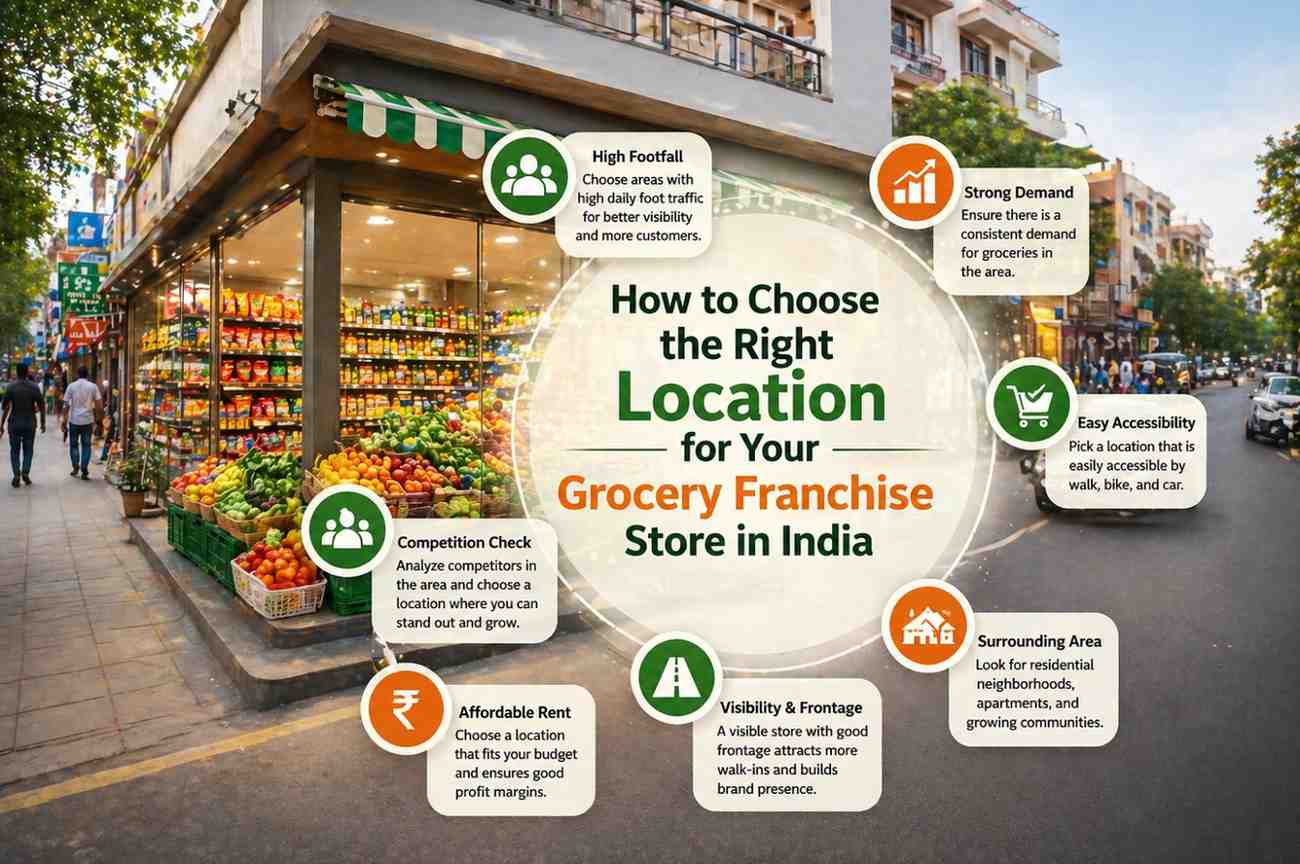
How to Choose the Right Location for Your Grocery Franchise Store in India (2026)
Location can make or break your grocery franchise store. Learn the key factors — footfall, demographics, competition, rent & more — to find the perfect spot for your Buyzaar Mart store in India.
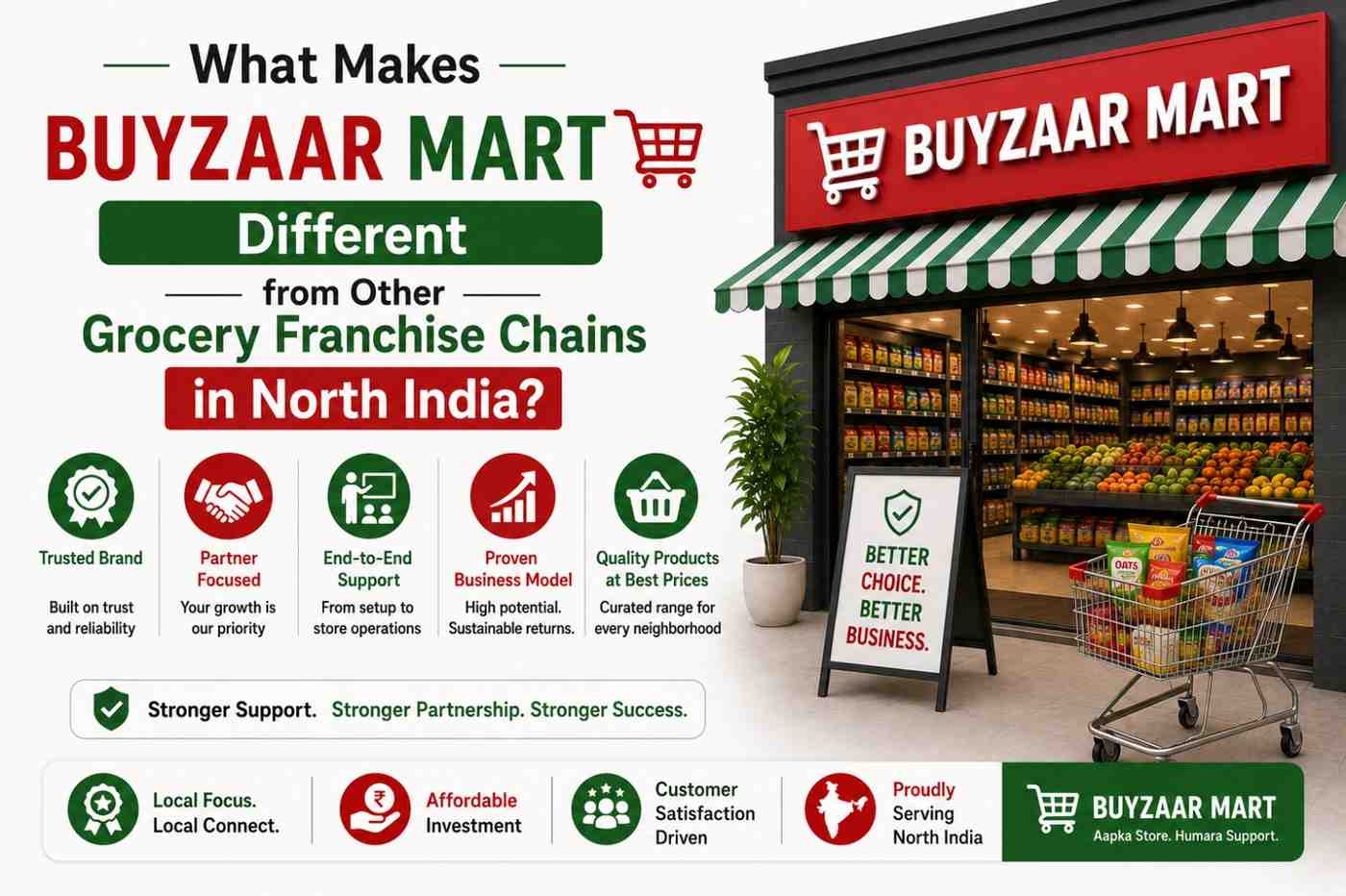
What Makes Buyzaar Mart Different from Other Grocery Franchise Chains in North India? (2026)
Wondering what sets Buyzaar Mart apart from other grocery franchise chains in North India? Discover the key differentiators — from tech-enabled operations and FMCG brand partnerships to franchisee-first support and profit margins.
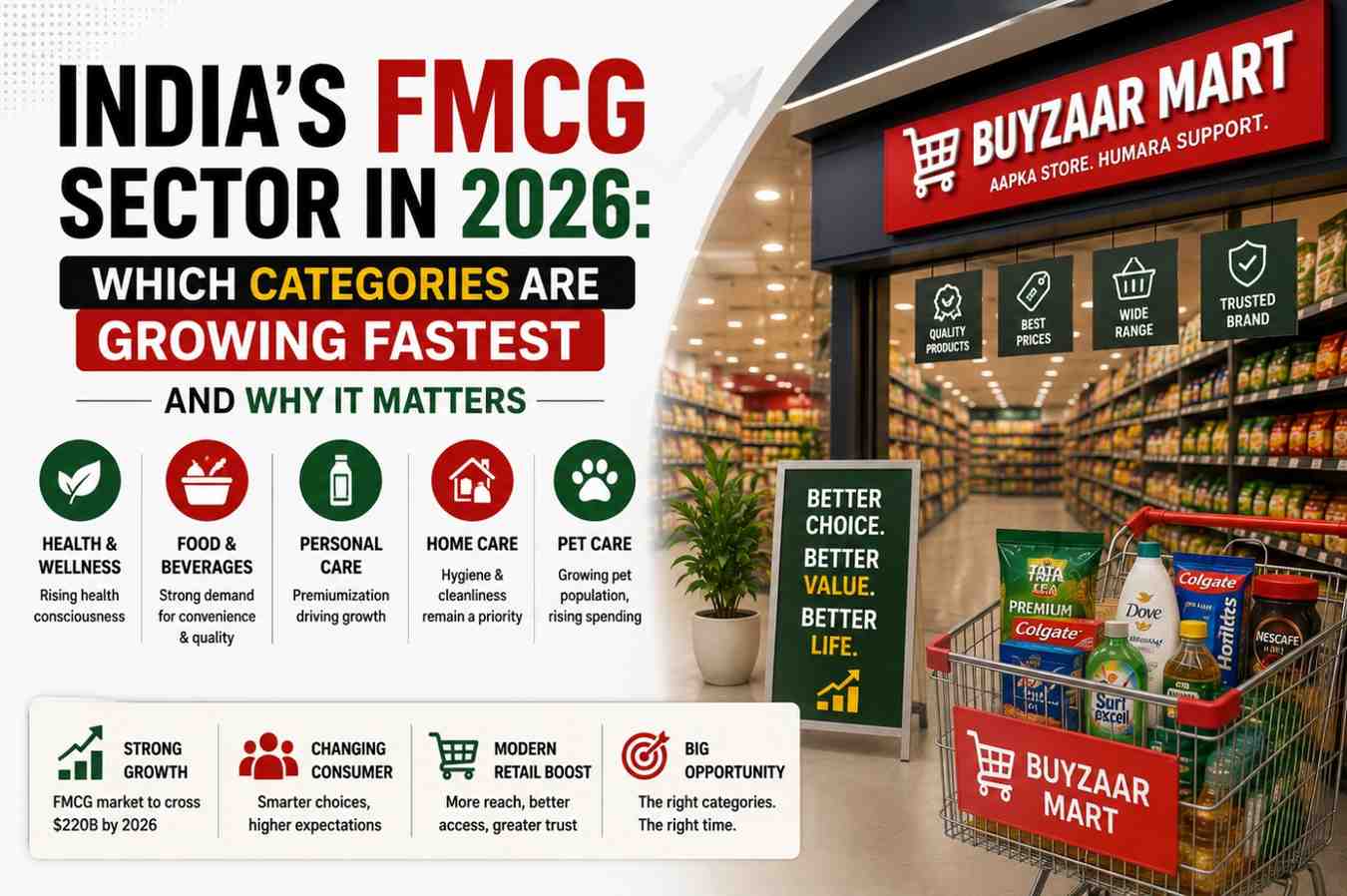
India's FMCG Sector in 2026: Which Categories Are Growing Fastest and Why It Matters
India's FMCG market is projected to hit ₹10.2 lakh crore by 2026. Discover which categories are growing fastest — from health foods to personal care — and what it means for grocery franchise owners across North India.