Organic Food Business in Tier-2 Cities: What Actually Sells
Learn what organic food actually sells in tier-2 cities. Explore top categories, pricing, certification and stocking tips for a profitable organic section.
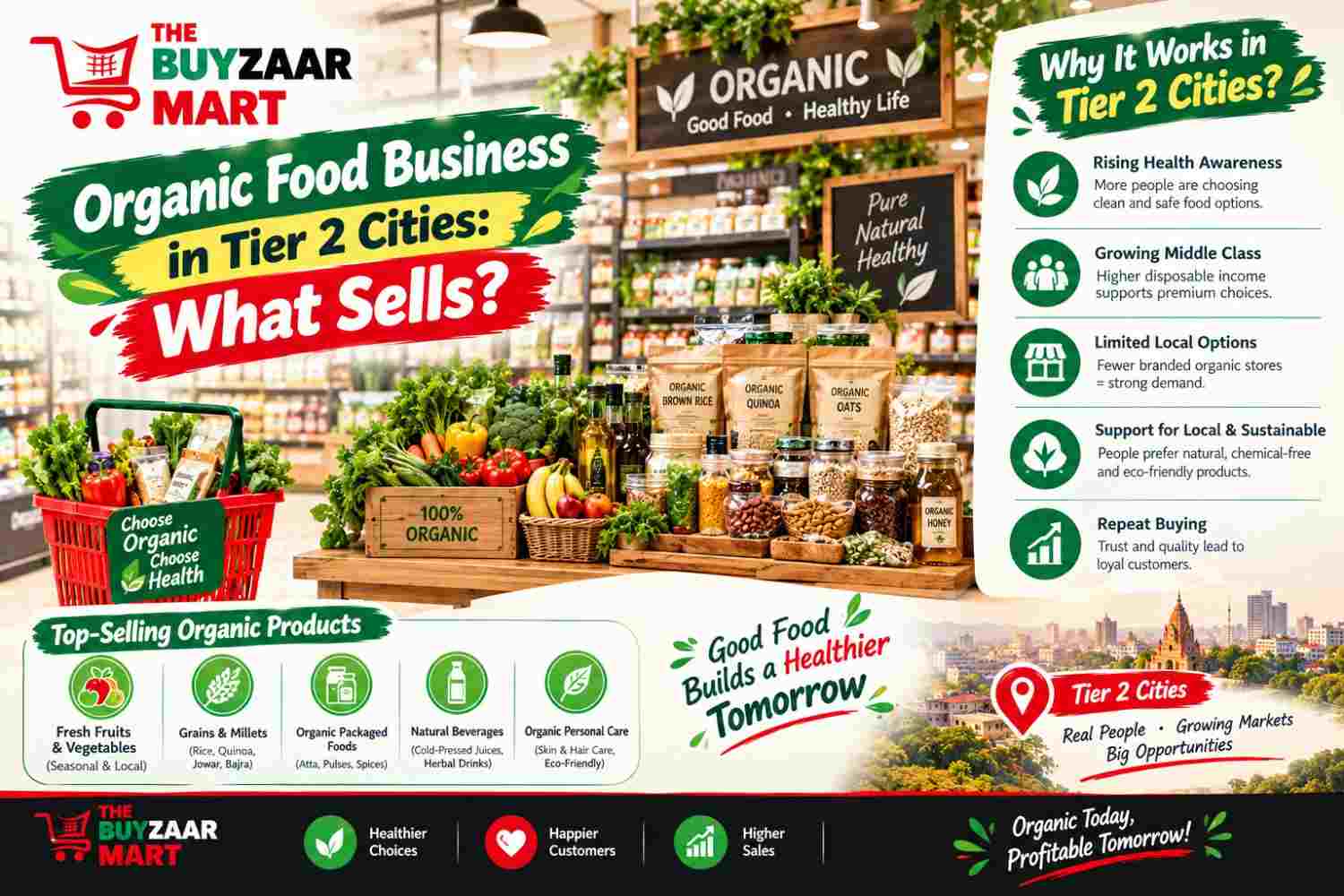
Organic food is no longer only a big-city trend. Families in tier-2 cities now read labels, ask about chemical-free products and pay a little extra for items they trust. But not every organic product sells, and shelves full of expensive, slow-moving stock can strain cash flow quickly. This guide explains what actually sells in tier-2 markets, how to price and source it, and how to build customer trust without overspending.
Why Tier-2 Cities Are Ready for Organic Food
- •Families are paying more attention to diet, lifestyle health and food quality than before.
- •Doctors’ advice, social media and word of mouth push them to try cleaner, simpler foods.
- •More households now have room to upgrade a few everyday items to better quality.
- •Most buy organic selectively, choosing a handful of products instead of the whole grocery list.
- •Dedicated organic stores are few, so a well-run neighbourhood store can own the category locally.
- •Early trust is hard for later competitors to match.
What Actually Sells: Top Organic Categories
- •Organic atta, rice, dal and millets sell steadily because families already buy them every month.
- •Offer small and medium packs from a few trusted brands so customers can try without a big commitment.
- •These are among the most common first purchases, since customers see a clear quality difference over refined options.
- •Repeat buying is strong once customers like the taste.
- •Honey, tulsi tea, green tea and herbal blends fit the health-conscious shopper’s routine.
- •They are easy to stock, last long and suit gifting too.
- •Organic nuts, flax, chia, pumpkin seeds and whole spices sell well to families focused on healthy eating.
- •Small packs keep the price per purchase comfortable.
- •Millet cookies, muesli, oats and ready-to-cook mixes attract working parents looking for quick, healthier options.
- •These add useful variety without needing much space.
- •Parents pay close attention to ingredients and often prefer trusted organic options for children.
- •A small, well-chosen range builds long-term loyalty.
- •Demand exists, but spoilage and price premiums make this the riskiest category.
- •Start with a few pre-ordered or fast-turning items, and expand only if sales prove steady.
What Does Not Sell as Easily
- •Exotic, imported superfoods and unusual ingredients often sit on shelves for months.
- •A focused range of familiar products beats a large range of unfamiliar ones.
- •Big packs raise the entry cost, and cautious first-time buyers avoid them.
- •Smaller packs encourage trial and repeat purchase.
- •Items that look organic but lack clear labels, certification or brand trust create doubt.
- •Customers hesitate to pay a premium for claims they cannot verify.
Pricing: Making Organic Affordable
- •Customers compare organic items with regular ones, so a very wide gap slows sales.
- •Price to be seen as worth the extra, not as a luxury.
- •Small sizes let shoppers test quality at low cost and often convert into regular buyers.
- •Offer larger sizes only for products that already sell well.
- •Tier-2 shoppers usually buy organic alongside regular groceries, not instead of them.
- •Placing organic items in the same store as everyday items makes them easy to add to the basket.
Building Trust: Certification and Labelling
- •Look for valid organic certification and the Jaivik Bharat logo on packaged organic food, as required under FSSAI rules.
- •Keep supplier certificates on file in case customers ask.
- •Do not label products “organic” unless the supplier can show proof.
- •Honest labelling protects you from compliance trouble and protects customer trust.
- •Short shelf labels explaining what makes a product organic help new customers decide.
- •Friendly staff who can answer basic questions make a big difference.
Sourcing Smartly
- •Branded organic products give reliability, while local farmers and producers add freshness and a local story.
- •Verify certification and quality for local suppliers before placing regular orders.
- •Organic products often have shorter shelf life because they avoid preservatives.
- •Frequent small orders protect freshness and reduce unsold stock.
- •Supply can be uneven for organic items, especially seasonal ones.
- •A second source keeps shelves full when the first falls short.
Display and Customer Education
- •Group organic products in one well-lit, tidy section so shoppers can find them quickly.
- •A dedicated corner signals that you take the category seriously.
- •Put staples, oils and honey where shoppers look first, with clear price tags.
- •Keep slower niche items on higher or lower shelves.
- •Short notes about the source, such as a local farm or region, add confidence.
- •Simple signage and sampling, where permitted, help first-time buyers try.
Stocking and Inventory Control
- •Begin with five to ten fast-moving organic products and expand using sales data.
- •Use POS reports to see which items sell and which sit idle.
- •Organic items such as flours, nuts and cold-pressed oils can turn stale sooner than conventional ones.
- •Rotate stock with FIFO and check dates weekly.
- •Keep items in a cool, dry, clean area, away from moisture, heat and strong odours.
- •Use airtight containers for loose products.
Common Mistakes to Avoid
- •Stocking a very wide range before knowing what local customers actually buy.
- •Pricing organic products too far above regular equivalents.
- •Ignoring certification and labelling rules.
- •Over-ordering fresh organic produce that spoils quickly.
- •Skipping staff training, so customers get no useful answers.
How a Buyzaar Mart Franchise Supports Smarter Category Decisions
- •Uniform store design and layout planning help owners place specialty categories without crowding core products.
- •POS billing and CRM show which items sell, so ordering follows real demand.
- •Partnerships with leading FMCG brands cover the dependable packaged range alongside specialty items.
- •Training and operational support help teams manage stock, hygiene and customer service.
- •Mini Mart, Super Mart and Hyper Mart formats let you choose a size that fits your market and budget.
Final Thoughts
- •Organic food can succeed in tier-2 cities when the range is focused, the price is fair and the claims are honest.
- •Staples, oils, honey, dry fruits and small-pack snacks usually sell best, while niche imports and fresh produce need caution.
- •Aspiring store owners who want a proven retail model with these systems can explore the franchise opportunities at The Buyzaar Mart.
Frequently Asked Questions
Does organic food sell in tier-2 cities?
Yes, especially staples, oils, honey and dry fruits. Customers buy selectively, so a focused range works best.
Which organic products should a grocery store stock first?
Start with atta, rice, dal, cold-pressed oils, honey, jaggery and herbal tea, then expand using sales data.
Is organic fresh produce worth selling?
It can be, but spoilage risk is high. Start with a few fast-turning items and pre-orders.
How can a store prove products are genuinely organic?
Check supplier certification and the Jaivik Bharat logo, and avoid labelling anything organic without proof.
How do you price organic products in a tier-2 city?
Keep the premium reasonable, offer small packs and track sales to adjust.
Related Articles
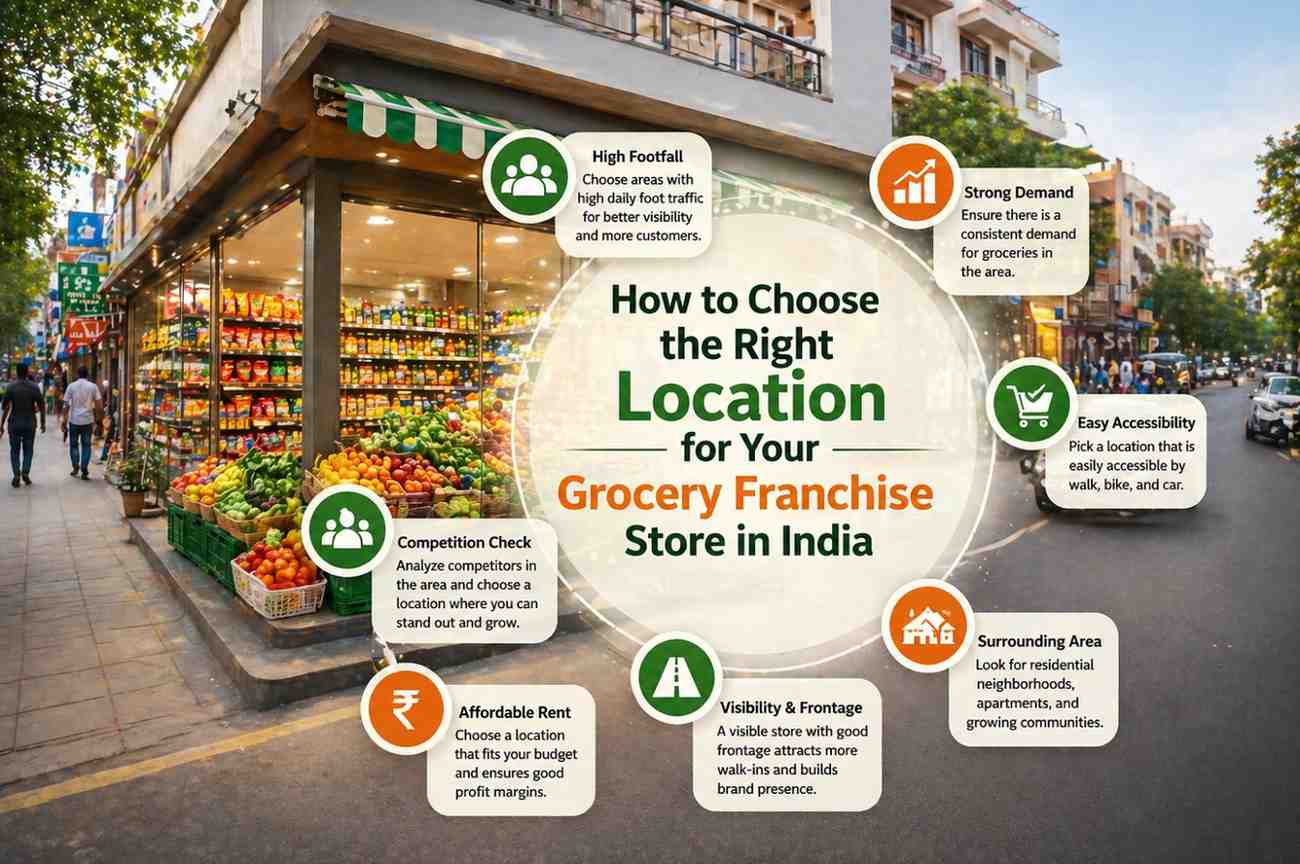
How to Choose the Right Location for Your Grocery Franchise Store in India (2026)
Location can make or break your grocery franchise store. Learn the key factors — footfall, demographics, competition, rent & more — to find the perfect spot for your Buyzaar Mart store in India.
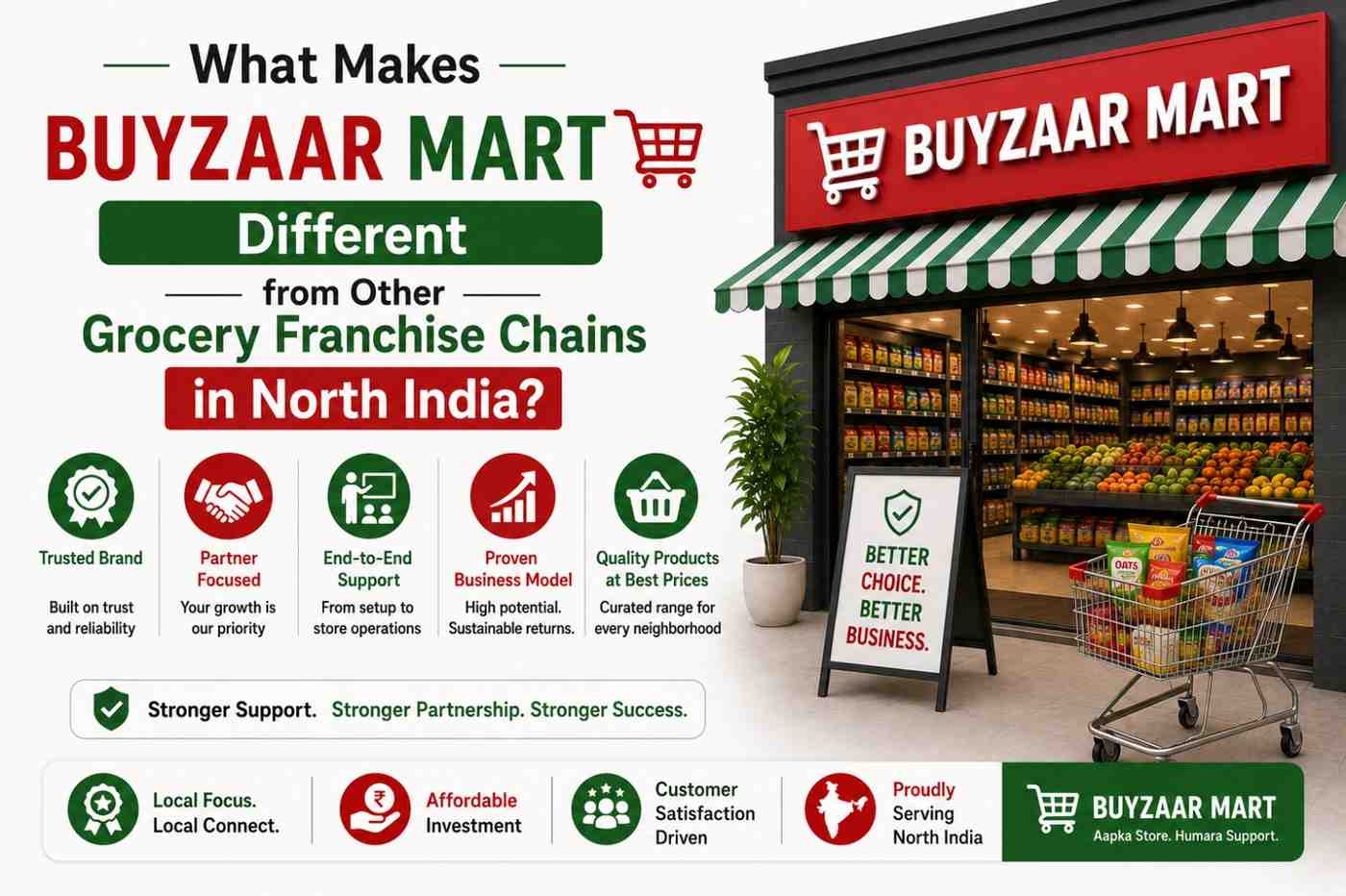
What Makes Buyzaar Mart Different from Other Grocery Franchise Chains in North India? (2026)
Wondering what sets Buyzaar Mart apart from other grocery franchise chains in North India? Discover the key differentiators — from tech-enabled operations and FMCG brand partnerships to franchisee-first support and profit margins.
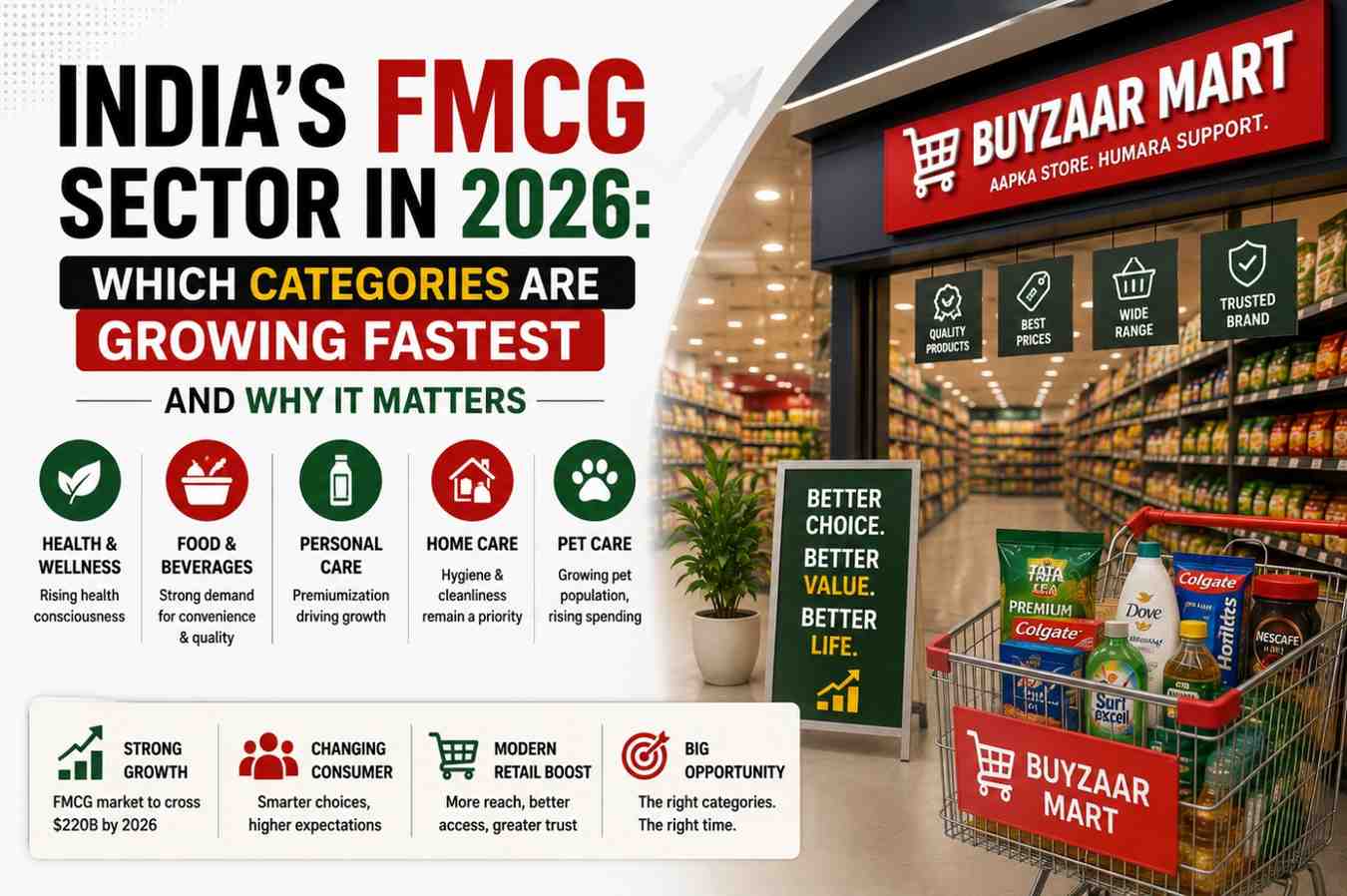
India's FMCG Sector in 2026: Which Categories Are Growing Fastest and Why It Matters
India's FMCG market is projected to hit ₹10.2 lakh crore by 2026. Discover which categories are growing fastest — from health foods to personal care — and what it means for grocery franchise owners across North India.