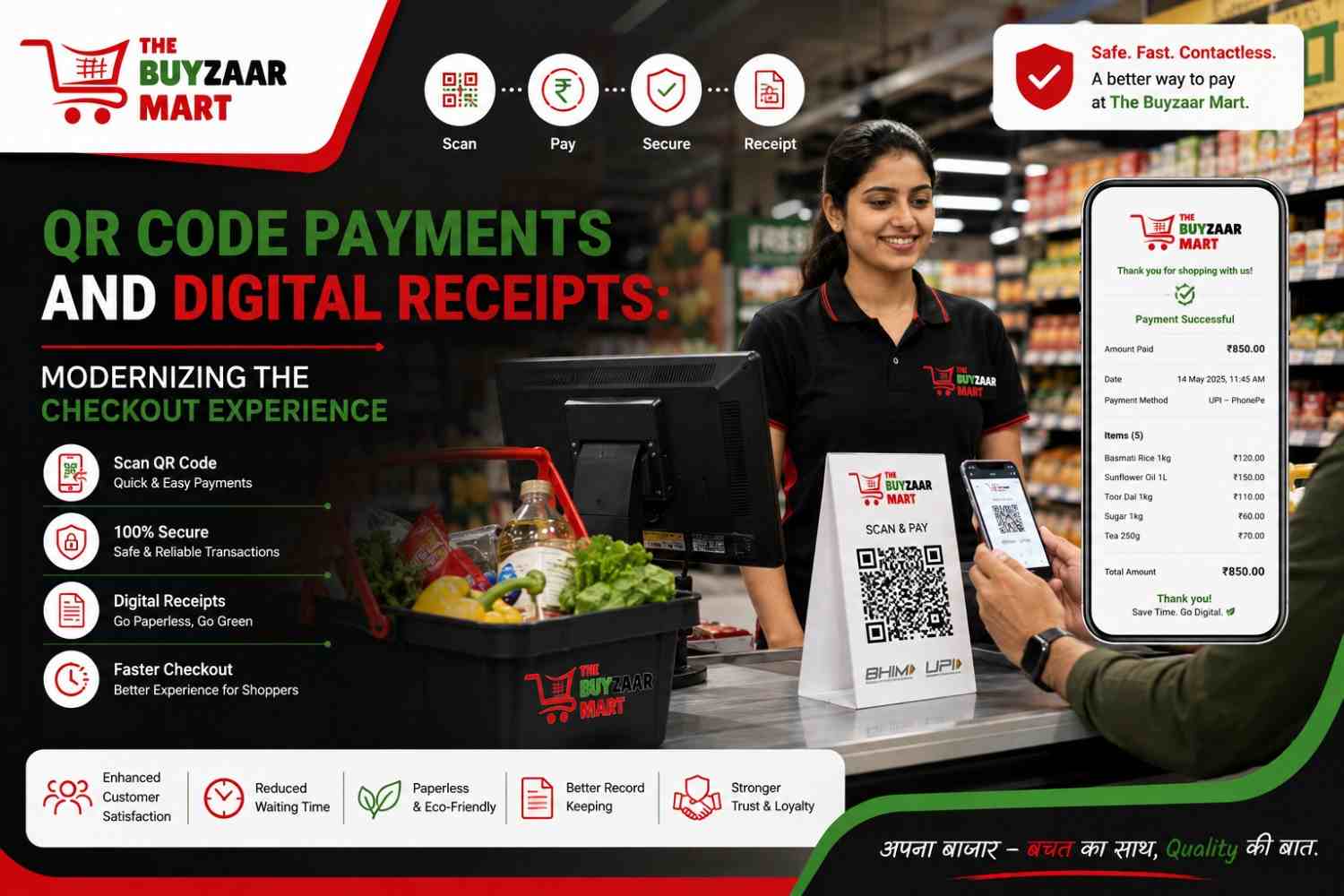
QR Code Payments and Digital Receipts: Modernizing the Checkout Experience
Discover how QR code payments and digital receipts speed up checkout, reduce errors, and build customer trust in modern grocery retail stores.
The checkout counter is the final impression a customer takes home from a grocery store, and it shapes whether they choose to return. A slow or confusing checkout process can undo the goodwill built during the entire shopping visit. Modern customers, especially in urban and semi-urban areas, now expect digital payment options as a default, not an exception. Long queues and cash-handling delays directly reduce customer satisfaction and repeat visits. A smooth, tech-enabled checkout reflects positively on the overall brand image of a grocery store.
The Shift Toward Digital Payments in Neighborhood Grocery Stores
- •Digital payments have moved from being a metro-city trend to a daily expectation across tier-2 and tier-3 markets as well.
- •UPI-based QR code payments have become the most widely used digital payment method in Indian retail
- •Customers increasingly prefer to avoid carrying cash for daily and weekly grocery purchases
- •Digital payments reduce the risks associated with handling large volumes of cash at store counters
- •Even older or first-time franchise owners are adapting quickly, since QR payments require minimal technical setup
- •Smartphone penetration and UPI awareness have grown significantly even in smaller towns, making digital adoption easier
- •Younger shoppers and working professionals actively prefer stores that support quick, cashless transactions
- •This shift is not limited to Mini Marts alone — Super Mart and Hyper Mart formats are also driven by faster digital checkout flows
Understanding QR Code Payments at the Checkout Counter
- •QR code payments allow customers to pay instantly using their smartphones, without cash or card swipes.
- •A static or dynamic QR code is displayed at the billing counter, linked directly to the store's bank account
- •Customers scan the code using any UPI-enabled app and complete payment within seconds
- •Dynamic QR codes automatically populate the exact bill amount, reducing manual entry errors
- •Payment confirmation is instant, allowing staff to complete the transaction without delays
- •QR-based systems eliminate the need for change management, which is a common friction point in cash transactions
- •Multiple QR options can be displayed for different UPI apps, ensuring compatibility with whichever app a customer already uses
Benefits of QR Code Payments for Grocery Store Owners
- •Adopting QR payments is not just a customer convenience — it directly benefits store operations as well.
- •Faster checkout reduces queue length during peak shopping hours, such as evenings and weekends
- •Reduces the risk of counterfeit currency, which is a real concern in cash-heavy retail environments
- •Minimizes cash-handling errors and end-of-day reconciliation issues
- •Improves transaction transparency, since every payment is digitally recorded
- •Supports better cash-flow visibility for store owners managing daily sales
- •Reduces dependency on maintaining large amounts of loose change at the counter
- •Lowers the security risk associated with storing large cash amounts on-site overnight
- •Simplifies accounting, since digital transaction records can be exported directly for bookkeeping
Digital Receipts: Replacing Paper With Convenience
- •Alongside QR payments, digital receipts are becoming a natural extension of the modern checkout experience.
- •Digital receipts can be sent via SMS, WhatsApp, or email immediately after payment confirmation
- •Customers no longer need to worry about losing paper receipts for returns or warranty claims
- •Reduces paper waste, aligning with more sustainable store operations
- •Digital receipts can be stored and searched easily, improving customer record-keeping
- •For store owners, digital receipts reduce printing costs and paper roll maintenance at the POS counter
- •Itemized digital receipts allow customers to track their monthly grocery spending more easily
How QR Payments and Digital Receipts Work Together
- •When combined, these two technologies create a seamless, end-to-end digital checkout experience.
- •Customer scans the QR code and completes payment through their preferred UPI app
- •POS system automatically confirms payment and generates a digital receipt
- •Receipt is instantly shared with the customer through their preferred communication channel
- •The entire transaction, from scan to receipt, can be completed in under a minute
- •This reduces manual intervention at every step, allowing staff to focus on customer service instead of paperwork
- •Integration between payment and receipt systems also reduces the chances of billing mismatches or duplicate entries
- •A unified digital flow makes it easier to audit daily transactions at the end of each shift
Technology Requirements for a Modern Checkout Setup
- •Setting up QR payments and digital receipts does not require heavy investment, especially for franchise-supported stores.
- •A basic POS system integrated with UPI payment gateway support
- •A printed or digitally displayed QR code linked to the store's payment account
- •A reliable internet connection to ensure uninterrupted transaction processing
- •Staff training on generating and sharing digital receipts correctly
- •Backup payment options, such as card swipe machines, for occasional connectivity issues
- •A basic smartphone or tablet at the counter to manage payment confirmations and receipt delivery
- •Periodic system checks to ensure QR codes remain active and correctly linked to the store's account
Customer Trust and Transparency at Checkout
- •Digital checkout systems also play a role in building long-term customer trust.
- •Instant payment confirmation reduces disputes over whether a transaction was successful
- •Digital receipts provide a clear, verifiable record of purchase details and pricing
- •Transparent billing builds confidence, especially for repeat shoppers who value consistency
- •Reduces chances of billing errors going unnoticed, since customers can review itemized digital receipts
- •Encourages customers to trust the store with larger or more frequent purchases over time
Impact on Store Efficiency and Staff Productivity
- •A modernized checkout process also improves how efficiently store staff can operate during busy hours.
- •Staff spend less time counting cash and managing change
- •Faster transaction processing allows more customers to be served during peak hours
- •Reduces end-of-day reconciliation time, since digital transactions are automatically logged
- •Frees up staff attention for customer assistance rather than repetitive billing tasks
- •Supports smoother operations across multiple counters in larger Super Mart or Hyper Mart formats
- •Reduces training time for new staff, since digital systems are often simpler than manual cash handling
- •Minimizes human error during high-footfall periods such as weekends and festival seasons
Handling Common Checkout Challenges With Digital Systems
- •Even with digital adoption, stores need to plan for occasional real-world challenges at the counter.
- •Network downtime should be managed with a clearly defined backup payment process
- •Staff should be trained to calmly guide customers unfamiliar with QR payments, especially older shoppers
- •Duplicate payment attempts should be checked and resolved immediately through the POS system logs
- •Clear signage near the billing counter can help first-time digital users understand the process quickly
- •Regular reconciliation between QR payment records and POS sales data helps catch discrepancies early
How This Fits Into the Buyzaar Mart Franchise Model
- •For Buyzaar Mart franchise partners, checkout modernization is built into the overall store setup and support structure.
- •Franchise partners receive POS systems that are pre-integrated with digital payment capabilities
- •QR code and digital receipt setup is part of the standard store launch process, not an additional task for owners
- •This allows even first-time retail entrepreneurs to offer a modern checkout experience from day one
- •Consistent digital payment infrastructure across locations strengthens the brand's professional identity
- •A smooth checkout experience supports the brand's positioning as a trusted, convenience-first neighborhood store
Frequently Asked Questions
Are QR code payments safe for daily grocery transactions?
Yes. QR-based UPI payments are secure, instant, and widely used across Indian retail for everyday transactions.
Do digital receipts replace the need for printed bills entirely?
Digital receipts can fully replace printed bills for most customers, though printed options can still be offered on request.
Is internet connectivity a major concern for QR payments?
A stable connection is required, but most stores also keep backup payment methods available for rare connectivity issues.
Can older or first-time store owners easily adopt this technology?
Yes. QR payments and digital receipts require minimal technical knowledge and are supported through standard POS training.
Does checkout modernization really impact customer loyalty?
Yes. A faster, more transparent checkout experience directly improves customer satisfaction and encourages repeat visits.
Related Articles
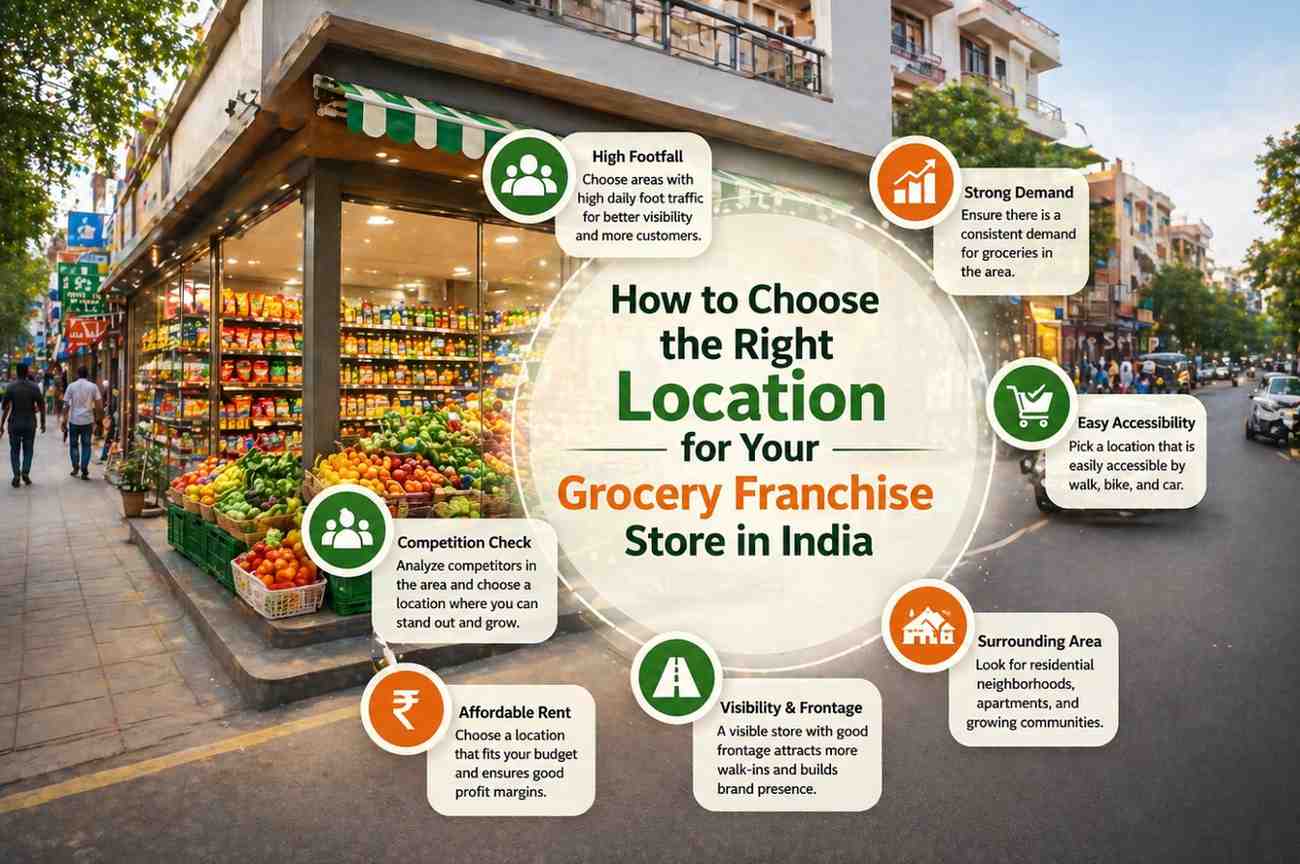
How to Choose the Right Location for Your Grocery Franchise Store in India (2026)
Location can make or break your grocery franchise store. Learn the key factors — footfall, demographics, competition, rent & more — to find the perfect spot for your Buyzaar Mart store in India.
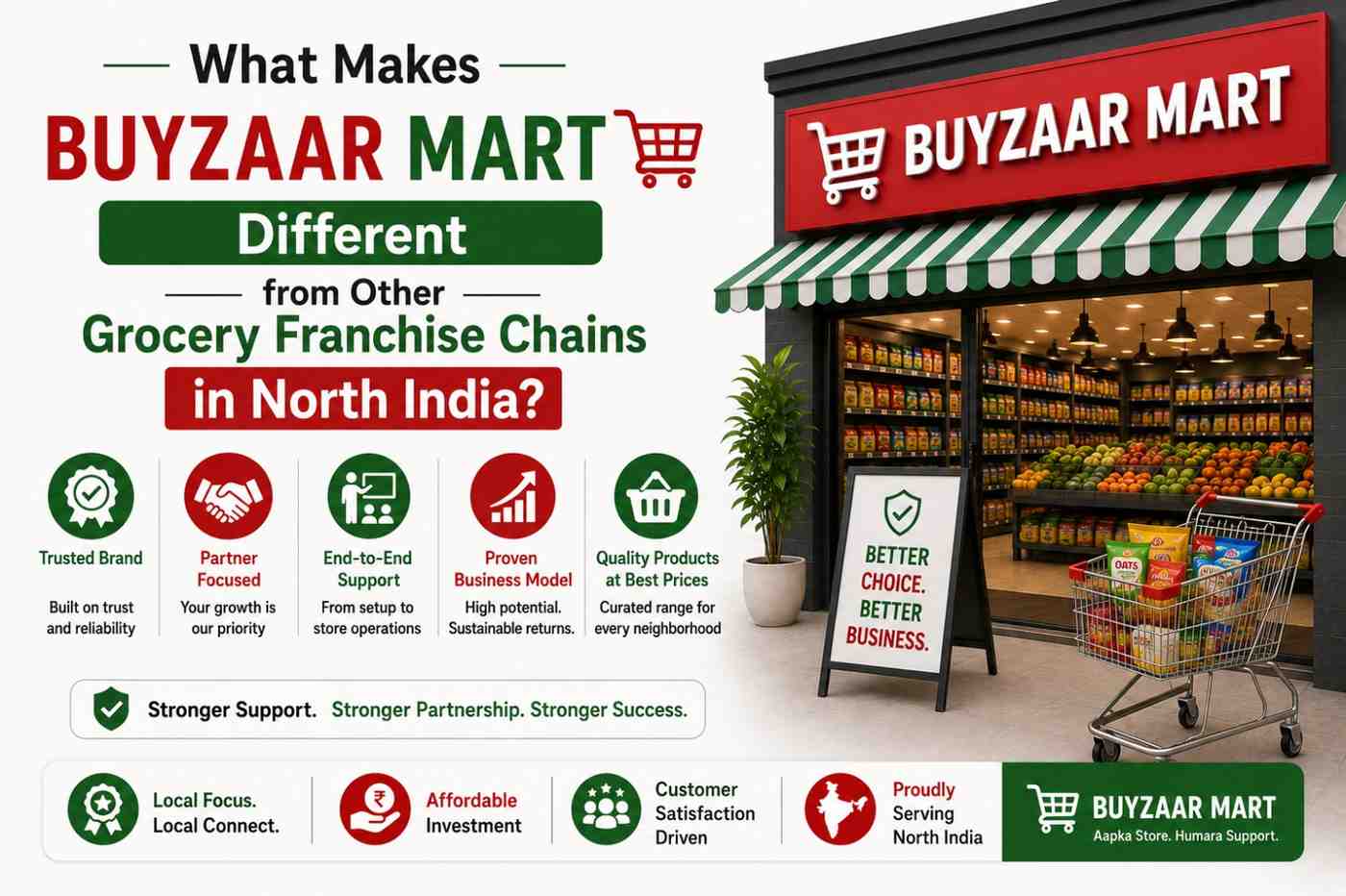
What Makes Buyzaar Mart Different from Other Grocery Franchise Chains in North India? (2026)
Wondering what sets Buyzaar Mart apart from other grocery franchise chains in North India? Discover the key differentiators — from tech-enabled operations and FMCG brand partnerships to franchisee-first support and profit margins.
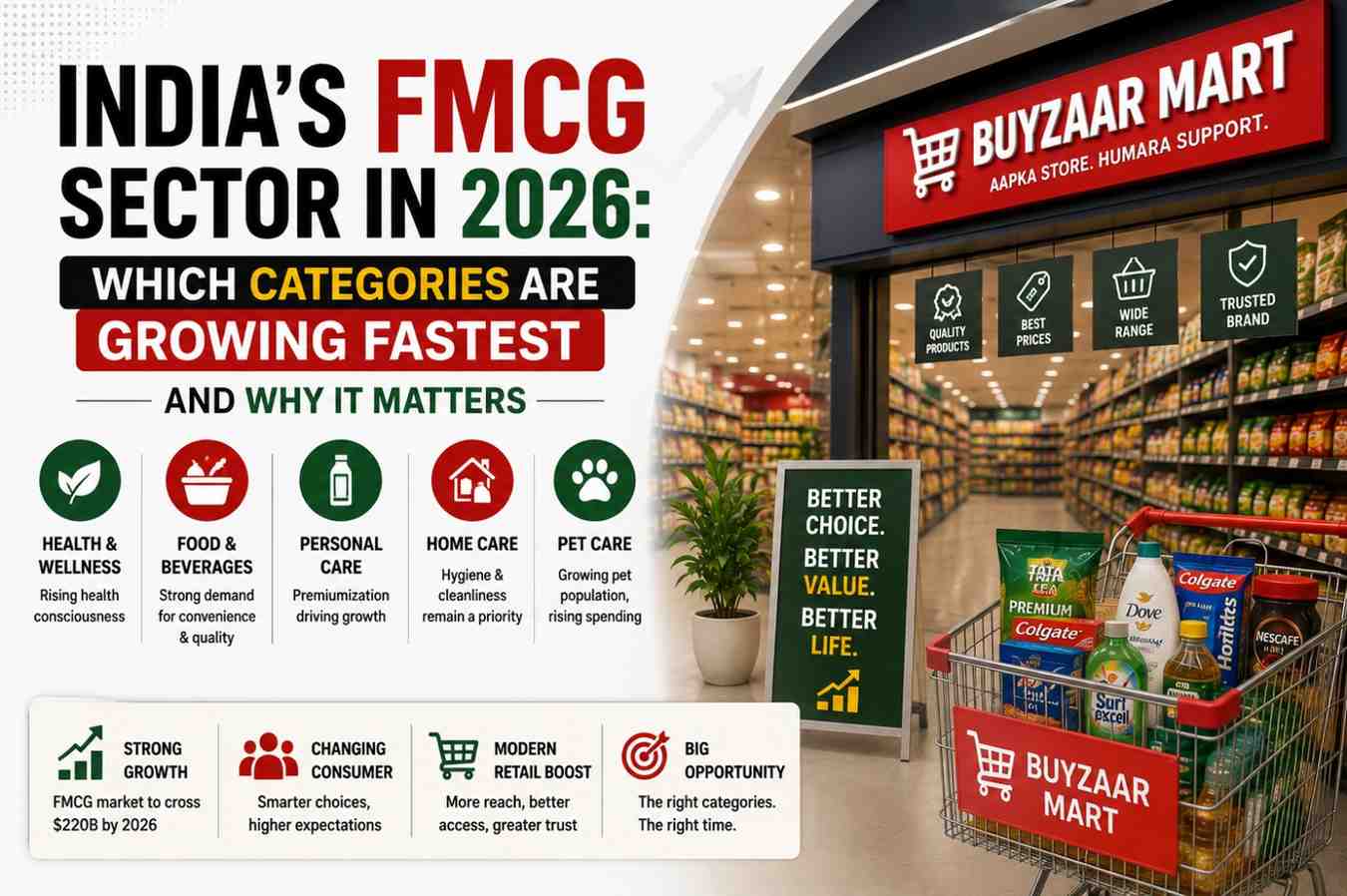
India's FMCG Sector in 2026: Which Categories Are Growing Fastest and Why It Matters
India's FMCG market is projected to hit ₹10.2 lakh crore by 2026. Discover which categories are growing fastest — from health foods to personal care — and what it means for grocery franchise owners across North India.