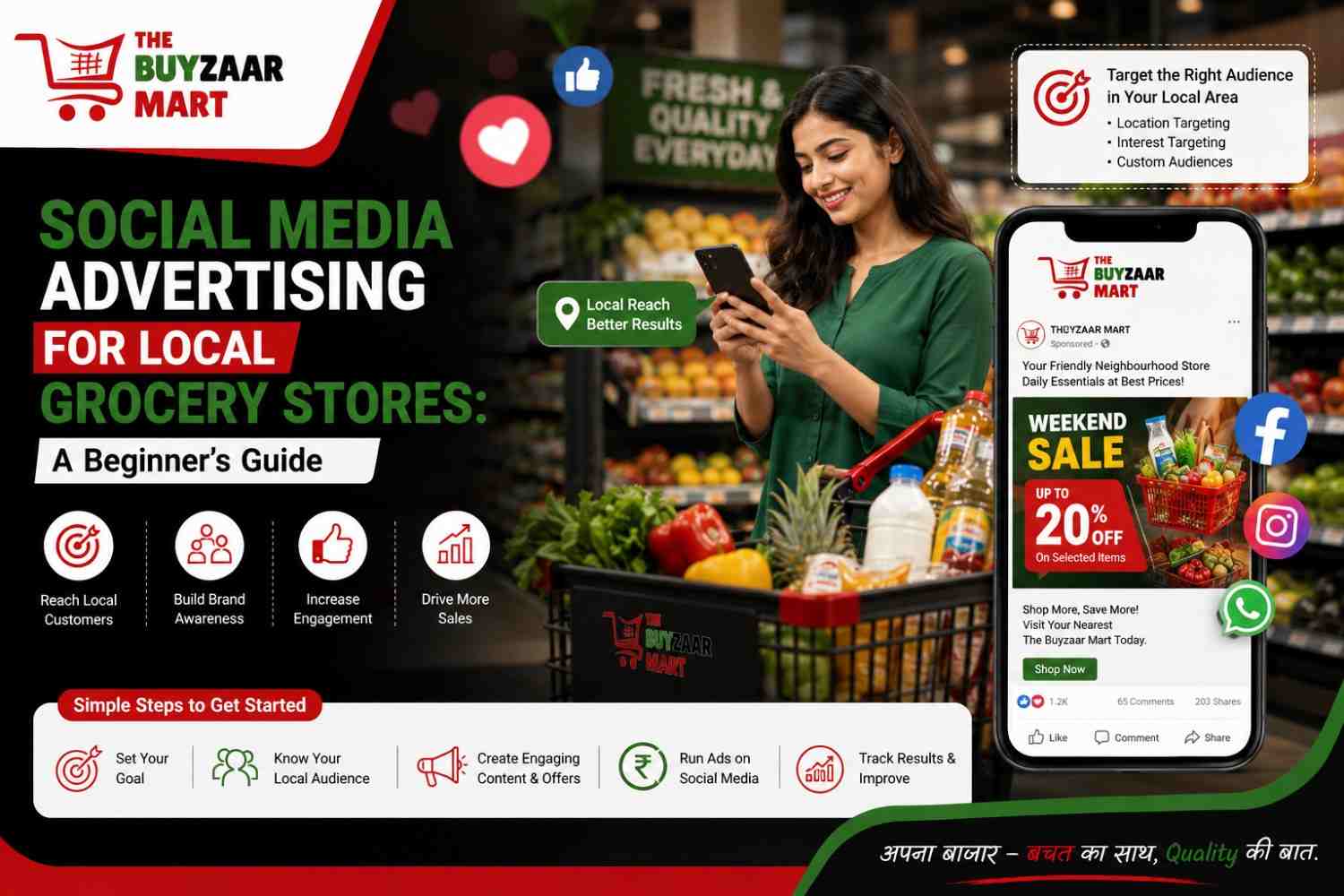
Social Media Advertising for Local Grocery Stores: A Beginner's Guide
A beginner's guide to social media advertising for local grocery stores, covering platforms, targeting, budgeting, and content that drives footfall.
Grocery shopping decisions are increasingly influenced by what customers see online, even for a purchase as routine as daily groceries. Local customers often check social media before deciding where to shop for offers or new store openings. Social media advertising helps grocery stores build visibility beyond just their immediate street or locality. It allows store owners to directly reach nearby households at a relatively low cost compared to traditional advertising. Consistent social media presence builds trust and familiarity, which matters for repeat, everyday shopping. For Buyzaar Mart franchise partners, social media becomes a practical tool to build a strong local customer base from day one.
Understanding the Basics of Social Media Advertising
- •Before running ads, it helps to understand how social media advertising works at a foundational level.
- •Social media advertising means paying to show posts to a specific, targeted audience rather than relying only on organic reach
- •Platforms like Facebook and Instagram allow advertisers to target users by location, age, and interests
- •Ads can appear as posts, stories, or short videos within a user's regular scrolling feed
- •Even a small daily budget can generate meaningful visibility when targeting is done correctly
- •Unlike traditional print ads, social media ads offer measurable results such as views, clicks, and engagement
Choosing the Right Platforms for a Local Grocery Store
- •Not all social media platforms work the same way, so choosing the right one matters for local retail businesses.
- •Facebook works well for reaching a broad local audience, including older age groups within a neighborhood
- •Instagram is effective for visually showcasing store offers, fresh produce, and store ambiance
- •WhatsApp Business complements paid advertising by allowing direct, personalized communication with customers
- •YouTube Shorts or Instagram Reels can be used for short, engaging video content about the store
- •For most local grocery stores, focusing on one or two platforms consistently works better than spreading efforts too thin
Setting Up Location-Based Targeting
- •Since grocery stores serve a specific local area, precise location targeting is one of the most important steps in advertising setup.
- •Set a target radius around the store, typically a few kilometers depending on the store format
- •Focus targeting on residential colonies, apartment complexes, and nearby markets within that radius
- •Avoid overly broad targeting, as it wastes budget on audiences unlikely to visit the store
- •Use city or locality names directly in ad copy to increase relevance for local viewers
- •Adjust targeting radius separately for Mini Mart, Super Mart, or Hyper Mart formats based on their typical catchment area
Creating Content That Attracts Local Shoppers
- •The content used in ads plays a major role in whether local customers stop scrolling and pay attention.
- •Highlight everyday value propositions, such as fresh stock, competitive pricing, and daily essentials availability
- •Use clear, simple language that reflects how local customers actually talk about grocery shopping
- •Showcase real store visuals, including shelves, produce sections, and billing counters, rather than generic stock images
- •Include specific, time-bound offers to create urgency, such as weekend discounts or festival stocking deals
- •Highlight convenience factors like store timings, home delivery options, or nearby locality coverage
Types of Social Media Ads That Work for Grocery Stores
- •Different ad formats serve different purposes, and understanding these helps in planning a more effective campaign.
- •Store awareness ads to introduce a newly opened franchise location to the local community
- •Offer-based ads highlighting discounts on specific categories, such as staples or personal care items
- •Event-based ads for festival stocking, back-to-school seasons, or special local occasions
- •Video ads showing a quick walkthrough of the store to build familiarity before a customer's first visit
- •Retargeting ads aimed at people who have previously engaged with the store's page or website
Budgeting for Social Media Advertising as a Beginner
- •New store owners often worry about advertising costs, but social media budgeting can start small and scale gradually.
- •Begin with a modest daily budget to test which content and targeting combinations perform best
- •Allocate slightly higher budgets during festival seasons or store launch periods
- •Avoid spending the entire budget on a single ad; instead, test multiple variations
- •Track cost-per-click and cost-per-engagement to understand which ads deliver better value
- •Gradually increase budget only after identifying consistently well-performing ad formats
Measuring the Success of Social Media Campaigns
- •Tracking performance is essential to ensure advertising spend is actually contributing to store growth.
- •Monitor reach and impressions to understand how many local users are seeing the ads
- •Track engagement metrics such as likes, comments, shares, and saves
- •Measure click-through rates to see how many viewers are visiting the store's page or inquiring further
- •Where possible, correlate footfall increases with specific ad campaigns or offer periods
- •Use these insights to refine future content, targeting, and budget allocation
Common Mistakes to Avoid in Local Grocery Advertising
- •Beginners often make avoidable mistakes that reduce the effectiveness of their social media campaigns.
- •Targeting too wide an area, which dilutes relevance and wastes advertising spend
- •Using generic stock images instead of authentic store visuals
- •Running ads without a clear offer or call-to-action for the viewer
- •Ignoring customer comments or messages generated through ad engagement
- •Failing to update ad content regularly, leading to audience fatigue over time
Building an Organic Social Media Presence Alongside Paid Ads
- •Paid advertising works best when supported by consistent organic activity on the store's social media pages.
- •Post regular updates about new stock arrivals, seasonal offers, and store activities
- •Share behind-the-scenes content to build a personal connection with local customers
- •Respond promptly to comments and messages to maintain an approachable brand image
- •Encourage satisfied customers to share their experience or tag the store in their posts
- •Use organic content to build trust, which paid ads can then amplify to a wider local audience
Combining Social Media Advertising With In-Store Offers
- •For maximum impact, social media campaigns should align closely with what is actually happening inside the store.
- •Promote in-store discounts or loyalty program benefits directly through social media ads
- •Use QR codes in ads that link to WhatsApp for instant offer redemption or inquiries
- •Announce festival stocking or seasonal promotions in advance to build anticipation
- •Highlight new product categories or sections added to the store through targeted posts
- •Ensure staff are aware of ongoing campaigns so they can reinforce offers at the billing counter
How This Fits Into The Buyzaar Mart Franchise Model
- •For Buyzaar Mart franchise partners, social media advertising becomes a structured tool for building local visibility from the very start.
- •Franchise partners receive guidance on setting up location-based advertising for their specific store area
- •Standardized branding elements help maintain a consistent, professional look across social media campaigns
- •Local marketing support is part of the broader franchise launch and growth strategy
- •This allows even first-time entrepreneurs to build a strong digital presence without prior marketing experience
- •Consistent social media visibility supports the brand's positioning as a trusted, modern neighborhood grocery store
Frequently Asked Questions
Is social media advertising effective for a single local grocery store?
Yes. With proper location targeting, even a single store can generate strong local visibility and customer engagement.
How much budget is needed to start advertising on social media?
A small daily budget is enough to begin testing, with spending increased gradually based on performance results.
Which platform is best for a local grocery store to start with?
Facebook and Instagram are typically the most effective starting points due to their strong local targeting capabilities.
Do grocery stores need professional content for social media ads?
Authentic, simple content showcasing the real store often performs better than highly polished but generic content.
Can social media advertising work alongside traditional local marketing methods?
Yes. It works best when combined with in-store offers, local outreach, and word-of-mouth marketing efforts.
Related Articles
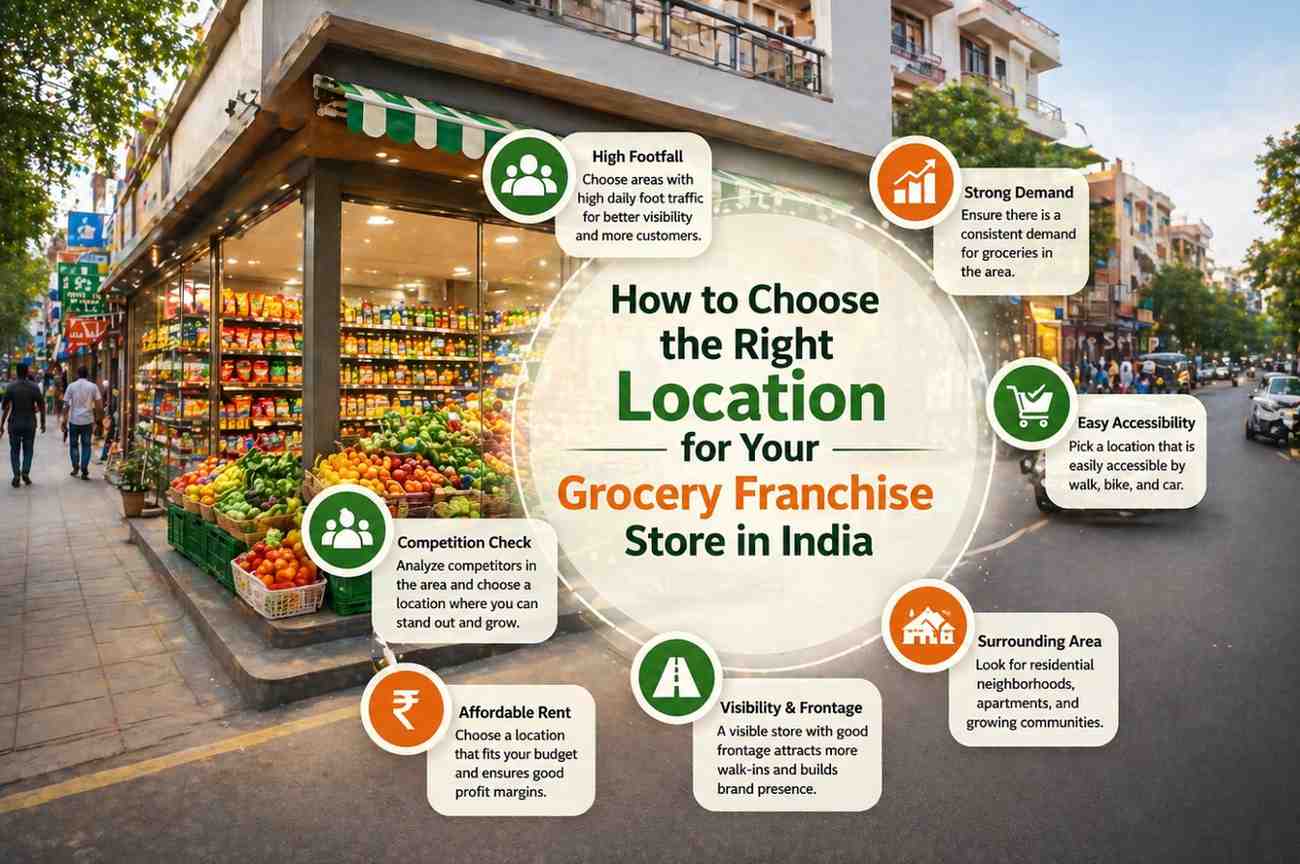
How to Choose the Right Location for Your Grocery Franchise Store in India (2026)
Location can make or break your grocery franchise store. Learn the key factors — footfall, demographics, competition, rent & more — to find the perfect spot for your Buyzaar Mart store in India.
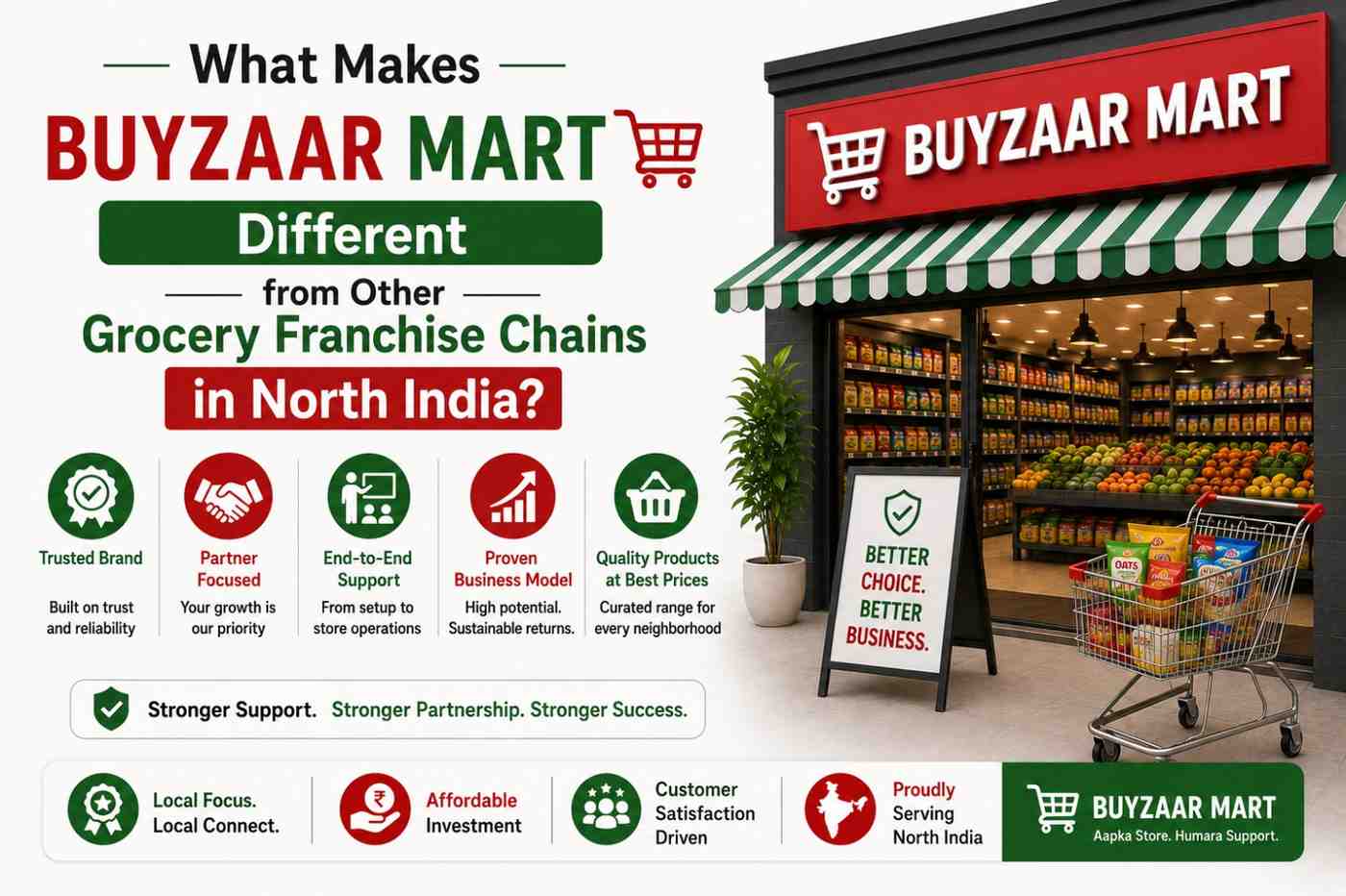
What Makes Buyzaar Mart Different from Other Grocery Franchise Chains in North India? (2026)
Wondering what sets Buyzaar Mart apart from other grocery franchise chains in North India? Discover the key differentiators — from tech-enabled operations and FMCG brand partnerships to franchisee-first support and profit margins.
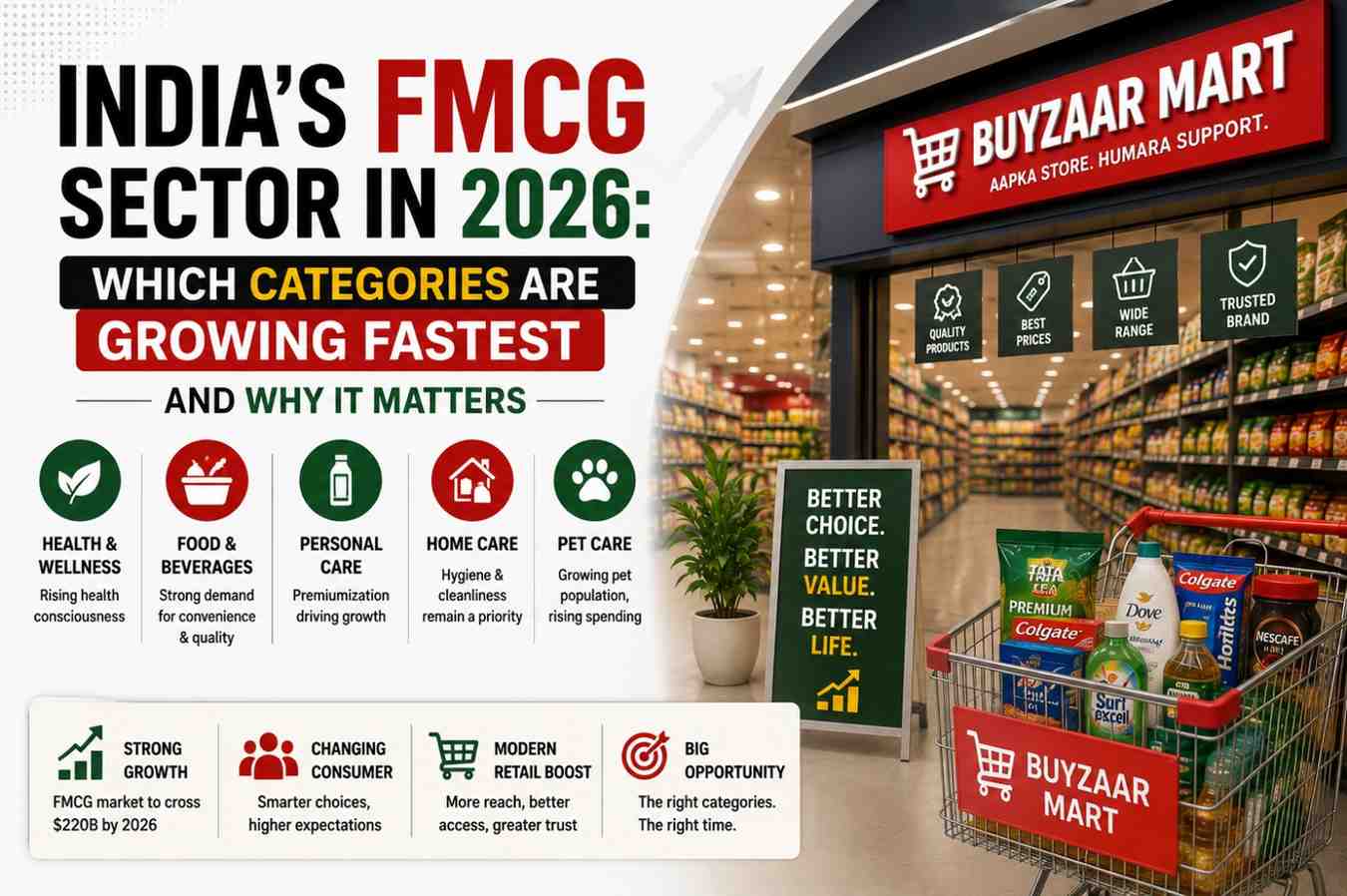
India's FMCG Sector in 2026: Which Categories Are Growing Fastest and Why It Matters
India's FMCG market is projected to hit ₹10.2 lakh crore by 2026. Discover which categories are growing fastest — from health foods to personal care — and what it means for grocery franchise owners across North India.